Camas-Washougal logo tag

Midterm losses push WA GOP into superminority

Some point finger at party leader Walsh as House seats down to 29

By
timestamp icon
category icon Government, News

When this century began, Republicans held half of the 98 seats in the Washington state House of Representatives and shared power with Democrats. They will soon occupy 29.

The Grand Old Party’s descent to superminority in the chamber has been a decade-in-the-making journey, coinciding with the Trump era, and hastened by the whopping loss of nine seats in the Nov. 3 election.

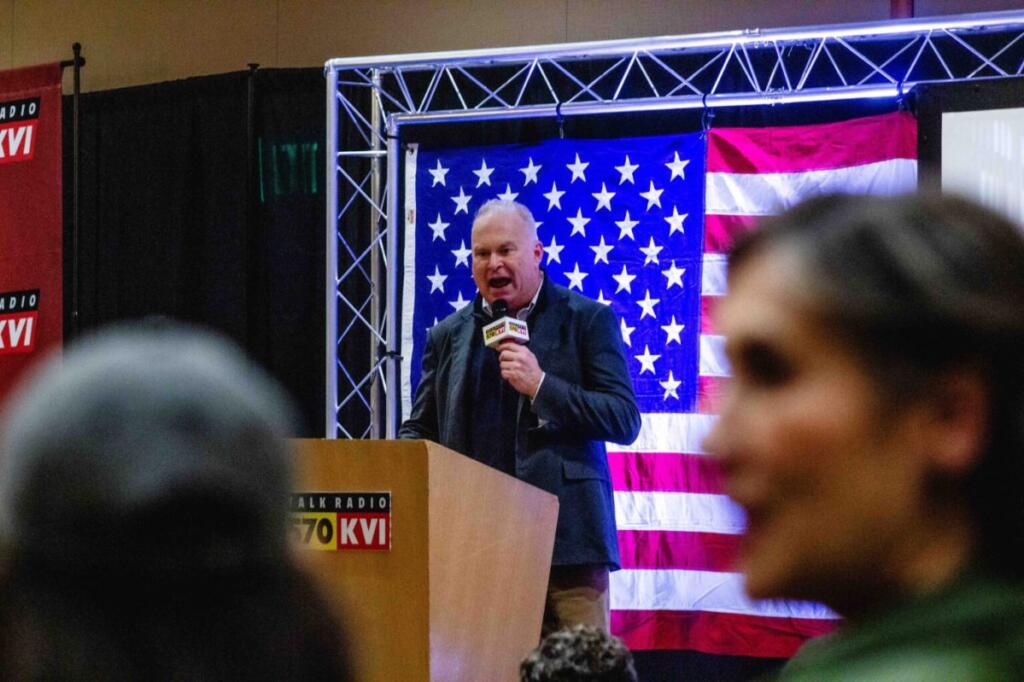
Rep. Jim Walsh, R-Aberdeen, who easily won reelection, is also the chair of the Washington State Republican Party. He’s getting pressed these days on how the party will respond while fending off critics who think more could have been done to lessen the political damage.

“The midterm was bad. It was not this epic tsunami,” he said. Incumbents who are losing “got caught in the riptide of statewide mania of Trump, Trump, Trump.”

Walsh’s term ends in January. Some, including a former state party chair, want him to step aside so the organization can reboot. He intends to seek reelection.

“We are going to continue to rebuild the party to make it a true bottom-up operation,” he said. “We’re getting there. The process is not quite done.”

Diagnosing the damage

Blame for what happened on Nov. 3 is apportioned to many, with Walsh getting a larger piece.

“If you lose, they come for you. That’s politics,” said Mathew Patrick Thomas, one of Washington’s two members on the Republican National Committee and the former chair of the King County Republican Party. “Donors really want to know ‘what’s the new plan’ after we get our butts kicked.”

A similar diagnosis of what transpired and what to do now emerged from interviews with Republican lawmakers, donors, activists and party chairs.

The state party needed to have raised more money and started earlier to build its get out the vote operation, they say. And Walsh, along with House Minority Leader Drew Stokesbary, R-Auburn and others engaged in the political operations for the House Republican caucus, should have been in greater sync.

Get the latest headlines in your email every week!

This field is for validation purposes and should be left unchanged.

But President Donald Trump’s decade-long dominance on the national landscape posed the single largest obstacle facing Republican candidates. His presence has been souring the GOP brand for years; many candidates struggled to escape his shadow.

Trump urged people to vote like he was on the ballot. In Washington many did. Swing voters disillusioned by the president’s use of tariffs and the war in Iran sided with Democrats. Meanwhile, moderate Republicans disaffected by Trump’s policies likely sat out partisan races.

“We thought we had the right messaging but it was too complicated for the average person. It was too easy to blame what’s happening nationally,” said Rep. David Stuebe, R-Washougal, one of the House Republicans getting ousted.

With Democrats turning out in higher numbers, a controversial redistricting map forged by a federal judge was another factor. Those redrawn lines shifted more than 300,000 people across 13 legislative districts on both sides of the Cascades. It put more Democrats into the 12th, 14th, 17th and 18th districts located across central and southwest Washington. In all those places, Republican lawmakers are getting unseated.

Matt Brown, chair of the Yakima County Republican Party, said an electoral shellacking like this requires a commitment to finding a way to ensure voters can hear the message of Republicans campaigning in their community above the uproar of national politics.

“You won’t win every election. You are going to have losses. The key is moving forward with clear expectations,” Brown said. “The small things will catapult you to the bigger wins.

What does party chair do?

There’s no handbook or style guide for running a state political party. Generally, the chair is counted on to be a spokesperson, a strategist and a fundraiser.

Chairs cozy up to the donor class using money raised to elect candidates, pass or defeat ballot measures, and build an operation to turn out a party’s voters. Some chairs will try to build unity among like-minded forces that don’t all agree on the right messaging, the best marketing and the targets for the most resources.

Chairs let legislative caucuses recruit their candidates, though they may encourage individuals to run for statewide and federal offices. But, in the end, only individuals will decide if they want to run and for what office.

The state Republican Party will pick a chair in January.

Walsh earns around $105,000 annually as party chair, in addition to his legislative salary of $72,494. Washington State Democratic Party Chair Shasti Conrad declined to share her annual salary.

To get elected, Walsh or other GOP party chair candidates must receive a majority of votes from the 117 people on the party’s central committee: a panel made up of the chair and two state committee members from each of the state’s 39 county Republican parties.

These are Walsh’s bosses, described as “the most conservative of the conservative” Republican activists.

“In fairness to Jim, there certainly exists within the Republican Party not only Trump voters but ones who believe wholeheartedly in the Trump agenda,” said Steve Gordon, a Pierce County precinct committee officer who led the unsuccessful efforts to repeal the income tax on higher earners. “Jim can’t afford to alienate those folks.”

Walsh hasn’t so far. First elected in August 2023, he was re-elected in January 2025. He’s a conservative who can fire up a crowd with his orations.

Though some view his rhetorical rants on social media as self-serving, those pokes draw reactions. Gov. Bob Ferguson recently predicted Walsh would step aside but said he hoped he did not, calling Walsh a “weak, ineffective” leader.

Walsh laughed when asked about this.

“Part of the job of party chair is be a lightning rod for the neurotic governor to strike at,” he said.

Walsh has been criticized for less than robust fund raising. Some blame his embrace of the MAGA agenda for driving some donors to withhold money from the party and instead contribute to other organizations working to elect Republicans.