Camas-Washougal logo tag

Vancouver resident lived in fear after missing court date

The Washington State Department of Commerce announced Sept. 2 that they will be providing funding for low-income immigrants in threat of deportation for legal rep and services. One mom in Clark County is facing deporation and a lack of resources to get legal representation.

By
timestamp icon
category icon News

A Vancouver woman who missed a court date necessary for her visa found herself in a conundrum that affects many immigrants who live here.

Unlike in criminal court, those going through immigration proceedings aren’t entitled to a court-appointed lawyer at government expense. And, until recently, Vancouver residents have fallen through cracks in the legal aid system.


“Since I entered the country, I’ve been going to court. Normally, when I’ve gone to court, I haven’t had legal representation, neither private nor nonprofit,” the woman said speaking in Spanish, translated to English through an app.

Those living in Vancouver usually report to immigration court in Portland, but most legal aid is based in Seattle and Tacoma. And they aren’t eligible for legal aid funded by Oregon.

“Clark County and Vancouver specifically face a unique situation when it comes to pro bono or low-cost immigration services,” Nathaniel Belachew, an attorney for the Portland-based Immigrant & Refugee Community Organization, said. “The Vancouver area has generally been an underserved population.”

His organization can now help Vancouver residents thanks to a grant from the Washington State Department of Commerce.

Washington is one of 10 states providing no-cost or pro bono legal assistance and referral services to immigrants. Since launching the grant program in 2022, the state has seen a distinct uptick in applications, said Cary Retlin of the state commerce department.

The department received 16 applications in 2023 and 28 in 2024, he said.

“The amount of folks at risk of removal out from the country or in other sorts of deportation proceedings has increased substantially,” Retlin said.

Overcome with fear

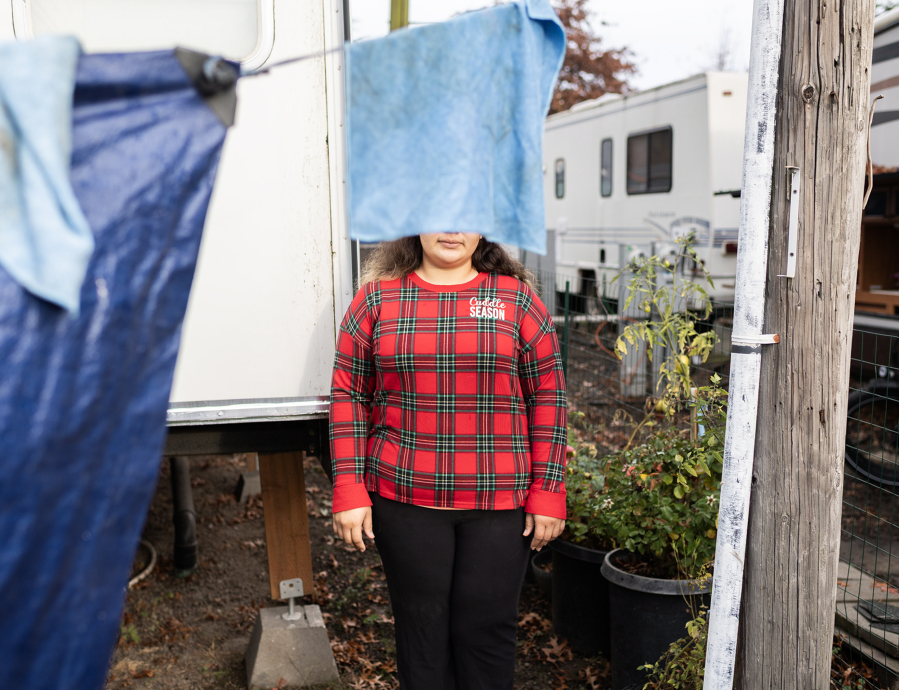
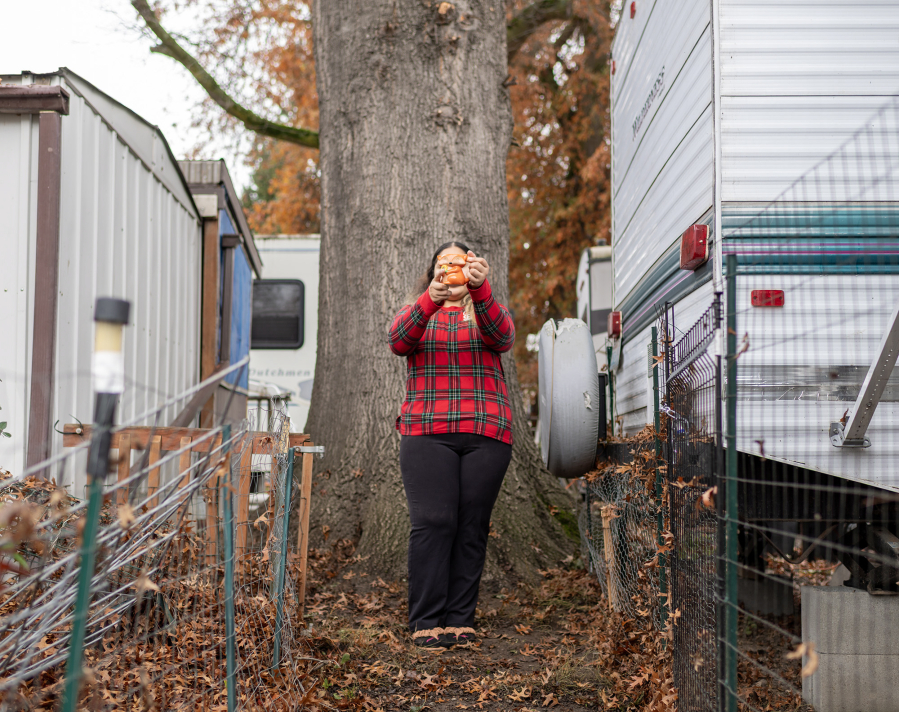
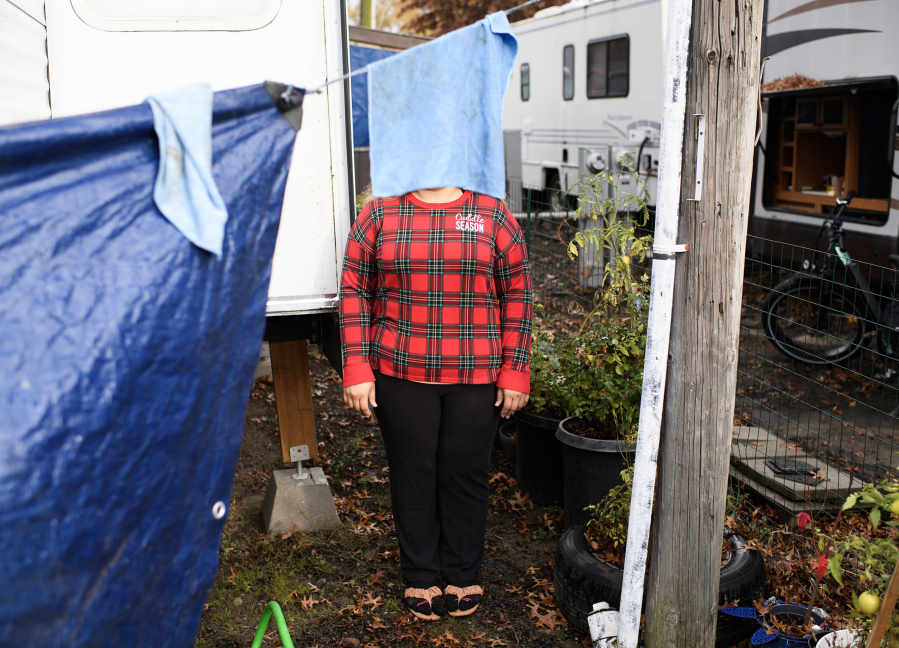
The Vancouver woman moved to the United States from Honduras in 2018. For the most part, she has been representing herself in immigration court since entering the country. The Columbian is identifying her only as Katherin, her first name, because she fears her children may be targeted by immigration enforcement.

A small hiccup turned into a big problem for Katherin when she missed a May 8 immigration court appointment. She missed a payment on her mobile phone bill, so her service was cut. That left her without GPS to help her navigate to court.

Then, the court issued a deportation order for her, which left her without a work permit or other documentation.

“I was also overcome with fear because of everything that was happening,” Katherin said.

Without a new court date, she spent weeks in fear of being deported at any time, which would leave her five young children without a mother.

“We weren’t going to have anyone to welcome us there (in Honduras) — no clothes, no housing, absolutely nothing,” Katherin said. “We were going to arrive with what we were wearing and the little we had in our suitcases and that was it.”

In her prior search for legal assistance, Katherin had reached out to the Immigrant & Refugee Community Organization in Portland. She lived in Oregon then, but by the time the organization had a lawyer available for her, she had moved to Vancouver.

“So I couldn’t receive legal assistance from them,” Katherin said. “That’s basically the help I’ve had navigating the immigration system.”

At capacity

When the Immigrant & Refugee Community Organization received a grant from the Washington State Department of Commerce in January 2024, it expanded services into Vancouver.

Still, the need exceeds the available funding, so legal aid nonprofits focus on clients whose safety is at risk.

These include those on the brink of deportation who are pregnant, living with disabilities or illness, and survivors of domestic violence, torture or human trafficking, according to the state commerce department.

The Northwest Immigrant Rights Project is the largest legal aid provider receiving the state grants.

“We know that for someone who is detained, for example, having direct representation — it’s almost tenfold the likelihood of success,” Executive Director Malou Chávez said.

Chávez has worked for the nonprofit since 2008. Over those 17 years, she has seen immigrant protections dwindle and cases take longer, she said. In 2010, Chávez could expect to get an expedited decision on a visa for a survivor of violence within weeks. Now, it’s taking five to seven years for applicants to learn if they’ll even have a court date, Chávez said.

“The changes in laws and policies and practices are making our jobs also even more difficult to be able to represent our community,” Chávez said.

The Northwest Immigrant Rights Project uses some of its grant funding to host community outreach events to help immigrants seeking legal services whose cases may not be eligible for direct legal support.

“At this point, all of our community is at high risk,” Chávez said.

A second chance

Thanks to a GoFundMe, Katherin received donations to pay a low-cost lawyer to discuss her situation. According to her lawyer, her only option was to petition to reopen her deportation case, which the court was unlikely to do.

As Katherin waited for news on her case, she stopped going outside. Her children asked to stay home from school because they feared they would return home to find her gone.

It was June, a few days before her children’s summer vacation, when Katherin received an envelope from U.S. Citizenship and Immigration Services.

When Katherin opened the envelope and translated the English document to Spanish with Google Lens, she read that her application was denied. Katherin and her children sobbed. She collected herself enough to call her lawyer to verify the information.

“I sent him a photo, and I think two or three hours passed, which felt like an eternity to us,” Katherin said.

Finally, Katherin’s lawyer called with good news. The translation was wrong. Her case would be reopened. Her lawyer would fully represent her for a mere $300 a month.

“We started crying but tears of joy,” Katherin said.

Since then, Katherin has continued to only use donations from the GoFundMe toward legal fees. Her family moved back to Portland.

“My children and I already know what it feels like to be in limbo,” Katherin said. “It’s very difficult.”

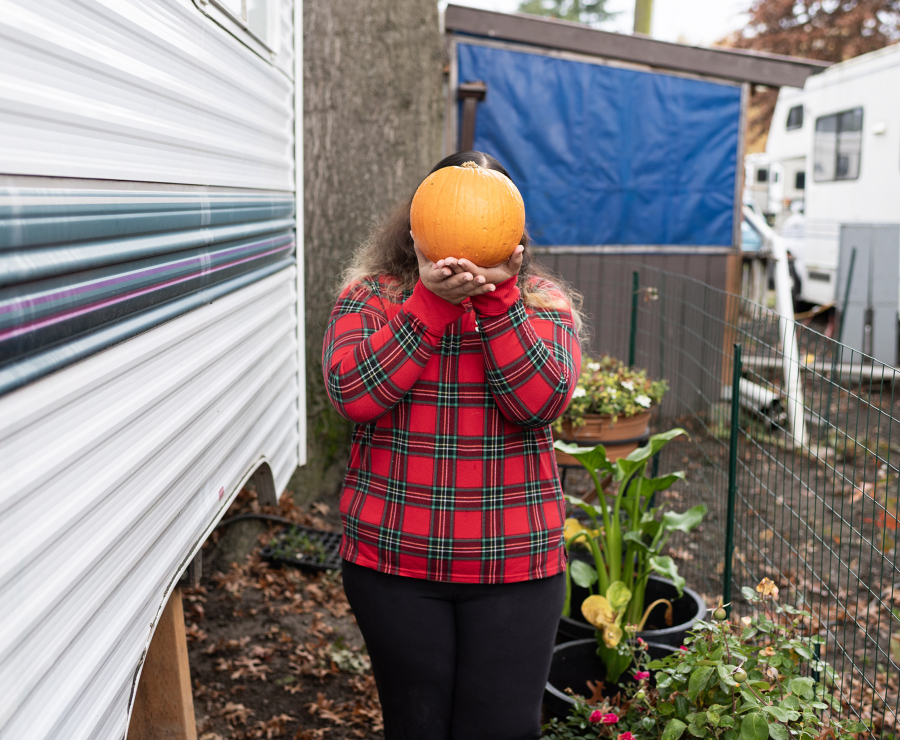
Her children have returned to their school in Vancouver. And Katherin no longer fears stepping outside to tend her garden.

Emily Rogers: 360-735-4517; [email protected]