Login
Login
 Newsletters

 Clark County, Government, News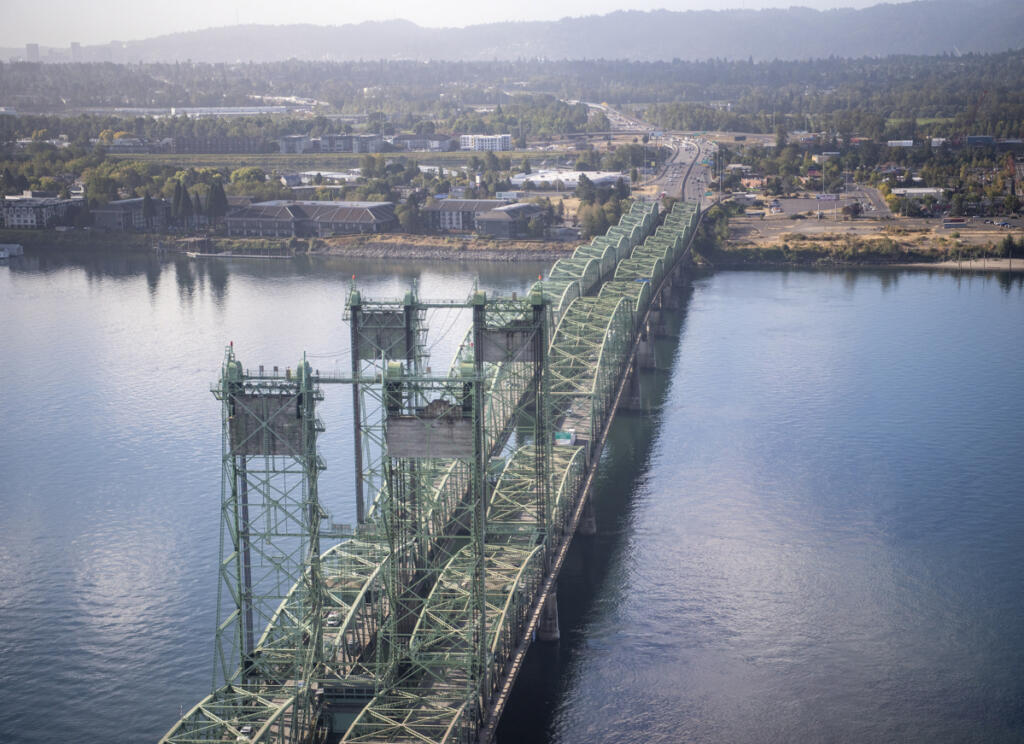
The effort to replace the century-old Interstate 5 Bridge reached a key milestone Friday with the release of the final report on the project’s environmental and community impacts.
The 944-page report responds to about 9,100 public comments and includes technical studies that show the impacts of replacing the current I-5 Bridge, extending light rail trains from Portland to Vancouver, adding an express bus shoulder lane, improving bicycling and pedestrian access, and modifying seven highway interchanges within a 5-mile corridor that stretches from Victory Boulevard in North Portland to state Highway 500 in Vancouver.
- A single-level, fixed-span bridge as opposed to a proposed double-decker configuration.
- One auxiliary lane in each direction on the new bridge spans, described in the report as a way to “reduce overall environmental impacts while improving transportation operations and safety.”
- Ramps at C Street in Vancouver. Program leaders said in the report that although removing the ramps from the design came with cost savings and reduced visual impacts, they felt it was important to build the C Street ramps to help reduce traffic impacts in Vancouver.
- Up to five Park & Ride facilities to accommodate a combined 1,270 vehicles.