Camas-Washougal logo tag

Skamania County Sheriff’s Office disables license plate reading cameras over privacy concerns

Court ruled images captured by Flock Safety cameras are public records, must be released upon request

By
timestamp icon
category icon Government,
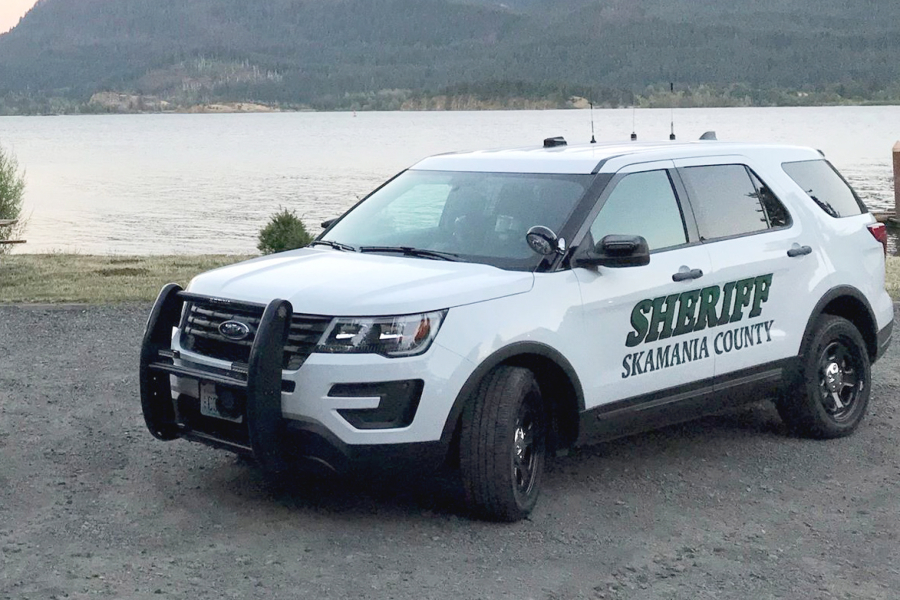
The Skamania County Sheriff’s Office said in a social media post Nov. 12 that the county has disabled all six of its automated license plate reader cameras because the images collected are considered public records to be released upon request. (Contributed by the Skamania County Sheriff’s Office)

Skamania County has shut off its automated license plate reader cameras after a judge ruled images captured by them must be released under Washington’s public records law.

The Skamania County Sheriff’s Office said in a social media post Nov. 12 that all six cameras in the county have been disabled over concerns about public privacy.


The decision comes after Skagit County Superior Court Judge Elizabeth Yost Neidzwski ruled earlier this month that images collected by Flock Safety cameras are public records and must be released upon request. Neidzwski wrote in her decision that “Flock camera images are created and used to further a governmental purpose.”

Flock Safety cameras are automated license plate readers sold to law enforcement agencies and businesses to collect data for crime prevention and response. The cameras automatically collect data from pictures and video of passing vehicles and, using AI, are able to identify people based on license plates, vehicle damage, color, make and model.

Data gathered by Flock cameras is stored in a cloud server and assigned a “30-day time to live” from the hour of collection, and then it is automatically deleted, Holly Beilin, a spokesperson for Flock Safety, told The Columbian.

She said the company’s cameras have helped solve 10 percent to 12 percent of reported crime in the United States.

Flock Safety does not disclose individual customer contracts or camera locations, said Paris Lewbel, another spokesperson for the company. But he said the company partners with more than 100 law enforcement agencies across Washington, making it the largest provider of automated license plate readers in the state.

The Skagit County case centered on the cities of Sedro-Woolley and Stanwood, which sued Oregon resident Jose Rodriguez in an attempt to block his requests for Flock camera images.

Sedro-Woolley and Stanwood have since turned off their cameras.

The Skamania County Sheriff’s Office said in its social media post that this recent court decision is a threat to public safety and allows access to anyone, “extending far beyond the policy parameters set forth by the Skamania County Sheriff’s Office for their own personnel.”

Other cities, like Woodburn, Ore., have followed suit and also suspended the use of their Flock cameras after a report from the Center for Human Rights at the University of Washington. The Oct. 21 report revealed that U.S. Immigration and Customs Enforcement has been accessing and conducting thousands of searches with data from at least 31 Washington police agencies. Some “enabled direct, 1:1 sharing of their networks with U.S. Border Patrol at some point during 2025,” the report states.

A separate analysis by 404 Media found more than 4,000 “lookups” carried out by local and state police on behalf of federal agencies or in connection with immigration enforcement.

The Skamania County Sheriff’s Office said in its social media post that its contract with Flock extends through December 2026. The infrastructure will remain in place until the termination of the contract, but the cameras and license plate reader technology will be disabled.

Undersheriff Tracy Wyckoff told The Columbian the agency is trying to protect the public’s privacy by disabling the technology and that the court’s decision extends beyond the normal use of the camera systems.

“The public is concerned about their privacy. And now that the system is open to the public, it’s also a concern for us,” he said.

Beilin, the Flock spokesperson, told The Columbian that while this decision has affected whether police use the cameras, the decision by the judge isn’t a new policy.

“Nothing has really changed,” Beilin said. “Washington state has one of the most broad public records request laws in the country, so this isn’t new.”

Beilin said some agencies are facing lawsuits tied to the public records law, because people are purposely submitting requests shortly before data is automatically deleted in an attempt to force legal penalties.

“If they don’t deliver the records, then the people requesting the data sue those agencies,” Beilin said.

“Unfortunately, some individuals in Washington have abused the breadth of the public records law to extort significant settlements from Washington communities for technical violations of the disclosure requirements, which we cannot believe is the intent of the law,” Lewbel, also a Flock spokesperson, said in an email to The Columbian. “We are supporting efforts to enact a legislative fix to this situation, which is costing Washington communities tens of thousands of dollars to stave off frivolous lawsuits.”

Phil Neff, UW Center for Human Rights research coordinator, could not verify if this claim was true.

“I don’t know if that’s true at all,” he said. “If Flock has an issue with how the state’s public record law works, they’re entitled to their opinion.”

Neff said that UW based its report on Flock documentation from public records requests and audits for about two to three dozen searches. The study characterized the audits as “back door” access by ICE.