Camas-Washougal logo tag

Skamania County suffers winter tourism slump as region pinches pennies

Businesses get creative in challenging times

By
timestamp icon
category icon Business, News

A slow winter season in Skamania County is worsening the impacts of a broader tourism downturn the county has suffered since pandemic-era outdoor recreation booms began to wane.

Both the number of yearly visitors and the amount of money they spend each trip have declined in the past five years, detailed county tourism data shows.


The trends come as economic anxieties are rising for a growing number of Washingtonians and other Americans. Skamania officials said those worries are driving more and more people to save money, leaving the county with less revenue to work with.

Penny-pinching pain

“With the cost of goods and services going up, taxes going up, people are just spending less — locals included,” said Angie Martin, executive director of the Skamania County Chamber of Commerce.

Asa Leckie, the Republican chair of the county commissioners, and state Rep. Kevin Waters, R-Stevenson, both echoed that.

“People don’t have as much disposable income like they have in the past,” Leckie said. “When they do recreate, they’re going to their spots or going fishing, but they’re foregoing the lunch or the meal, and that’s impacting our local businesses.”

The county pays for detailed tourism analytics data, which backs up the county leaders’ observations.

In 2019, Skamania County saw about 3.4 million visitors, with about 228,000 staying overnight, according to the data. By 2024, that fell to 2.1 million trips, with 182,000 overnights.

While spending data doesn’t go as far back, it still captures the same decline: In 2022, the average visitor spent $159. By 2024, it was $148. Preliminary 2025 data puts the number at $144.

That works out to a roughly $92 million decline in tourism spending between 2022 and 2024, down from about $407 million.

Overnight trip numbers have suffered in particular, partly driving that decline. Data shows the percentage of day trips increased over that period, while the percentage of one- and two-night stays declined.

Dwindling dollars

All that has a big impact on a tourism-dependent county like Skamania.

“I know several of our tourism-based businesses are down,” Martin said. “I would say restaurants specifically are down.”

Martin said that has led some businesses to cut back on hours. December was particularly punishing, but January improved due to good weather, she said. With February shaping up to be rainy, however, the situation does not look promising.

Martin said she is seeing some local businesses get creative to keep customers coming in.

“A lot of live music at various businesses,” she said. “One of our local restaurants has been doing special dinners — like a seafood special dinner one night, and lots of trivia and paint nights and wine and paint, and sales at the local gift shops.”

Leckie also celebrated local businesses’ efforts but said the situation is challenging for them.

“We don’t have all the data in yet,” Leckie said, “but in the last small-business report, there did seem to be some stalling and loans and loan requests.”

Skamania’s timber troubles

For Leckie, the ideal solution to the county’s broader economic problem is negotiating an agreement with the U.S. Forest Service to increase logging on federal land, which covers nearly 80 percent of the county.

That’s currently a challenge, because state and federal laws and ownership leave the county with its hands tied behind its back when it comes to logging.

Compounding that, a recent move by the state will lead Skamania to lose even more timber revenue for the sake of water quality in areas that feed salmon-bearing streams.

Get the latest headlines in your email every week!

This field is for validation purposes and should be left unchanged.

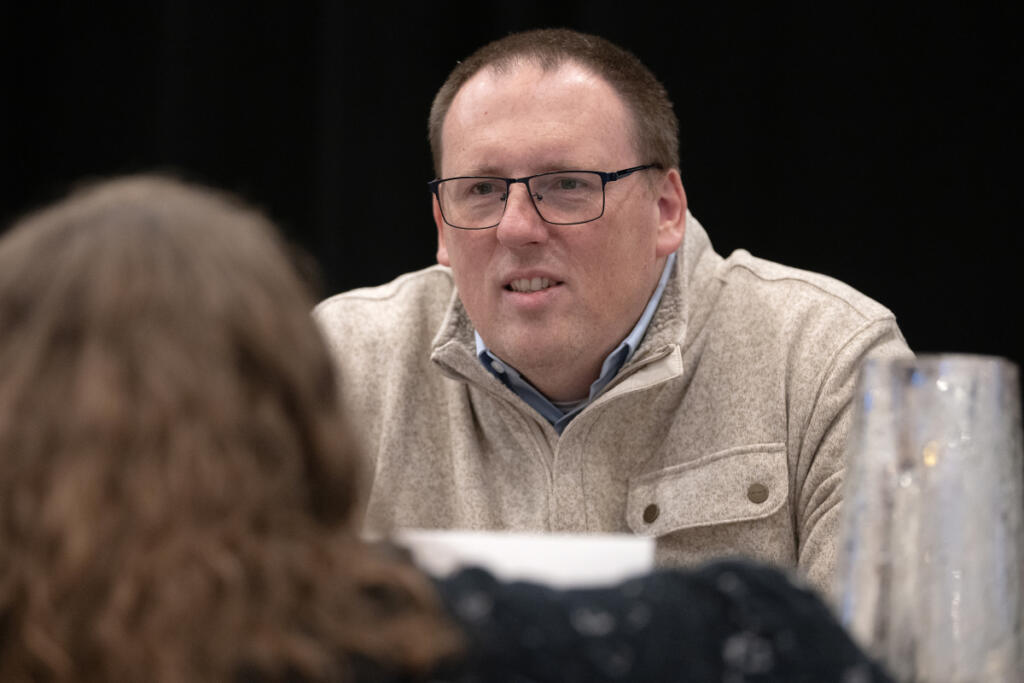
To Waters — who also is the executive director of the Skamania Economic Development Council — timber can no longer be depended on.

“If you ask this — ‘Timber or tourism?’ — we’d pick timber every time, but we’re also realists,” he said.

His father and grandfather worked in timber, but he said it became clear that he would have to find a new path to keep his family in the county. So over the past quarter century or so, Waters and his family increasingly have ventured into tourism and the service industry.

“Our family has multiple revenue streams,” he said. “We own a wedding venue, we own cabins, we own the brewery. … I could go on and on about the things that we have to do as a family to survive.”

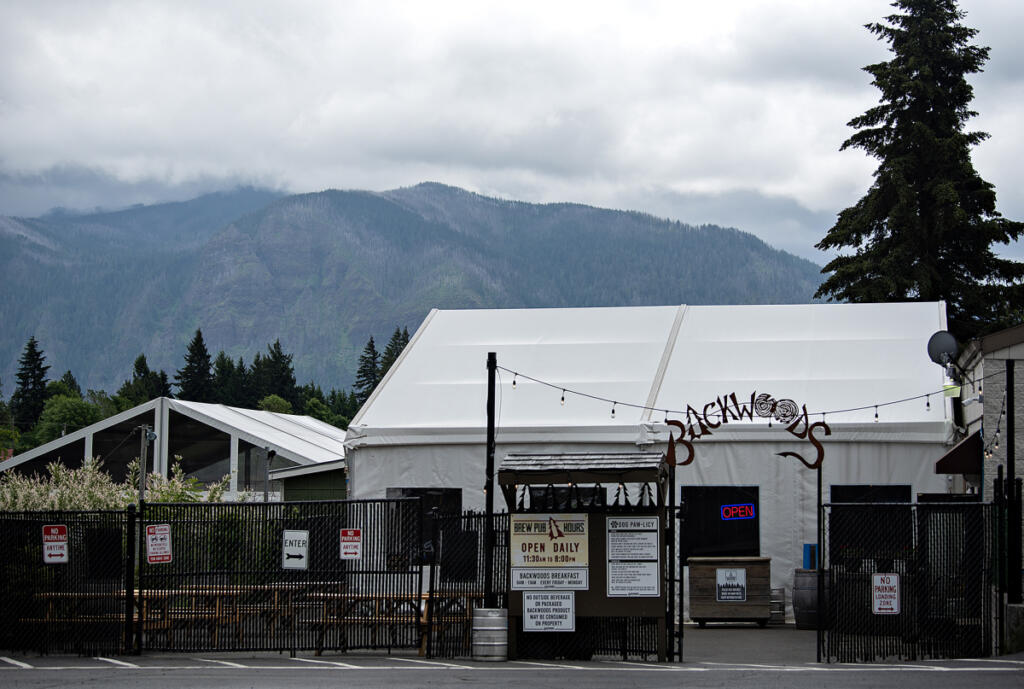
Waters said his family’s restaurant, Backwoods Brewing, isn’t suffering but also isn’t growing. The grocery store is down a bit, he added.

“I lived in Skamania County, and we were in hospitality back in ’08 as a family,” he said, referencing the Great Recession. “It kind of reminds me of ’08, just a little bit.”

But Waters said this is just a natural ebb in a decadeslong trend of tourism increases that he doesn’t see slowing down anytime soon.

“I mean, hell, 20 years ago you could go lay in the middle of the road in Stevenson. And 30 years ago, you could do that in Hood River,” he said. “So, we are still just trying to grapple and figure out tourism as a community.”

A county up a creek

For Leckie, the risk of these dips is that they leave less money to keep the county running and to make key investments that support economic growth.

That means search and rescue teams are stretched thin. And infrastructure needed to support tourism in the future may go unmaintained, leading to still fewer visitors.

“We’ve had an increase in recreational kayaking in some of our watersheds,” Leckie said, “but … the atmospheric rivers back in December have washed some of the access roads out.”

Because the county wasn’t sure when they could be fixed, the yearly Upper Wind White Water Festival had to be canceled. That leaves businesses dependent on those off-season tourism dollars up a creek.

But Waters is broadly hopeful.

“The Gorge as a whole is just going to have to figure out how to live within it, and how to be in front of it, instead of running behind it and trying to catch up to it,” he said. “We’ve got the right people in place. We’ve got more things going now as a county than we ever have, trying to just work together and confront our issues.”