Camas-Washougal logo tag

Clark County OKs 5-year homeless plan

Program focuses on retaining workers, aiding housing, and prevention

By
timestamp icon
category icon Clark County, Government, News

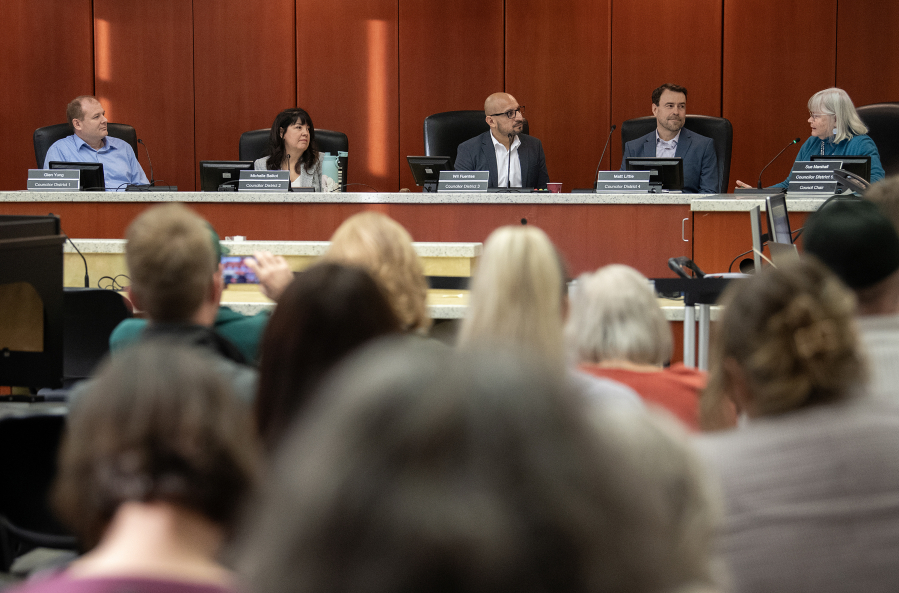
The Clark County Council on Tuesday unanimously approved a new five-year plan for tackling the accelerating homeless crisis.

The Clark County Local Homeless Housing Plan, which runs through 2030, focuses on retaining support workers, removing barriers to housing and preventing further homelessness.

The number of homeless people living outside has more than doubled in the county in the past decade, with 660 people homeless in 2015 and 1,500 this year, according to Council for the Homeless data.

Shelter space and affordable housing remain a challenge. In the Portland metro area, including Clark County, there were only 23 affordable units for every 100 low-income households in 2023, a drop from the previous year’s 25, according to the National Low Income Housing Coalition.

The county’s plan, which is required by the state, calls for increasing wages for workers serving the homeless population and adopting policies that support staff retention. The average tenure for workers in the homeless sector is less than two years, according to a report from the National Alliance to End Homelessness.

The plan also calls for improving transparency and accountability in funding, as well as maintaining real-time data on homeless providers’ progress.

The plan’s section on harm reduction — which refers to reducing the harms caused by drugs as opposed to trying to eliminate substance use — drew criticism from several residents at the meeting.

Ridgefield resident Rob Anderson urged the county to focus instead on a housing model that encourages addiction recovery. Several others pointed to drug use as a cause of homelessness, while still others countered that housing is necessary to help people recover from addiction.

Councilor Glen Yung said homelessness and addiction are complex problems, each requiring different approaches, but communitywide effort is needed for both.

“When you talk about chemical addiction … imagine doing that or trying to recover from any kind of addiction without having a stable, safe environment that you are living in. It’s not going to happen,” Yung said.

Many residents spoke in favor of the proposed five-year homeless action plan, which was shaped by Council for the Homeless, consulting firm ECOnorthwest and county staff, as well as people who have experienced homelessness. The plan falls within the county’s existing budget capacity, according to a staff report.

Martha Maier, a former pastor at St. Andrew Lutheran Church, said when the church would open its annual overnight winter shelter service, she would see children doing their homework in the entryway before they hopped on their school bus. She said there were also people who worked but couldn’t afford housing.

“In a country as rich as ours, it’s hard for me to understand why we don’t have housing for everyone?” Maier said. “I think we can make it happen.”