Camas-Washougal logo tag

Columbia River Witches Collective’s high priestess: ‘This isn’t an aesthetic. … This is my spiritual path.’

By
timestamp icon
category icon Arts & Entertainment, Camas, Life

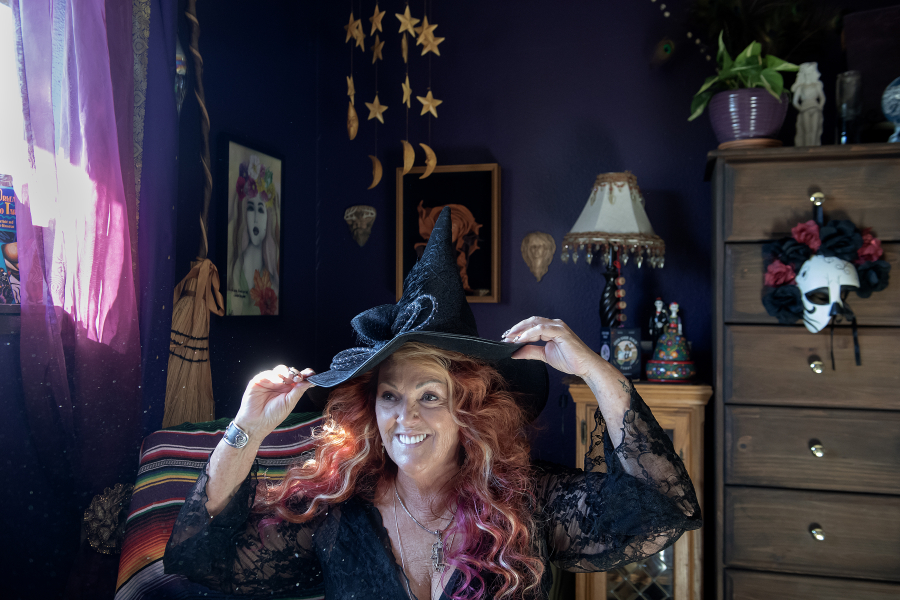
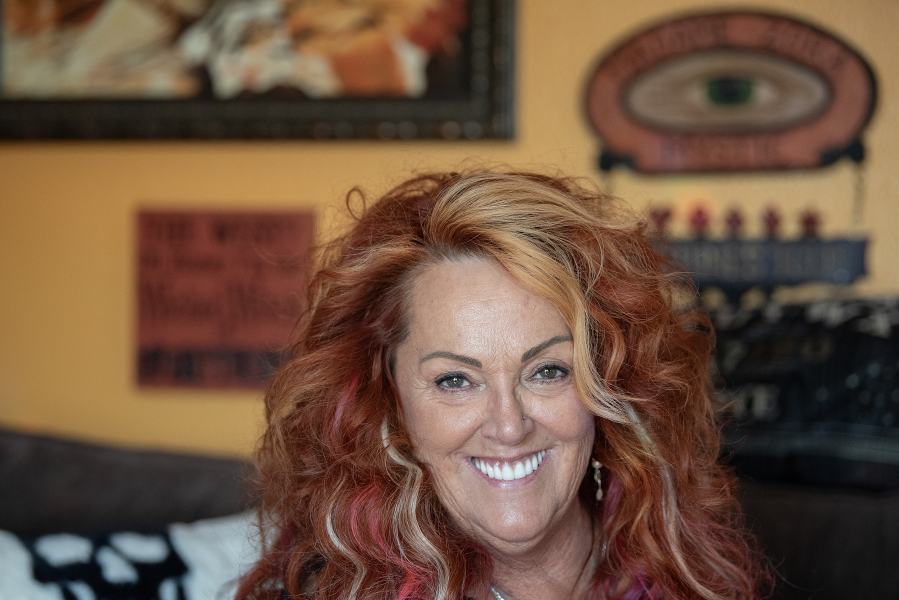
For Camas resident Angel Biederbeck, being a witch isn’t just something she does for Halloween.

“I’m a witch 12 months out of the year,” said Biederbeck, 62. “I am out of the broom closet completely and I have been for decades.”

She is high priestess of the Columbia River Witches Collective, which has 434 followers on Facebook and an inner coven of 13 member witches. She also posts witchy content on TikTok under the moniker “The One Minute Witch.”

Although not widespread, this sort of nature-based spiritual belief finds fertile ground in the Pacific Northwest. In the Portland-Vancouver metro area, 2 percent of adults identify as pagan or Wiccan, compared to less than 1 percent nationwide, according to the Pew Research Center’s 2024 Religion Landscape Study.

“When people say ‘What are you?’ I say ‘I am a witch and I practice witchcraft,’ ” Biederbeck said. “That’s about taking the word back and releasing that ridiculous Hollywood trope. I’m not flying around the neighborhood scaring cats.”

The Columbia River Witches Collective, which includes both men and women, meets to learn spells, rituals, herblore and traditional crafts, Biederbeck said. The witches honor the full moon, the new moon and other sacred days on the pagan calendar. They get together for social occasions, including Renaissance festivals, weekends at the beach and trips to the pumpkin patch, Biederbeck said.

They also do community outreach, just like any spiritual organization, Biederbeck said. The coven just concluded its third annual food drive for the Interfaith Treasure House Food Bank and are planning to participate in Washington’s Adopt-a-Highway program. They host an annual pagan picnic (or “witch-nic”) as well as a New Year’s Eve party. In the future, she said she hopes to host spring and autumn festivals in Camas’ Crown Park for “pagans and normies alike.”

Biederbeck’s goal with The One Minute Witch and as leader of the coven is to share information about the reality of modern witchcraft. It’s not all “Goth girls” and it’s not just about wearing a pointy black hat, Biederbeck said. (She does, however, own several.) The collective’s website and Facebook page are awash with witch imagery but she said she could do without the wicked old witch stereotype.

“Pumpkins, scary cats, vintage Halloween — I love all of that,” Biederbeck said. “The only thing I find kind of offensive is witch hags, all wrinkled up. I do embrace my inner crone but I’m not green nor do I have a wart sticking out.”

Biederbeck, who grew up in Washougal, said she’s always felt a little magical. As a girl, she built altars at Sandy Swimming Hole on the Washougal River, played with candles and believed that birthday wishes had power, she said. At Hathaway Elementary, she read the same four books about witches over and over again — that is, until the librarian wouldn’t let her check them out any more.

“I could see energy. I could see auras. I could understand that animals had their own soul and could relate and communicate with me,” Biederbeck said. “It didn’t seem supernatural to me. It just seemed natural.”

She was raised in a “dysfunctional and alcoholic” Catholic family, she said, and struggled with addiction. She moved away from home at age 13 and endured a rough patch until age 22, when she became sober. She searched for spiritual answers but was turned off by patriarchal religions that perpetuated the abuse she’d already been through, she said. At that time, it was hard to find like-minded seekers or resources to satisfy her curiosity.

“In the early ’80s, there were no witchcraft stores,” Biederbeck said. “If you told somebody you believed in witchcraft, they would have locked you up and put you on medication. You had to find a flyer in the back of the health food store.”

Biederbeck hopes to make it easier for others interested in witchcraft. She hosts a monthly witch school open to anyone covering a range of witchcraft-related topics. She said she teaches a variety of classes about basic witchcraft, the elements, spellcrafting, gods and goddesses and the seasons at the Camas store Vampire Unicorns. (For the less witchy-minded, she also leads make-and-take craft workshops.) She has an impressive 400-volume pagan library, assembled with help from one of her coven members, a retired librarian. Any curious person is welcome check out a book, she said.

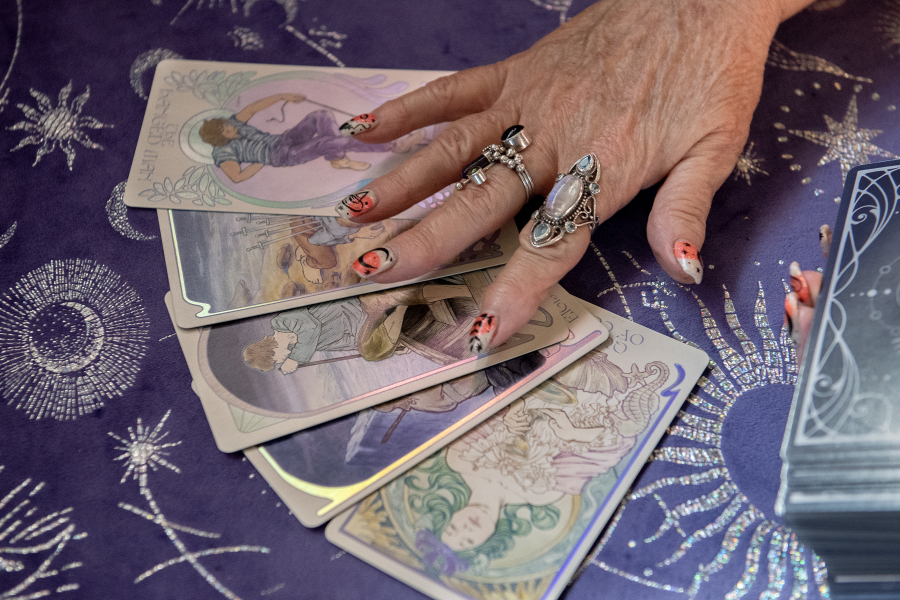
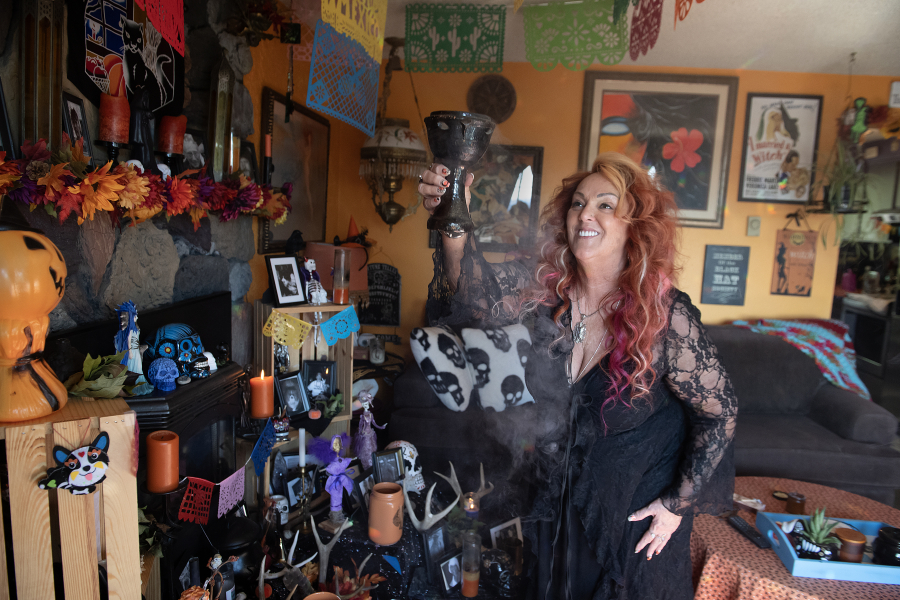
As high priestess of the coven, she presides over gatherings to celebrate the eight sabbats or holy days of the Wheel of the Year, a 20th century pagan calendar adapted from ancient traditions. She also creates healing rituals for women with breast cancer, performs handfastings for couples, welcomes newborns and blesses homes. Biederbeck said she charges a fee to create a spell, do a tarot reading or other types of blessings and rituals for noncoven members.

She will not do curses or hexes. Witchcraft is not evil, she said, but is instead focused on creating balance and deepening connections with nature. She has “never met a witch that believes in the devil or worships Satan,” she said, and she does not personally believe in Satan. Her practice has “Wiccan and pagan DNA and roots,” she said, and draws inspiration from Celtic mythology as well as Greco-Roman gods and goddesses. She’s also influenced by the spiritual practices of the Lakota people of the Great Sioux Nation, with whom she studied for 11 years, she said.

She draws a distinction between people who embrace the witchy aesthetic and those who are devoted to the practice of witchcraft. Anyone can light candles and recite spells, she said, but it’s the knowledge behind the actions that gives it a spiritual dimension.

Witchcraft is a science that requires study, thought, preparation and practice, Biederbeck said. She keeps a record of what she’s learned in volume of magical notes, called a book of shadows or grimoire, which helps her keep track of what works and what doesn’t. And she “110 percent” believes in magic, she said.

“Magic and spellwork is focused meditation where you line up the corresponding energy and project it into the universe at the same time,” Biederbeck said. “It’s no different than saying a prayer. You’re just aligning elemental energies to go with it.”

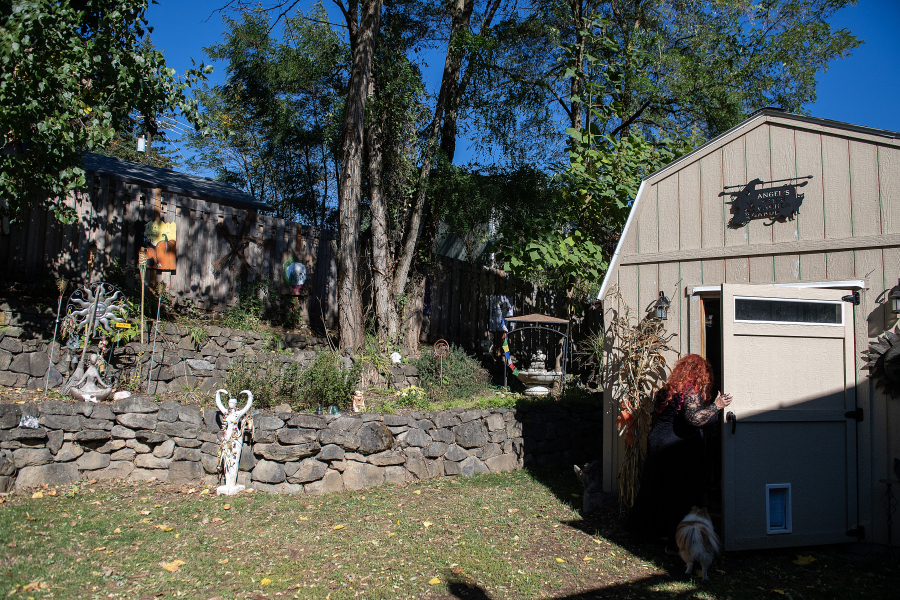
However, even witches have to pay the bills. Biederbeck is the CEO of Wandering Witch Trading Company, an independent sales representative for multiple metaphysical vendors selling everything from sage bundles, crystals and cauldrons to wind chimes, apparel and jewelry. She also has a home hair salon, where she works some practical magic.

Get the latest headlines in your email every week!

This field is for validation purposes and should be left unchanged.

On Oct. 30, Biederbeck will lead a Samhain celebration at Vampire Unicorns. The gathering is more than a Halloween party. It’s part class and part ritual, she said, designed for learning and solemn observance. For Biederbeck and other witches, Samhain is a sacred day to honor loved ones who have passed. It’s also the witches’ New Year, she said, a time to say goodbye to the past and look forward to the future.

She’s acutely aware that most people “have some sort of preconceived idea about the word ‘witch,’ ” she said, and the label “pagan” brings up a mental image of “hugging trees with a candle on your head.” She understands the culture is profoundly ambivalent towards witches and that’s why some in the collective aren’t open about their convictions — but calling herself “witch” is an expression of Biederbeck’s most authentic self, she said.

“This isn’t an aesthetic,” Biederbeck said. “This isn’t a lifestyle choice. It’s not a religion. This is my spiritual path.”