Camas-Washougal logo tag

Maryhill Winery powers up solar array thanks to renewable energy grant

Winery's new 100-kilowatt solar panels in Klickitat County produce enough energy to power 30 homes a year

By
timestamp icon
category icon Business, Environment,

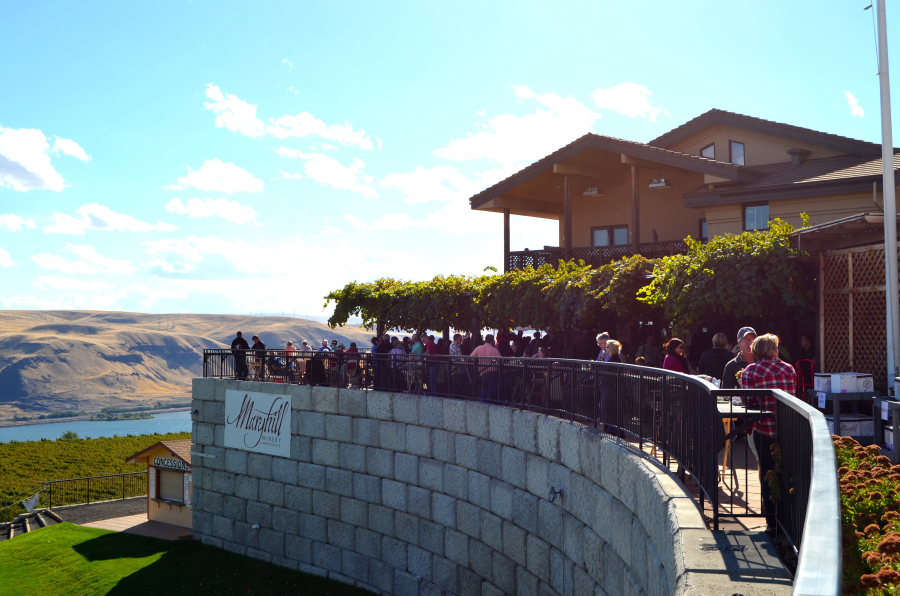
Patrons of Maryhill Winery’s Vancouver waterfront tasting room might be surprised to learn how much energy it takes to produce their favorite pinot noir, Sauvignon blanc or cabernet. Now that energy is coming from the sun rather than from fossil fuels.

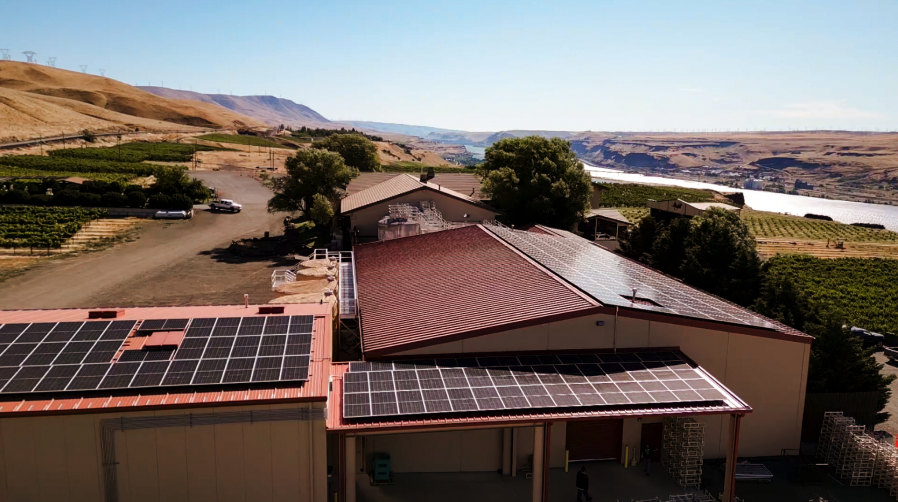
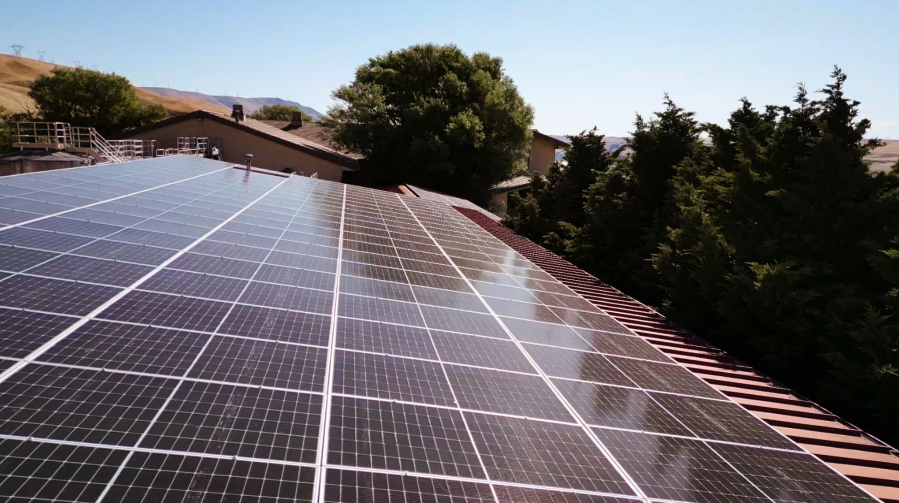
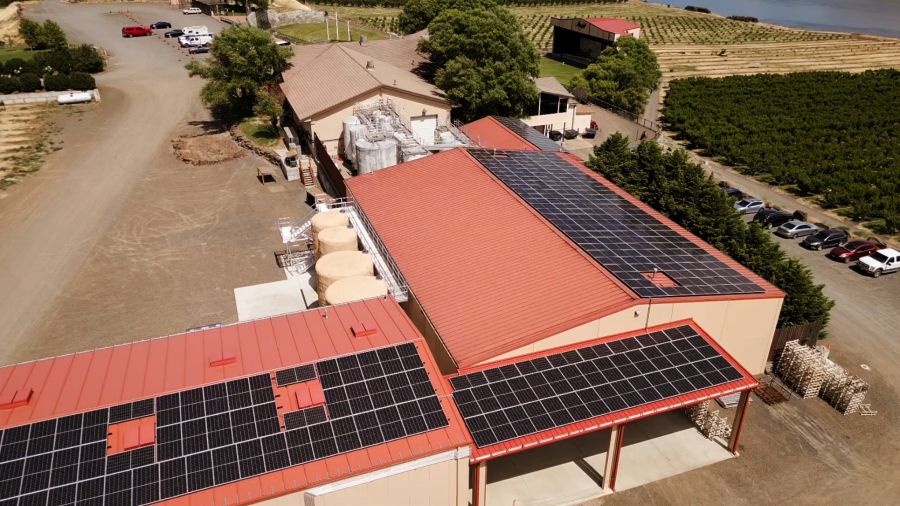
Joining the numerous wind farms that dot Klickitat County’s landscape is Maryhill Winery’s new 100-kilowatt solar array, enough energy to power about 20 households for a year.


While grapes are still harvested by hand, modern wine-making relies less on traditional human-powered skills and more on high-tech innovations that require electricity. These include automated sensors in vineyards to measure soil moisture and vine health, drones to monitor crops, and high-tech machinery in cellars and barrel rooms to monitor and control temperature, fermentation and acidity.

“In our barrel room, we try to keep it at 60 degrees summer and winter, because you want the barrels in a nice humid environment. We have a humidifier in there that keeps it at about 80 percent humidity. The wine in the tanks all has to be chilled, especially the white wines,” owner Craig Leuthold said.

Finding the right spot for the solar array took some planning.

“We have a tile roof on the primary winery building and you can’t put solar on there because there’s no way to attach it to the roof. And we have an existing barrel building that had a metal roof on it, but it didn’t have enough square footage to accommodate a 100-kilowatt solar project,” Leuthold said.

When Leuthold decided to build a new barrel building to house a specific type of fermentation process, he decided to add the solar array to the roof.

“We started this project, I’m guessing, almost five years ago in terms of the planning process and whatnot,” Leuthold said.

The new barrel building was completed last fall, but construction on the solar array didn’t begin until January.

“They started the solar project at the beginning of this year, and it went live just about the middle of April,” Leuthold said. “With the available grants and the tax incentives, it made financial sense for us. And we’ve always been proponents of sustainability. My wife and I started recycling 45 years ago, before it was mandated, before it was even popular.”

Leuthold said the winery aims to be environmentally friendly. For example, the winery uses sustainably grown natural cork to seal its wine bottles.

“We are really committed to that. We recycle all our cardboard at the winery; we put it into big bales and then deliver it to a recycling plant down in Portland. We do the same thing with our pallets that don’t become usable,” Leuthold said.

With energy costs unlikely to go down, Leuthold said adding solar power to the winery will eventually pay for itself, even if the solar array can’t meet all of the winery’s energy needs year-round.

Through a net metering contract with Klickitat Public Utility District, power produced by the solar array is tracked by the utility, then deducted from the winery’s utility bill. During the sunnier summer months, Leuthold said the array sometimes produces more power than the winery consumes.

A renewable energy grant through the U.S. Department of Agriculture’s Rural Energy for America Program paid for about half of the $325,000 cost for the solar array. With other tax incentives, the winery ended up paying about 20 percent of that cost, Leuthold said.

“That’s approximately a three-year payback,” he said.

As for the common myth that solar projects can’t produce enough energy in the Pacific Northwest to make them worthwhile, Leuthold said that may be true west of the Cascades, but east of the mountains, it’s a different story.

“We get a lot more sunshine. … We haven’t been through a winter yet, but solar panels have become more and more and more efficient. In the three years from when we started the project until it was actually installed, solar efficiency had improved 30 percent,” he said. “I would imagine by the time this solar array gets to the end of its lifespan, which they say is about 20 years, the technology will have changed so much, it’ll probably be twice as efficient as it is now.”

Shari Phiel: [email protected]; 360-562-6317; @Shari_Phiel

About the project: Community Funded Journalism is a project from The Columbian and the Local Media Foundation that is funded by community member donations including The Cowlitz Tribal Foundation. The Columbian maintains editorial control over all content. For more information, visit columbian.com/cfj.