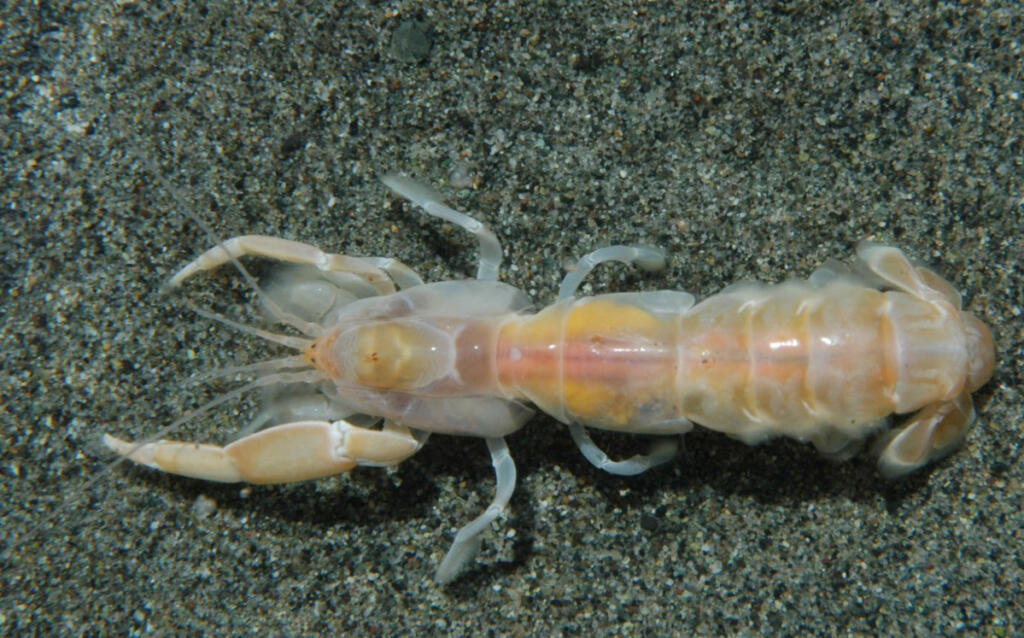
New research from a University of Washington scientist could give oyster farmers in Willapa Bay a fighting chance at battling burrowing ghost shrimp, little crustaceans that cause big problems. Biology professor Jennifer Ruesink published her findings last week.
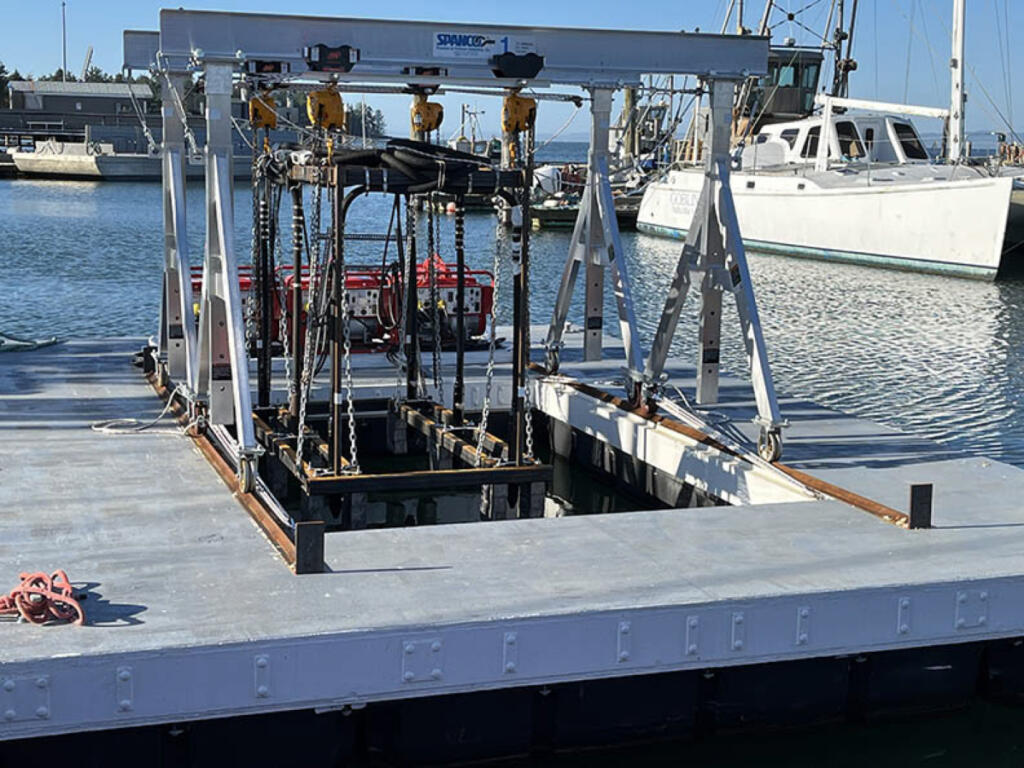
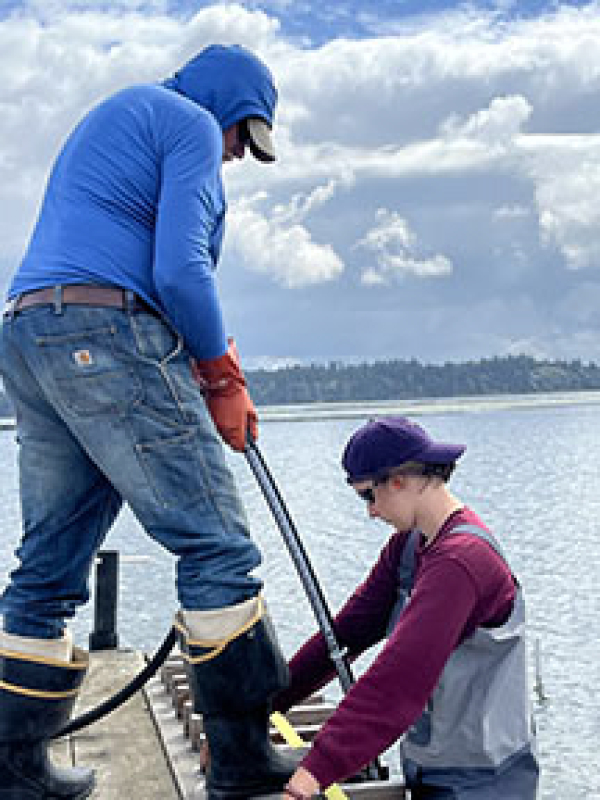
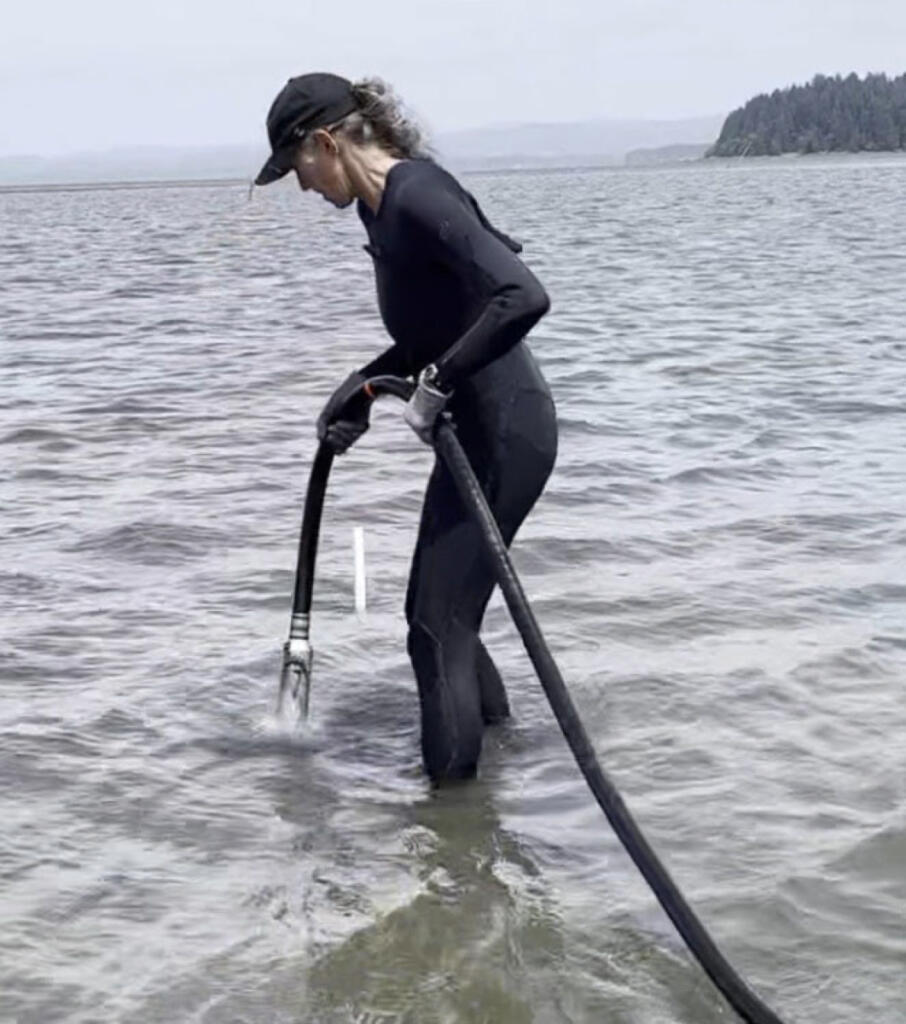
Since 2023, Ruesink has been using a combination of subsurface vibration and surface pressure in designated areas in the Willapa Bay tidal flats to reduce burrowing ghost shrimp numbers.
“We realized we’re not chasing them away. We’re not vibrating them to death. What we’re doing is trapping them,” Ruesink said. “We have turned what was an adaptive value for them into a vulnerability.”
As ghost shrimp burrow they loosen the sediment, turning what was firm sand into soft mud. Oysters living in these sandy areas sink into the mud and suffocate. The proliferation of ghost shrimp has been devastating for oyster farms.
“I’ve lost a huge portion of my farm. Our carrying capacity for harvest-ready oysters used to be 235,000 bushels. My current carrying capacity is 75,000 bushels and that is 100 percent due to burrowing shrimp,” said Ken Wiegardt, a fifth-generation oyster farmer and head of Jolly Roger Oysters in Ocean Park.