Camas-Washougal logo tag

Spring Chinook salmon season ramping up on Columbia River

Warmer water temperatures are helping the bite

By
timestamp icon
category icon Clark County, Outdoors, Sports

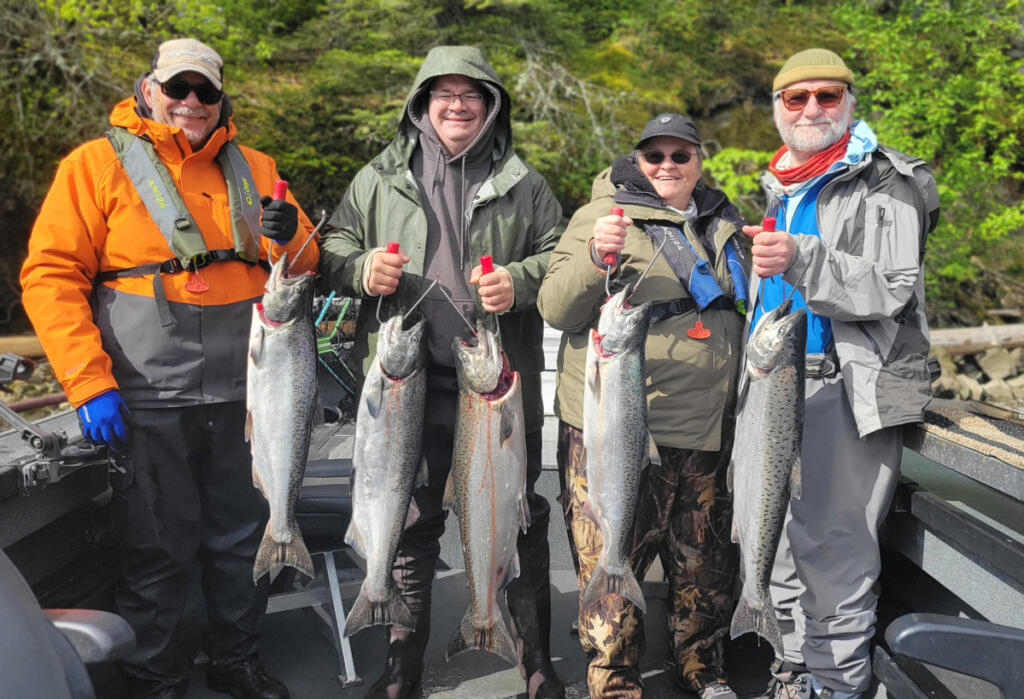
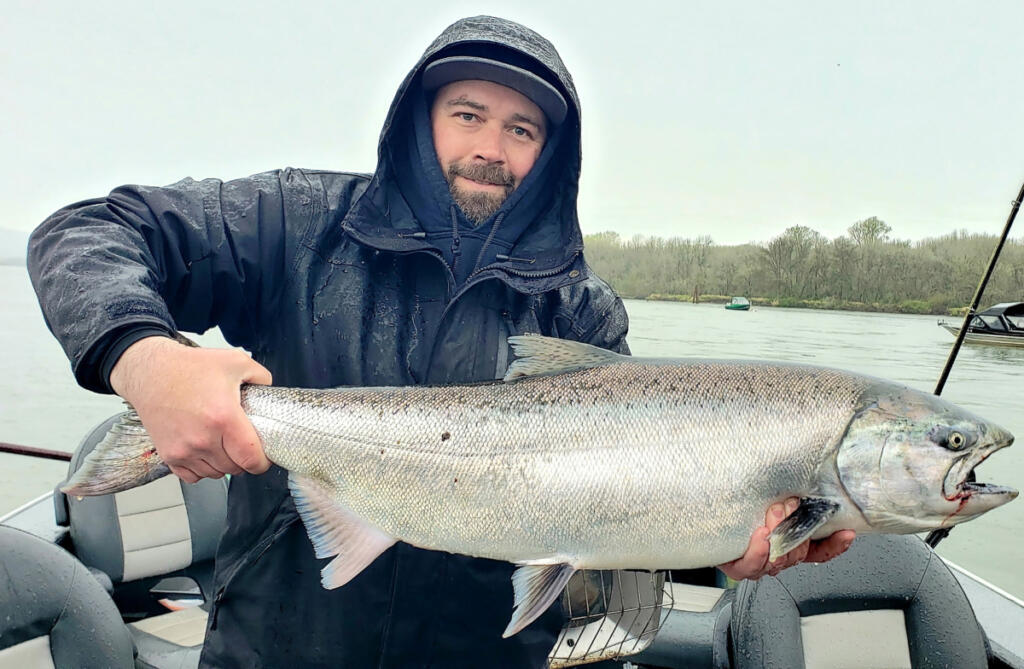
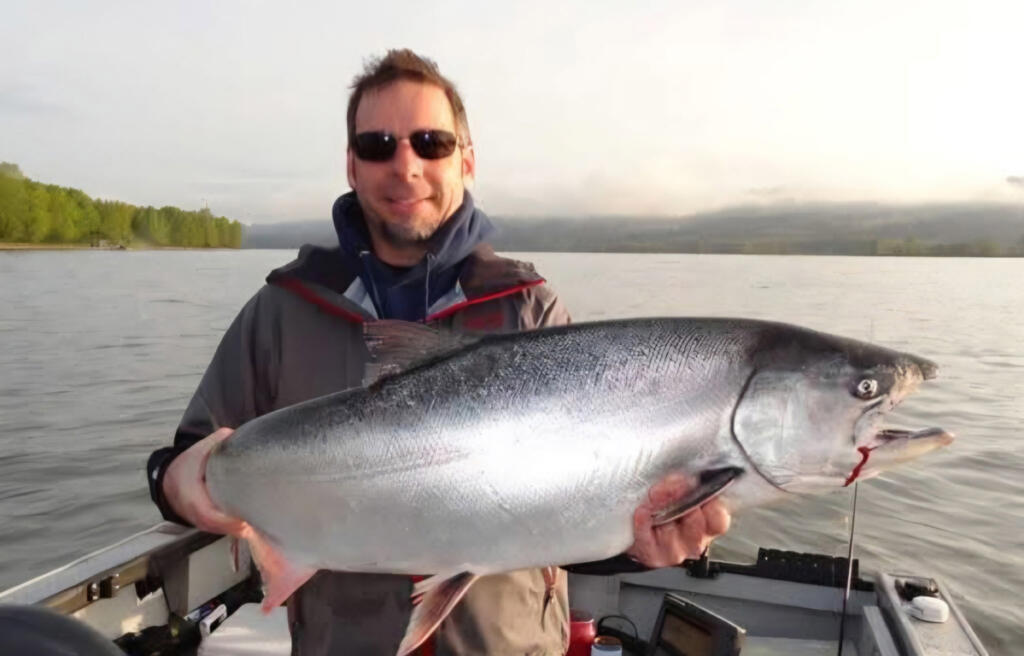
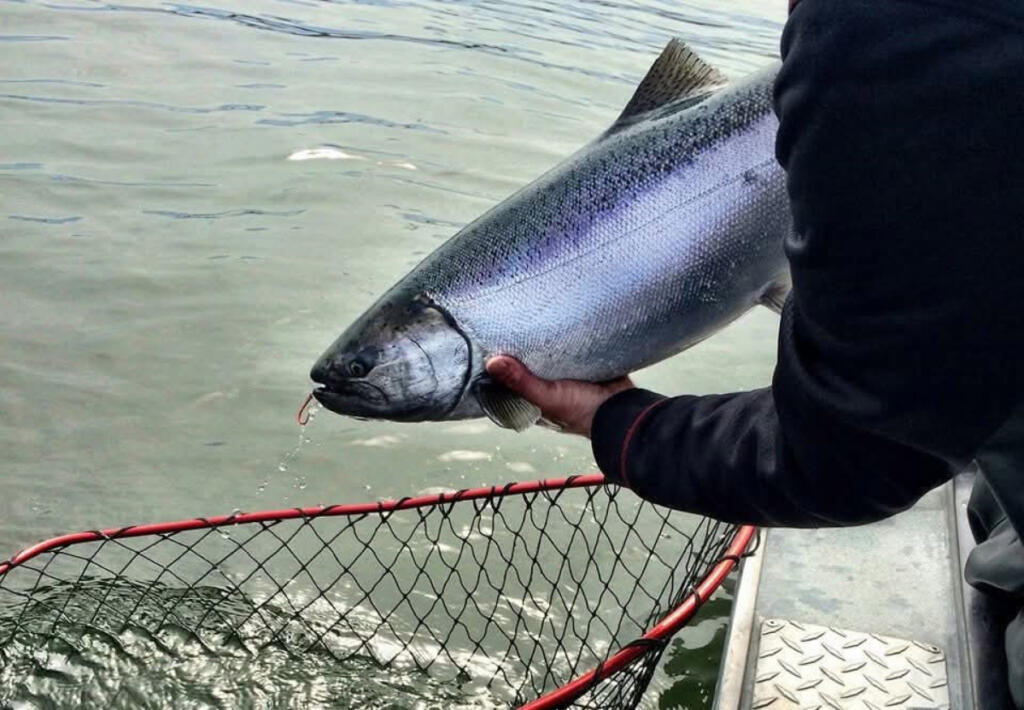
Spring chinook fishing on the Columbia River is set to end after April 8, and although the fishery got off to a slow start, river conditions are favorable, and catches are beginning to improve.

In an email, Quinten Daugherty, a fish biologist for the Washington Department of Fish and Wildlife Region 5, reported the slow start is typical.

“Spring chinook catch starts off slow in February and March, and ramps up very quickly as the fishery moves into April, assuming average river conditions and weather patterns,” he said.

River conditions this year are much better than last year, when the river ran high and dirty for much of the season. This year the river is fairly clear, and is warmer than usual.

“The temperatures are warmer than normal, and are about 45 degrees,” said fishing guide Casey Kelly of NW Columbia Fishing Adventures. “Usually, we are running around 38 to 40 degrees. It definitely helps the bite, and gets the fish to push their noses into the current and move on up.

“The warmer temperatures kind of decide everything,” he added, “How they move, and how they bite.”

He did add that the run seems to be showing up later in recent years.

“This run is beginning later, and later, and later,” Kelly said.

The river conditions do make a difference, according to the data. Lower Columbia River spring chinook catch rates this season through March 22 have been tracking roughly double those observed in 2025 through the same time-period (February-March 22).

Kelly is set to begin fishing the Columbia, and he said he will fish it every day until the season ends. He is a little worried that with the favorable conditions, catches could climb to the point that the quotas could be exceeded.

“I will be out there every day that last week, if it goes that long,” he said. “I have a sneaking suspicion that things are going to ramp up really quick.”

Anglers seek the difficult-to-catch spring chinook for its fine fighting ability, and its exceptional value on the table.

Kelly has heard reports that indicate the catches are, in fact, climbing.

According to Daugherty, the effort and catch are expected to increase substantially over the remainder of the initial pre-update period through April 8. Although, catch and effort are tracking similar to expectations at this point in time.

So far, catches seem best in the lower river, but as the final week approaches, anglers may begin to see the schools moving up below Bonneville Dam. Anglers typically start to find the fish on the flats from Troutdale up to the dam during the first week of April.

Kelly said many anglers look for dam counts to climb before fishing the flats further up, but he said the salmon usually hang out below Bonneville and wait a while before they cross.

“The dam counts are not always of the root of what is going on in the lower river,” he said. “They kind of chill out there and get their bearings and then go over the dam and work their way up.”

Kelly tends to stay lower on the river, preferring areas around Portland and below.

“Where I fish is where I can fish,” he said. “All the areas are pretty good, but if we have certain wind directions, that will tell me where to go.

“If we have a heavy north or south wind, I concentrate on Caterpillar Island, and Davis Bar. If there is a bit of a heavy east or west wind, I will look to the Kalama and Longview areas. I fish the conditions instead of the fish.”

He said being able to control your boat is of the utmost importance, because if the boat is swinging back and forth in the wind, that pulls your bait off the bottom as you troll. It does not matter if the schools are in a particular spot if conditions make it too difficult to fish it. He said getting that gear to fish correctly is the key to success.

However, like most anglers, he does have a favorite area to fish.

“If I have a choice of anywhere, I prefer Woodland to Longview,” Kelly said. “If the water is higher, I will fish by I-5, and get up in those flats up there, but I don’t think we are looking at high water this year.”

Although many anglers will anchor on the ebb tide and fish stationary baits, Kelly prefers to troll herring on the bottom.

“I am a herring guy, through and through,” he said. “I love real bait, and I try to find the best bait I can get; good scales, perfect size, the correct freshness.”

He trolls the baits behind a triangle flasher.

He did indicate that he is going to try the plastic cut-plug lures this year, even though he is not quite sold on them yet. Those lures, such as the Yakima Bait Spinfish, have become extremely popular.

“I am going to try the plastics more this year,” he said. “I will try them on a couple rods and see if I can get those working so I don’t have to buy so much herring.”

When the Columbia closes, he will look to the Willamette River, and eventually move up to the Wind River. He reports that the crowded Drano Lake experience is not one that he enjoys.

Still, for many anglers fishing the Columbia River for spring chinook is a high point in their fishing season.

Daugherty said it is too early to reliably project potential extensions, as the fishery is only about 5 percent complete based on current accrued recreational mortalities.

He also stated that before offering additional pre-update opportunity, fishery managers will need to know how many upriver-origin spring chinook mortalities have already been accounted for.

Given the current Lower Columbia River season end date of April 8, and depending on joint-state data processing, catch estimation timing, and the remaining pre-update balance, potential extensions would likely be developed and implemented the following week.

The official upriver-origin spring chinook run-size update typically occurs mid-May.

Before fishing, anglers should always check the WDFW Emergency Regulations to ensure the season is still open. It could close at anytime if catches exceed allowable mortalities.

Check the emergency regulations online at https://wdfw.wa.gov/fishing/regulations/emergency-rules