Camas-Washougal logo tag

‘Take the treatment to the people’: Health officials in Clark County strive to address hepatitis C in those who are homeless

Liver infection found in 44% of homeless population in U.S.

By
timestamp icon
category icon Clark County, Health, News

Hepatitis C has a cure. Yet for some Clark County residents, homelessness can stand in the way.

Homeless people are significantly more susceptible to contracting hepatitis C, a viral infection that causes liver damage. Infection with the disease can be found in up to 44 percent of the U.S. homeless population compared with about 2 percent of the general population, according to the National Institutes of Health.


The World Health Organization has set out to eliminate hepatitis as a public health threat by 2030. Tony Stupski, clinical director with Sea Mar Community Health Centers, said that to eliminate the disease in Clark County, providers have started bringing resources to the streets.

“If we really are trying to eliminate the disease in our community, we’re going to have to take the treatment to the people rather than expect them to come to the clinic,” Stupski said.

Barriers

In early August at Open House Ministries’ annual resource fair, the Washington State Health Care Authority mobile unit HCV-ElimiNATION set up shop to test attendees for hepatitis C and teach them more about treatment and prevention.

This was just one way to bring the resource to the people, Stupski said.

Lorraine Olson, who lives in a nearby homeless camp, decided to stop by and get tested because “why not?” The disease impacts people all around her.

Hepatitis C spreads when blood from an infected person is shared with someone who is not infected. The most common way people contract the virus is through sharing needles for substance use or unsterilized tattoo equipment, Stupski said.

Hepatitis C has a cure and has decreased in recent years, according to the Centers for Disease Control and Prevention.

Yet, for people experiencing homelessness, getting diagnosed and treated presents challenges.

Transportation, lack of a permanent address, difficulty enrolling in insurance or Medicaid, and having nowhere secure to store medication can all become barriers to completing treatment, Stupski said.

“It’s a two-month course of treatment for treating hepatitis C, but places to store can be a barrier,” he said. “It can also be lost or stolen.”

One man living in the homeless encampment near the Share House Men’s Shelter said that he has hepatitis C but hasn’t done anything to treat it because he has other things to worry about each day. Access to healthcare is also a huge issue, he said.

Stupski said screening for the virus begins with an antibody test, followed by a confirmatory test that determines whether the virus is currently present.

He said that distinction is important because about 20 percent of people exposed to hepatitis C clear the virus on their own without treatment.

However, people who have been successfully treated can also become infected again. At the same time, their antibody test will remain positive for life, so a confirmatory test is necessary to determine whether they currently have the virus. The two tests can present another set of barriers for homeless people, he said.

A national study found that people with unstable housing are 40 percent less likely to initiate treatment for the infection than people with stable housing.

Hepatitis C can be difficult to detect because most people have no symptoms.

When symptoms do occur, they can be as nonspecific as fatigue, Stupski said. For homeless residents, fatigue is a normal part of survival.

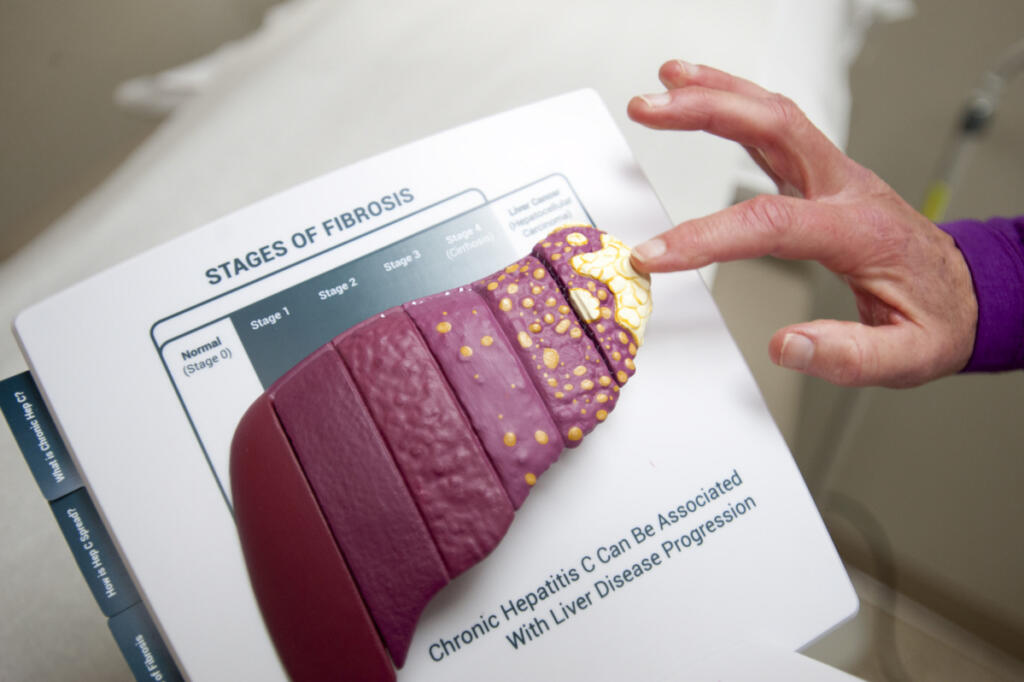
But left untreated, the infection can cause more severe symptoms, including abdominal fluid buildup, gastrointestinal bleeding and confusion — these generally occurring only after the disease has progressed to advanced liver damage such as cirrhosis, Stupski said.

Without treatment, hepatitis C can take decades to cause cirrhosis, although other liver conditions, and heavy alcohol use can accelerate the progression, Stupski said.

For Stupski, bringing testing and treatment directly to people experiencing homelessness is part of addressing those barriers. Instead of relying on people to navigate the healthcare system on their own, providers can meet them where they are and help connect them with treatment.

“It’s curable — that’s the message I would want everyone in the community to know,” Stupski said.