Camas-Washougal logo tag

Coast Guard OKs fixed-span, 116-foot-high I-5 Bridge replacement

Coast Guard has approved the IBR's preferred fixed-span bridge design.

By
timestamp icon
category icon News

The U.S. Coast Guard has approved a major piece of the Interstate 5 Bridge replacement plan, agreeing to a fixed-span bridge instead of a drawbridge.

On Friday, U.S. Sen. Maria Cantwell’s office said in a news release that Adm. Kevin E. Lunday, the commandant of the Coast Guard, has signed off on the 116-foot-high, fixed-span bridge design preferred by the Interstate Bridge Replacement Program planners.


The decision is a “major step forward toward finally completing the U.S. Department of Transportation’s environmental review and enabling construction to start later this year,” Cantwell said in the news release.

“This approval means the Coast Guard determined the new bridge doesn’t need to have a lift, which will eliminate the only stoplight on Interstate 5, put an end to commute interruptions and save millions in construction costs,” Cantwell said. “The vast majority of the maritime community agrees that the new bridge design will not only allow river commerce to continue but also improve safe passage down the river.”

The Coast Guard said in 2022 that it would require the replacement bridge spanning the Columbia River between north Portland and downtown Vancouver to be 178 feet high. Under U.S. law, the Coast Guard can regulate how and where bridges are built across navigable waters, such as the Columbia River.

Bridge replacement program leaders preferred a 116-foot, fixed-span bridge that would avoid the traffic-clogging drawbridge lifts and still meet the needs of most river users.

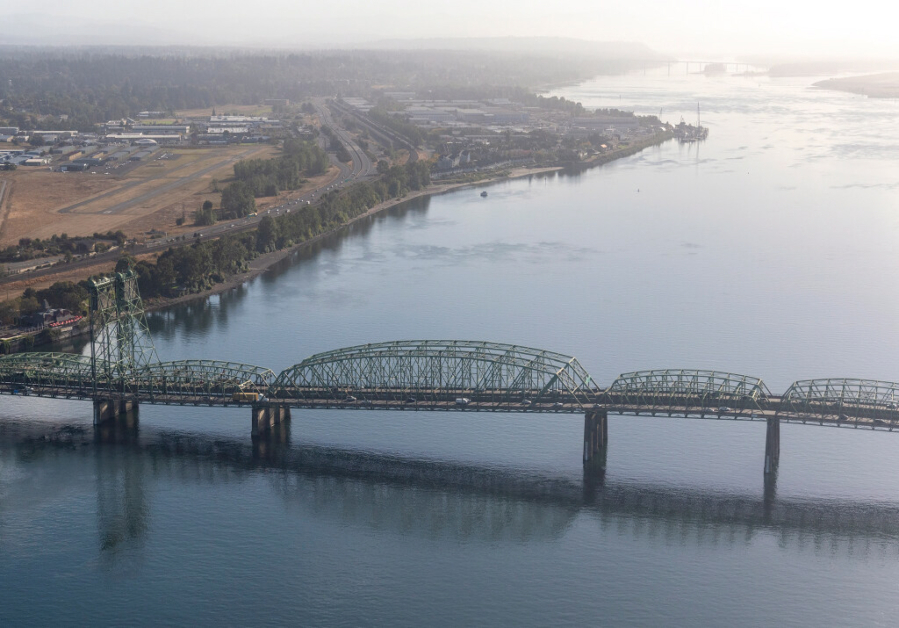
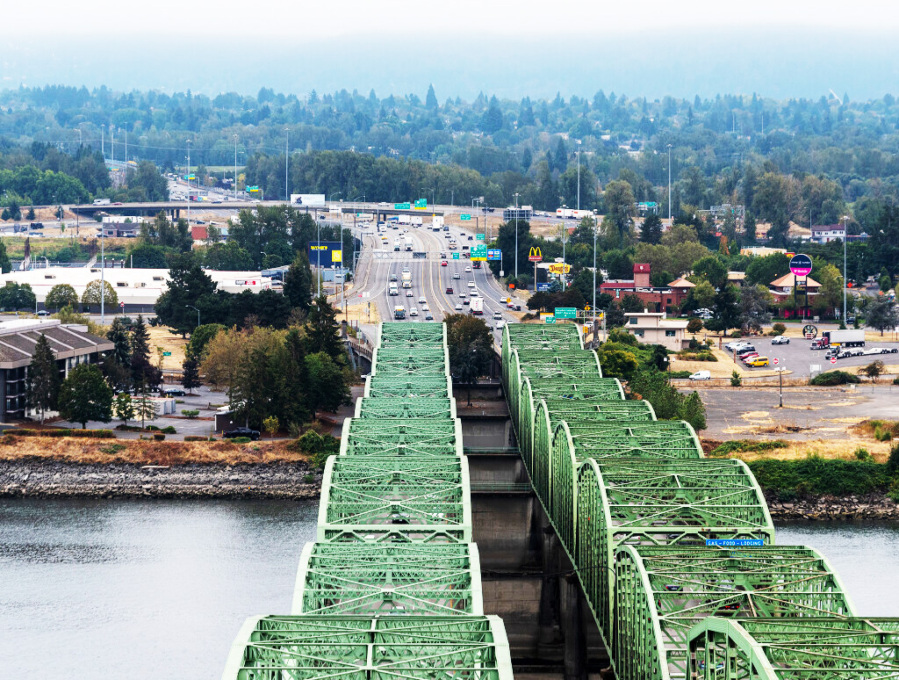
As Cantwell pointed out in the news release, the current drawbridge lifts an average of 250 times a year, stopping traffic for an average of 15 to 20 minutes each time.

Some years, there are as many as 480 bridge lifts, Cantwell pointed out, “backing up traffic on an already congested corridor.”

“This is the right decision for our economy, and for commuters who use this bridge every day,” Gov. Bob Ferguson said in a Friday statement. “I appreciated meeting with Coast Guard leadership to present our case in person. I look forward to continuing our progress to replace this 108-year-old bridge.”

U.S. Sen. Patty Murray, D-Wash., also lauded the decision.

“Keeping the I-5 Bridge replacement moving forward is how we keep all of Washington state moving forward,” Murray said in a statement Friday. “This next milestone reflects the years of hard work our region has done to address navigational needs and ensure the bridge works for everybody, especially Southwest Washington.”

Get the latest headlines in your email every week!

This field is for validation purposes and should be left unchanged.

In November, the bridge replacement program announced it had reached agreements worth $140 million with four river users that could be impacted by the lower bridge height.

In October, former bridge replacement program Director Greg Johnson wrote a letter to Coast Guard Lt. Cmdr. Brendan Harris explaining the program’s preference for a fixed rather than movable span.

“A 116-foot (span) is the highest clearance that … meets both river and land navigation needs while allowing reasonable landside connections; results in a safe gradient to highway traffic; reduces intrusion into protected airspace; and avoids the significant initial and ongoing investment of public money for a movable span that would serve the interests of a few river users,” Johnson wrote.

Comment period closes

The Coast Guard closed its comment period on the proposed bridge height Jan. 11.

Ferguson’s communications director said Thursday that the dozens of comments submitted to the Coast Guard showed widespread support for the 116-foot, fixed-span bridge.

Among those recommending the federal agency approved the fixed-span design were the Pacific Northwest Waterways Association, a trade association representing more than 150 members, including ports, barge companies, steamship operators and maritime labor unions.

“It is critical to our region, state and nation to replace the Interstate 5 Bridge as soon as possible,” the association said in its comment to the Coast Guard. “The impacts of congestion, due in part to the existing moveable span, cause frequent delay, leading to real and exponentially more costly impact (to) our regional economic viability.”

Other fixed-span supporters included the city of Vancouver, the Port of Vancouver, Vancouver trucking and manufacturing companies, riverfront industrial park owner Killian Pacific, Portland- and Vancouver-based marine construction companies, and all of the companies that reached agreement with the bridge replacement program in 2025.

In her letter on behalf of the city of Vancouver, Mayor Anne McEnerny-Ogle told the Coast Guard there is “strong regional consensus and community support” for the fixed-span design.

“I-5 is the primary freight route through the region, with approximately $133 million in commodity value and 70,000 commuters traversing the bridge for employment daily,” McEnerny-Ogle said in her letter. “The proposed fixed-span configuration would remove the only stoplight on I-5 between Canada and Mexico. This would reduce traffic delays and help maintain the free flow of freight to the region’s ports — the best way to support maritime commerce.”

Mike Bomar, the Port of Vancouver’s chief economic strategy officer, agreed.

In his letter to the Coast Guard on behalf of the port, Bomar said the fixed-span bridge design would meet the port’s navigation needs.

“To remain globally competitive, the port supports a bridge configuration in the final design that provides a safe and predictable travel for freight, while meeting the navigation requirements of the port’s river partners,” Bomar wrote. “The port’s position remains that the fixed span options … meet those needs.”

Ley ‘very opposed’

Of the dozens of comments submitted to the Coast Guard, two were against the fixed-span option.

One of those comments came from Republican state Rep. John Ley, who represents Southwest Washington’s 18th Legislative District.

In his letter to the Coast Guard, Ley said he is “very much opposed to the current proposal offering 116 feet of clearance” and urged the Coast Guard to stick to its previous 178-foot bridge clearance requirement.

The other letter opposing the fixed-span bridge design came from a group called Neighbors for a Better Crossing that said it represents “residents, small businesses, floating-home communities, river-dependent users and stakeholders across both sides of the bridge.”

“IBR has offered no new maritime data, no new vessel-height analysis, and no industry justification to override this determination,” the group noted in its letter. “We urge the Coast Guard to uphold its mandate to protect navigation — now and in the future.”

‘No option for not replacing’

Though the program has not released its final cost estimate for the replacement bridge, documents show a fixed-span bridge will cost significantly less than another movable span.

According to Cantwell’s office, building a movable bridge would likely cost at least $400 million more.

U.S. Rep. Marie Gluesenkamp Perez, D-Skamania, also weighed in on the bridge. Both Perez and Cantwell have helped secure $2.1 billion in federal funding for the replacement bridge.

On Thursday, Perez sent a letter to Rear Adm. Arex Avanni, commander of the Coast Guard’s Northwest District, asking him to approve the fixed-span bridge.

Perez’s office noted that it could cost more than $1 billion to build a movable bridge.

“There is no option for not replacing the I-5 Bridge,” Perez said in her letter to the Coast Guard. “This bridge connects tens of thousands of people to jobs throughout Southwest Washington and the Portland, Oregon metropolitan area, and is an essential interstate link for regional, national, and international economies.

“But the bridge is built on wood piles in sandy soil, which means that, as it stands, the bridge is at risk for collapse in the event of a major earthquake, which would devastate our economy and region,” Perez said. “A fixed-span bridge with 116 feet of vertical clearance would provide safe and reliable navigation for our river users while avoiding significant additional costs or construction time associated with a movable span.”

Kelly Moyer: 360-735-4674; [email protected]