Camas-Washougal logo tag

Harvest of area state forests to continue

Upthegrove: Laws will be followed despite pushback

By
timestamp icon
category icon Environment,

State forest lands in Clark County scheduled for harvest will remain on the auction block for now, despite pushback from residents, environmental groups and the county council, according to Public Lands Commissioner Dave Upthegrove.

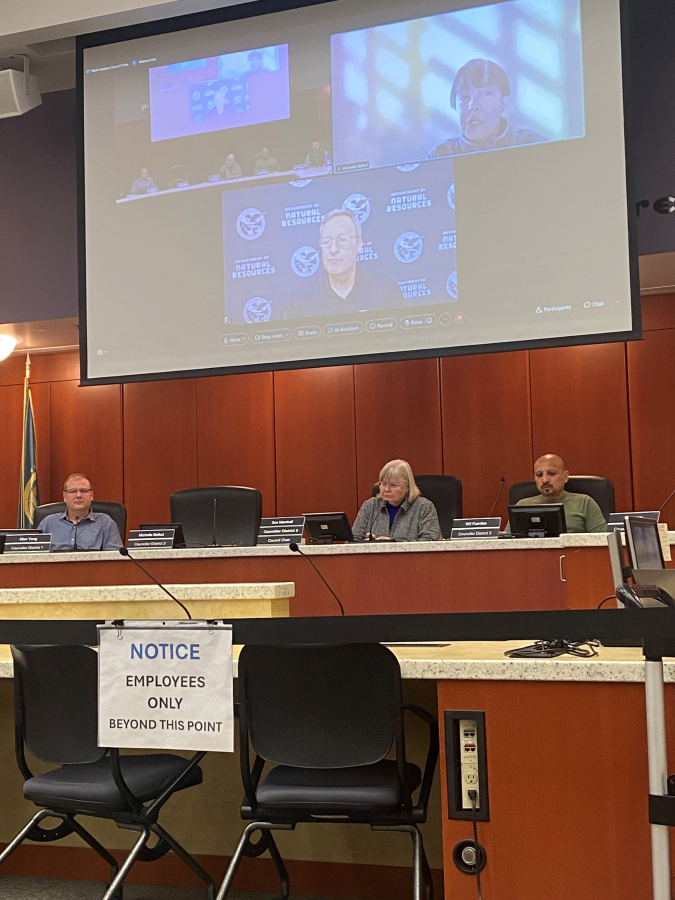
Upthegrove joined the Clark County Council via teleconference on Jan. 21 for a work session on forest trust lands. He said state constitutional requirements that trust lands generate revenue, state law, federal agreements and budget constraints make it impossible to halt timber harvests.


“Where this landscape-level system change will be taking place is in the Board of Natural Resources and through the Legislature. The biggest opportunity to chart the future for forestry is … our sustainable harvest calculation process. It’s kind of a mouthful, but we’re required by state law to set harvest targets by each trust, each area, following a pretty robust process,” Upthegrove said. “What assumptions we build into the sustainable harvest calculations … are going to be critical.”

Along with decisions on how to meet the state’s financial and legal obligations, he said, other considerations — such as which forests to harvest, when to harvest and what policy changes are needed — will all have to be considered by the board.

The state Supreme Court acknowledged that the Department of Natural Resources has a responsibility not just to the trust but also to the public when measuring benefits from trust lands, and those benefits aren’t limited to just revenue, Upthegrove said.

Councilor Matt Little said the council’s concerns about the kinds of harvesting methods to be used on specific parcels had little impact or response from DNR.

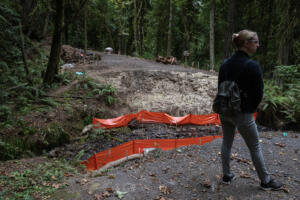
“What happened were basically clear-cuts directly adjacent to older growth forests that are owl habitat,” Little said of the harvested areas.

Little said DNR can choose other harvest methods besides clear-cutting, ones that leave more trees in place to provide habitat for wildlife and better protect the environment.

Upthegrove said he would like to move away from variable retention harvests, which resemble clear-cutting but leave a set number of trees per acre in place, but that will require policy and legislative changes. He also said variable retention harvesting generates more revenue, while more selective thinning methods would require additional lands be harvested to make up for lost revenue.

“I am concerned about the pace at which we have harvested those structurally complex older forests,” Upthegrove said.

Get the latest headlines in your email every week!

This field is for validation purposes and should be left unchanged.

He said the state’s habitat-conservation plan — the agreement with the federal government for how the state will comply with the Environmental Species Act — calls for 10 percent to 15 percent of its forest lands to be categorized as structurally complex, with diverse tree ages, sizes and species.

“That’s going to be in 70 years. I want to get us there faster,” Upthegrove said.

He said he wants to create a strong, healthy wood-products industry that can sustain future generations. That will require trust lands that also are ecologically sustainable.

“At any point in time across the landscape, we should have a mix of younger forests, medium-aged forests, older forests. We should be managing in a way that maintains that biodiversity,” Upthegrove said.

Councilor Glen Yung said prior county councilors may have been less interested in how trust lands are selected for harvest, how harvest methods are chosen and other parts of the program, but things are different now.

“It’s been at least a decade since Clark County has really been interested in this process at all,” Yung said. “We have a council that is very much engaged in this process and would really like to have as much input … as possible.”