Camas-Washougal logo tag

Clark County Council selects 20-year land-use map

Plan allows expansion of boundaries

By
timestamp icon
category icon Clark County, Government, News

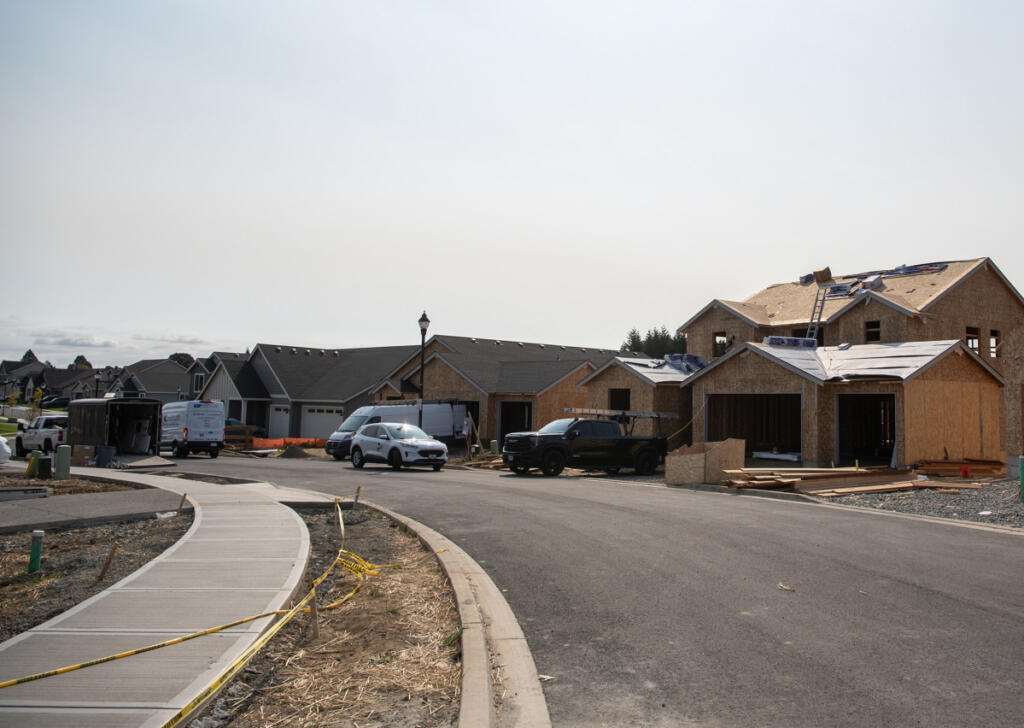
Clark County’s updated growth plan will let Ridgefield, La Center, Camas and other cities expand their urban growth boundaries and explore ways to rezone land currently designated for agricultural use.

That decision came earlier this month, when the Clark County Council voted 3-2 to select one of three proposed land-use maps to guide the next 20 years of growth.

The proposed map already had been endorsed by the planning commission, so Councilor Matt Little urged the council to just adopt that recommendation.

“It’s not a final decision. It’s a decision that will provide more analysis so we can make a future decision,” he said.

The planning commission also recommended the county create a transfer-of-development-rights program, which would allow landowners to sever development rights from ecologically sensitive or agricultural lands and sell them to developers for use in designated growth areas.

Little suggested revisiting that discussion when the council makes its final decision.

With the approval of the preferred map, staff will begin working on a capital facilities analysis and final environmental impact statement, county planner Jose Alvarez said. The council is expected to make its final decisions on any changes to the map or other parts of the growth plan by October.

Councilor Wil Fuentes, who voted against the map ultimately selected, was troubled by the idea of accepting the planning commission’s recommendation without further discussion.

“I think that’s incredibly irresponsible,” Fuentes said. “I think it’s the responsibility and the duty of this council to move by line item and have a discussion about these decisions as opposed to a blanket statement.”

Little also asked staff to further study criteria for dedesignating, or reclassifying, agricultural lands for development, a request echoed and supported by Councilor Glen Yung.

Under state law, the formal process for reclassifying farmland requires a comprehensive countywide analysis that includes three mandatory criteria and 11 discretionary criteria. The council hired a consultant in 2025 to complete the countywide study, which found that more than 90 percent of existing farmlands still are commercially viable with soils of statewide importance.

Some cities, especially Ridgefield, have criticized that study for using only the mandatory criteria rather than all 14 elements.

Marshall, one of the two votes against the map ultimately selected, said broad approval for rezoning agricultural lands could be trouble for the county.

“We can, if we choose, go back and look at some of those criteria, but I would just guess that if the outcome doesn’t meet with those who are advocating to dedesignate agriculture, there would still be criticism of any ag study,” she said.

In previous cases when the county approved dedesignating agricultural lands, it lost challenges in court, Marshall said. Those losses have been expensive for taxpayers and put the county out of compliance with the Growth Management Act, putting some state funding at risk, she warned.

Among the dozens of elected leaders and city officials, developers, landowners and neighborhood residents providing public comment on the first day of the two-day hearing were several members of Friends of Clark County, who urged the council to adopt the map that left existing urban growth boundaries in place.

The Friends group frequently has battled the county in court and before the Growth Management Hearings Board to protect sensitive lands from urban sprawl.

Ann Foster, president of Friends of Clark County, called the council’s decision disappointing. She said the council ignored testimony from over a dozen community-based organizations and nonprofits, and hundreds of individuals, as well as the county’s own agricultural advisory commission.

“Today, the majority of the county council … took another step towards needlessly expanding the urban growth areas and attempting to dedesignate prime agricultural land that the county’s own study found to meet the legal criteria for farmland of long-term commercial significance,” Foster said.