Camas-Washougal logo tag

‘A ministry of presence:’ Ukrainian native returns from ninth trip to serve as war zone chaplain

Ukraine man was a teenager in 1996 when his family emigrated from Ukraine

By
timestamp icon
category icon Life

Mikhail Pavenko and his wife, Inna, are just about used to Pavenko’s dangerous routine of visiting the front lines in Ukraine for weeks at a time. Their early May drive from east Vancouver to Portland International Airport, where Pavenko embarked on his ninth trip to his homeland since Russia’s 2022 invasion, was quiet and contemplative.

“Please come back,” Inna said at the departures gate.

“I always do,” Pavenko said, and the couple shared a hug.

Pavenko knows his safe, successful track record of volunteer trips to Ukraine as a military chaplain is no guarantee of future safety and success. But he feels compelled to keep making the journey, at his own expense.

That’s how troops and civilians in Ukraine see their situation, Pavenko added. Although the war remains deadly, demoralizing and exhausting, he said, Ukrainians don’t give much thought to abandoning the cause they believe is not only just, but crucial for the entire international community: maintaining their country’s integrity and independence, and driving invading Russian forces out.

Back in 2022, Pavenko said, Russian leader Vladimir Putin assumed that Ukraine would give up the fight against a larger, better-armed superpower in a matter of days or weeks. Instead, it’s been four years of a grinding, indecisive conflict with a front line that barely moves anymore.

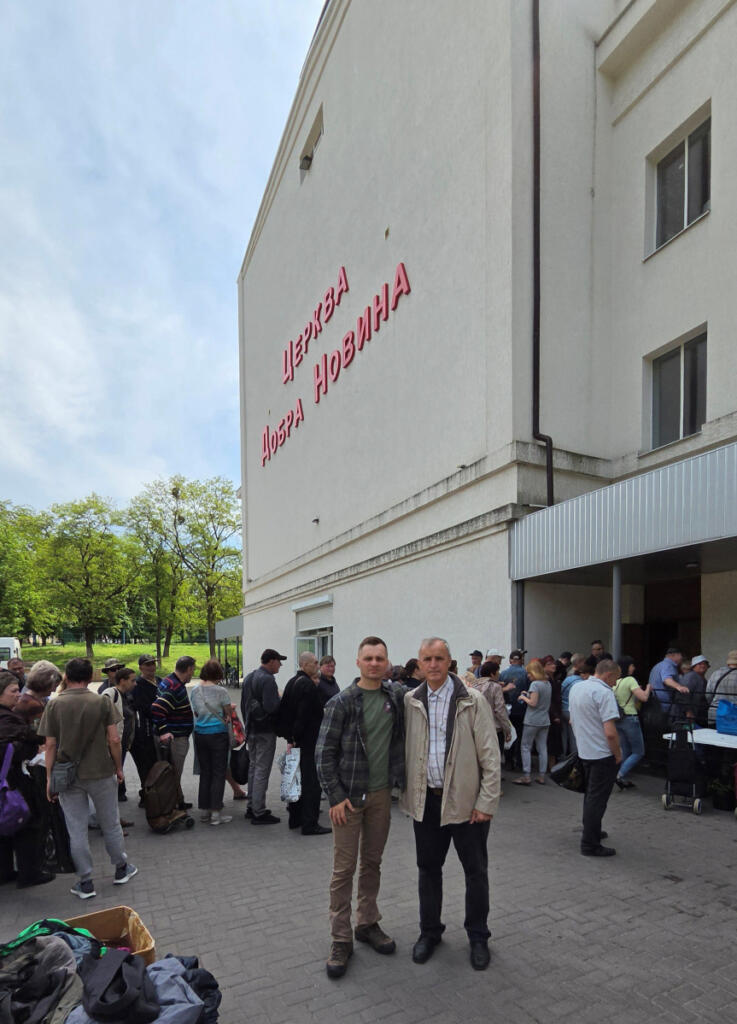
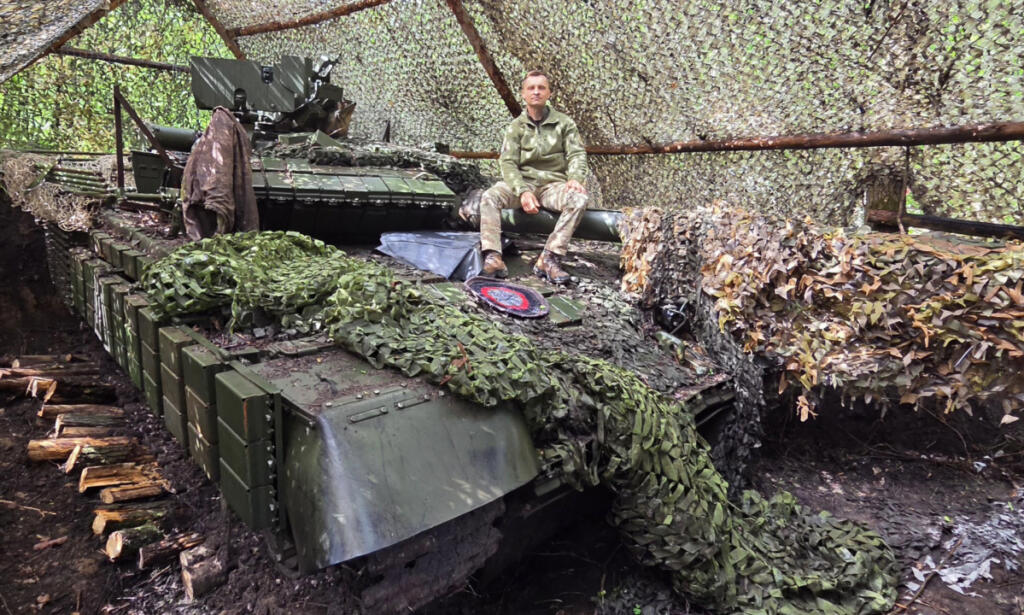
That front line, in the Donbas region of eastern Ukraine, is where Pavenko went on his latest trip. He visited soldiers, civilians, hospitals and churches.

“It was a great trip and it was a very challenging trip,” he said. “People are running on fumes, but they know they cannot quit.”

Pavenko was a teenager in 1996 when his family emigrated from Ukraine, in the former Soviet Union, to Tacoma. His parents were eager for religious freedom and economic opportunity after a lifetime of persecution, he said. But three of Pavenko’s uncles have continued to pastor churches in the contested east of the country, where Russian forces have destroyed Protestant churches and even killed Protestant leaders. Russia’s unofficial but de facto state religion is the Russian Orthodox Church.

“One of my uncles had three of his sons and two of his church’s deacons killed by the Russians,” Pavenko said. “Being a Protestant in Ukraine can be a death sentence.”

Now 39, Pavenko works an iconic public sector job in Vancouver: As in the classic Glen Campbell song, he’s “a lineman for the county” and has been climbing poles and fixing power lines for Clark Public Utilities since 2014. He and Inna have two children, ages 5 and 9.

In recent years Pavenko’s passionate interest in history and world affairs also motivated him to enroll in an online course of study at the University of Maine, where he recently earned a degree in history and political science. He argues that Putin’s invasion and demand of Ukrainian land in exchange for peace echoes Nazi Germany’s aggression and deception at the start of World War II.

Get the latest headlines in your email every week!

This field is for validation purposes and should be left unchanged.

“Appeasement did not work,” Pavenko said.

Ukrainians remain grateful for the United States’ military and moral support during this protracted war, Pavenko said, but he also noted that President Donald Trump’s commitment to Ukraine has wavered. The red carpet welcome Putin enjoyed at a top-level “summit” Trump hosted last summer in Alaska burnished the Russian leader with pomp and prestige, he said, but the meeting made no progress toward peace. More recently, he noted, the Iran war has prompted the Trump administration to waive some punishing economic sanctions on Russia, in order to cushion global oil markets and ease shock at the gas pump.

“The Trump administration has … eased certain sanctions, giving Russia opportunities to again sell its oil on global markets,” Pavenko said. “The Russians in return use those profits to build more missiles.”

‘I’m alive’ texts

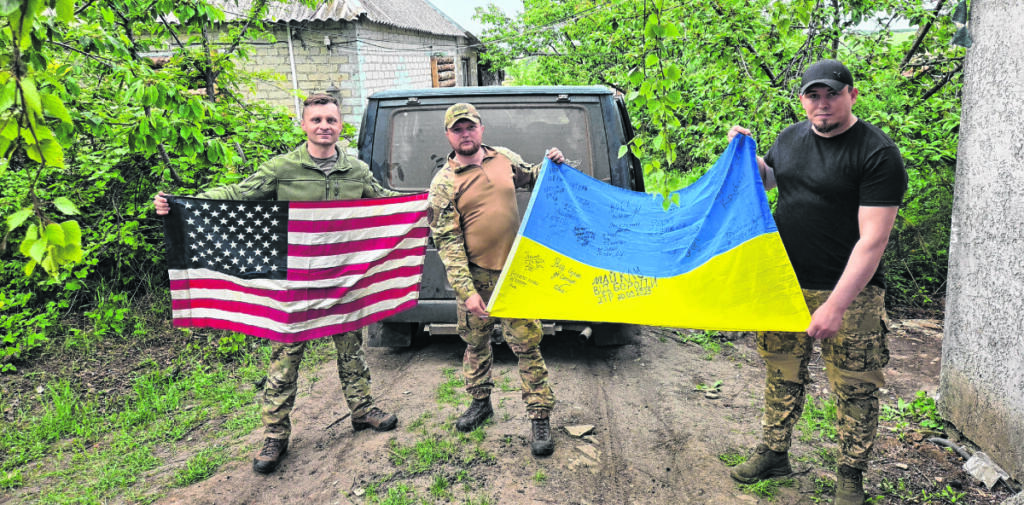
Before Russia’s all-out invasion, Pavenko could fly directly and safely into Ukraine’s capital city, Kyiv. But those days are gone, and in May, Pavenko flew into Warsaw, Poland (a 17-hour trip) and then made a midnight train journey across the border to Kyiv. He was met there by two fellow chaplains, and the trio drove to the front line in eastern Ukraine’s Donbas region.

The Donbas is a highly industrialized and mineral-rich area near the Russian border that Putin is determined to seize and occupy. Russia’s military strategy involves deploying “suicide drones” against the energy infrastructure that supports both soldiers and civilians, Pavenko said — and Ukraine has recently begun responding in kind, deploying drones against energy infrastructure inside of Russia.

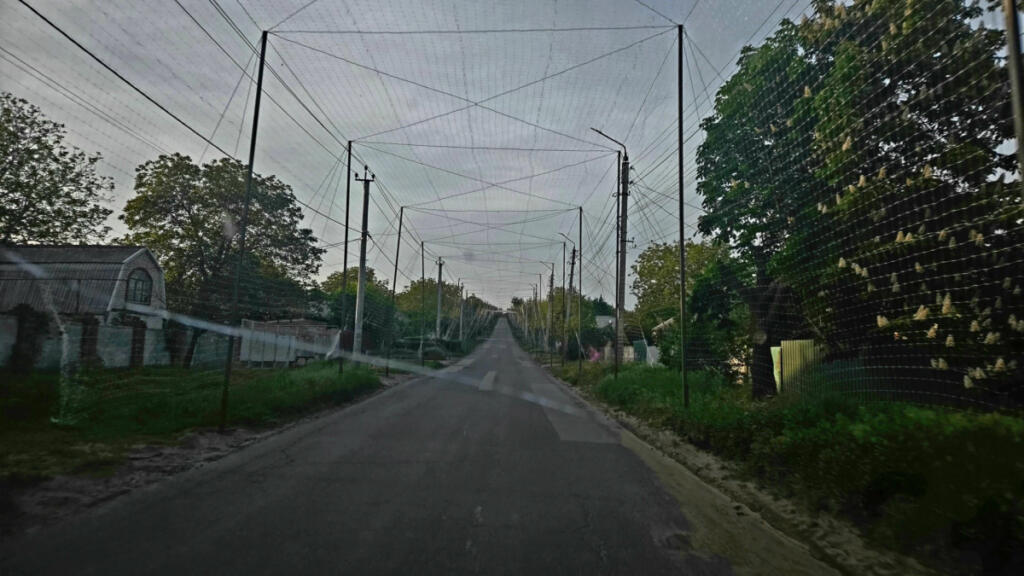
“Russian drones are a constant threat now. Most roads have anti-drone nets over them,” he said. The nets can catch diving drones, preventing them from hitting their targets and detonating, but they’re far from perfect. Some are lethal enough to destroy tanks.

Most civilians no longer drive unless they absolutely must, Pavenko said. His own chaplain unit always carried drone jammers and trackers when they went out, he said.

“Residents … have learned how to live and even work under constant Russian bombardments and Russian suicide drones that patrol the skies,” he said. “Russians absolutely do not spare civilians.”

As a military chaplain, Pavenko wears a helmet and armor, but doesn’t carry a weapon. Military chaplains are there to offer whatever noncombat support Ukrainian soldiers and civilians may need. For Pavenko, that has meant everything from repairing civilian roofs and washing machines to running food and mechanical parts between supply warehouses and troops on the front line.

“The chaplains are a logistical hub,” Pavenko said.

The village of Yasnohirka, where Pavenko spent much of his May trip, is about 9 miles from the front line, he said. It’s a regular targets of Russian fire.

“For months this village has been with no water, gas, electricity or telephone,” Pavenko wrote in a journal that he shared with The Columbian. “Russia is hitting the infrastructure daily and it is also targeting city repair crews with drones.”

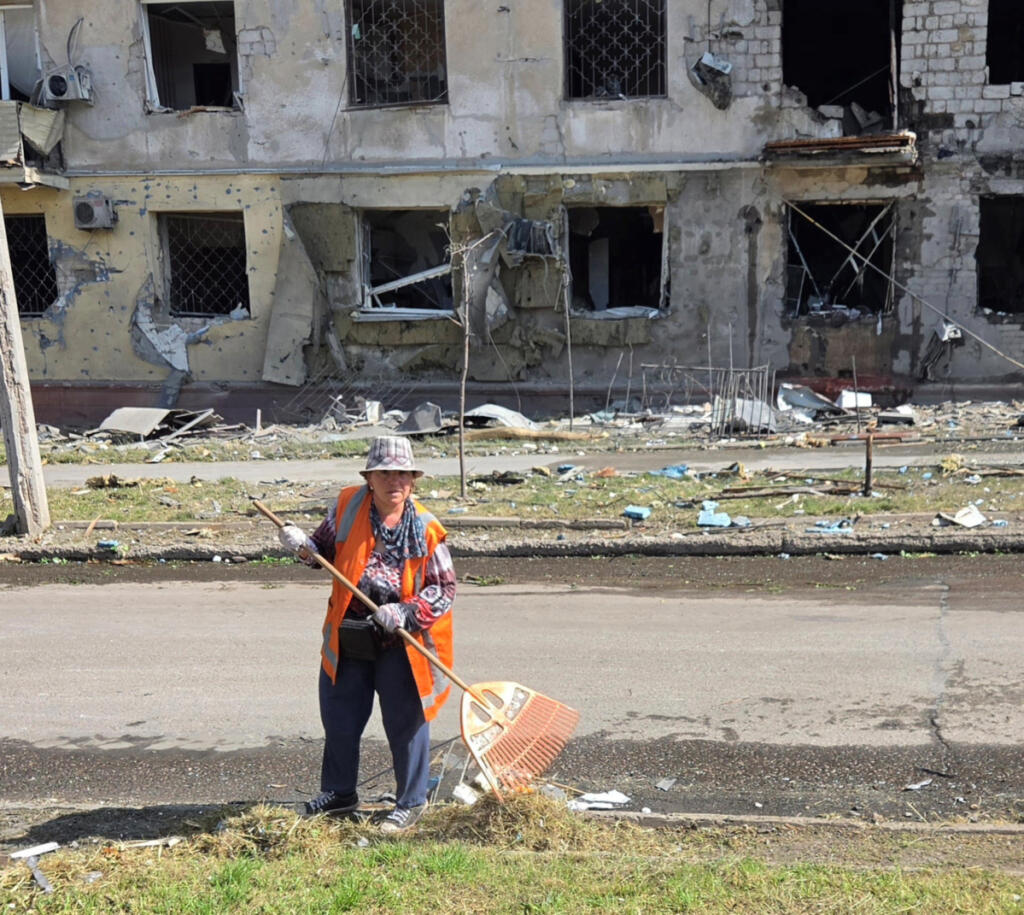
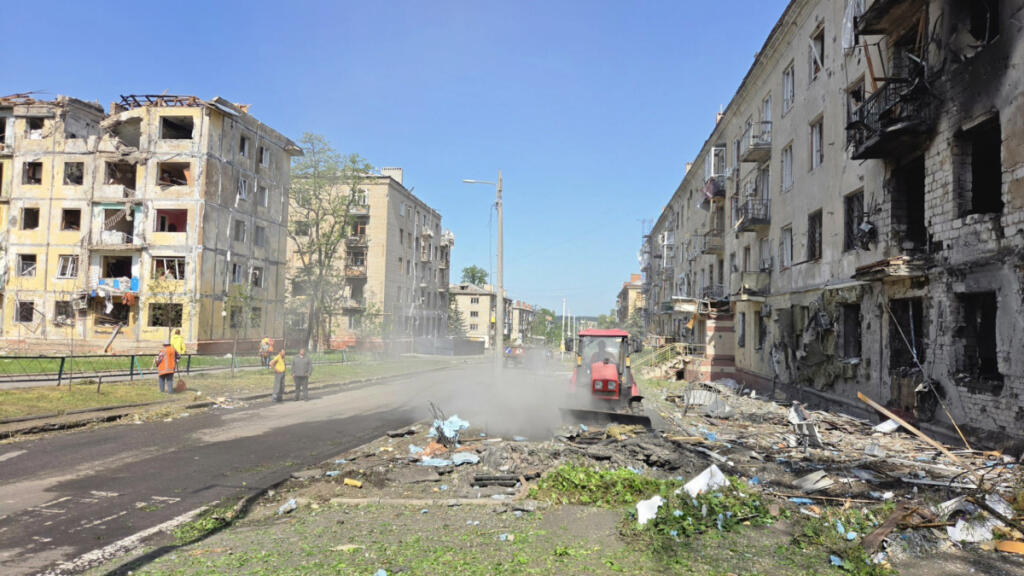
In the nearby city of Kramatorsk, Pavenko encountered a municipal worker named Irina who was sweeping the street outside an apartment building that had been struck by Russian bombs a few hours earlier. When she was finished cleaning up the street, Irina told Pavenko, she would return to her unpowered apartment and wait with her cellphone for expected, daily texts from her two sons.

“They are her ‘Hi, Mom, I’ve alive,’ texts,” Pavenko said. Irina’s sons are both fighting with the Ukrainian army, she said, and she hadn’t seen them in months when Pavenko met her.

“They are defending their mother,” Irina told Pavenko, and so she does her part too.

“She told me her broom is her weapon,” Pavenko wrote. “‘With each sweep, I am removing the enemy from my city.’”

How do Irina and other Ukrainians manage to stay in cell contact with family and other important contacts?

“Starlink satellites and portable generators,” Pavenko said.

A large steel plant in Kramatorsk has closed due to Russian bombardment, throwing many local people out of work, Pavenko said. One of those former steel plant workers is Oleksandr, who decided against moving away. Instead, he opened his own small tire repair shop.

“Most of my customers are soldiers,” Oleksandr told Pavenko, and he only charges what they can pay — which sometimes is nothing at all. “This is my way of saying no to Putin and yes to life,” he said.

Being there

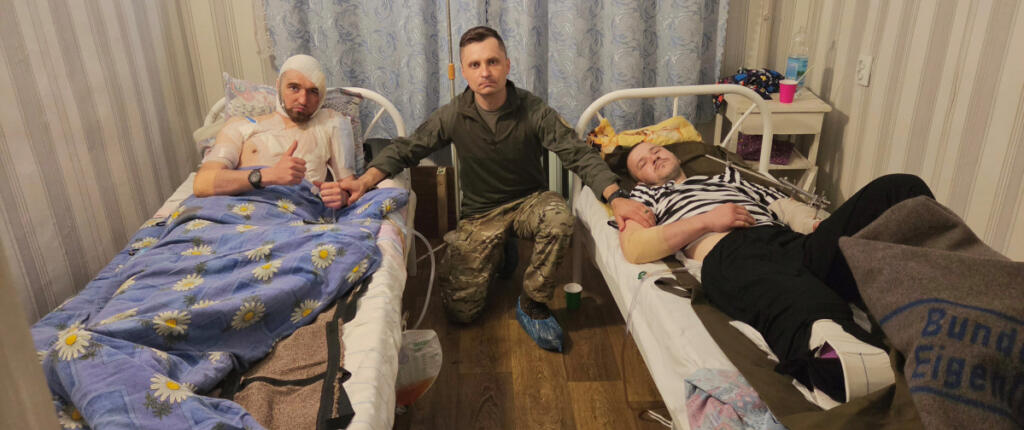
As a volunteer chaplain, much of Pavenko’s work on the front lines was simply sitting and visiting with soldiers — including the badly wounded.

About 30 minutes from the front, he said, is a “secret stabilization point” for wounded troops, which sounds like a rawer, rudimentary version of the emergency surgery “MASH” units that American TV viewers may be familiar with: a makeshift medical facility where the seriously wounded are quickly attended to before they can be transported to traditional hospitals farther from the front.

Tragically, Pavenko said, a frequent activity at the stabilization point is amputation. Pavenko met several amputees there, including a 28-year-old soldier named Mykola whose fate was still uncertain.

Mykola had already lost a leg to a mine. When Pavenko was with him, it wasn’t clear whether he’d be able to keep an arm.

“The doc said he’d try, but it wasn’t looking good,” Pavenko said.

What do you say to a man who’s suffering like that?

“It is difficult to know what to say, so you don’t say a whole lot,” Pavenko said. “It is a ministry of presence, a service of presence.” What Pavenko often did, he said, was get down on one knee — down to floor level — so he could offer compassion and comfort, face to face.

“Words get in the way,” he said. “Just be there.”