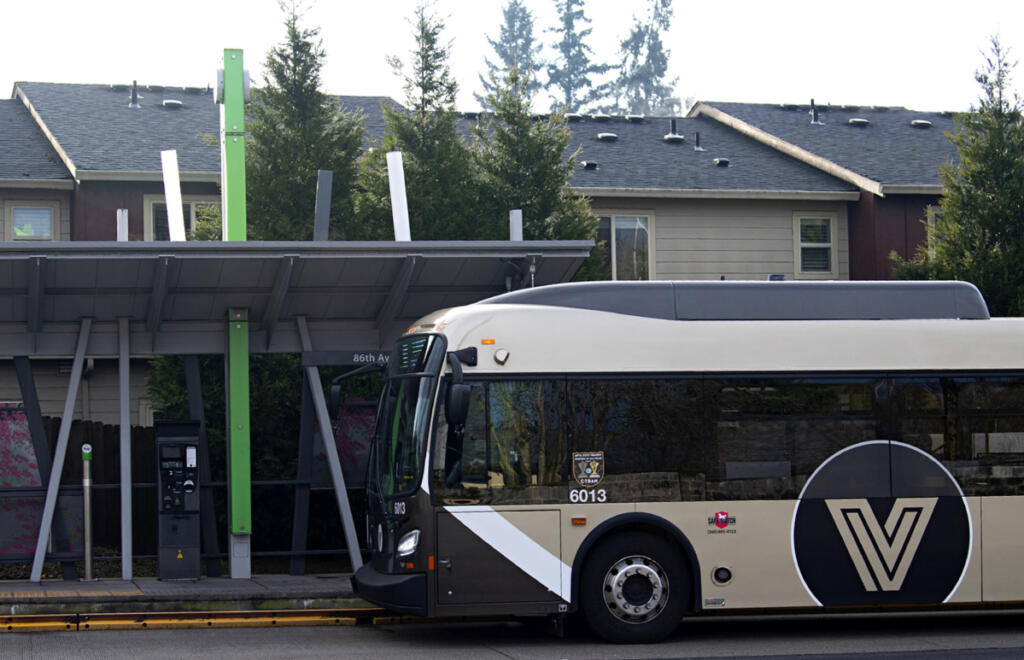
Thirteen percent of Vancouver-Portland homes are located less than half a mile from a bus or rail stop, according to new data.
On Thursday, the research firm Urban Institute released a report on the convenience of transit across metropolitan areas. The Vancouver-Portland metro area ranked 11th in the nation for the number of transit options per capita, measured in miles. At 20.3, it ranked second in Washington behind the Seattle-Tacoma metro area.
The growing housing crisis spurred the study. As the Vancouver-Portland metro area and other regions face housing shortages and skyrocketing prices, leaders have turned to transit-oriented developments as a solution, according to an Urban Institute report. An April Urban Institute report found that close to half of U.S. households cannot afford basic necessities. The Thursday report suggests that transit-oriented development is one way to help reduce household living expenses, specifically for lower-income residents.
The Urban Institute data showed that in the Vancouver-Portland area, 14 percent of housing growth between 1980 and 2022 was within half a mile of rail stations — slightly higher than in the Seattle-Tacoma area (13 percent).
“Transit-oriented development is a valuable tool that helps communities concentrate homes, offices, public services, and recreation in walkable, mixed-use areas with access to frequent, reliable, and fast public transportation,” the report said.