Camas-Washougal logo tag

Summer salmon fishing may be limited

Projected chinook return low, water temps big concern

By
timestamp icon
category icon News

The Columbia River summer salmon and steelhead fisheries are starting, and anglers will be able to target sockeye salmon and summer steelhead this year, but the chances of a fishery for summer chinook are very slim.

The final days of spring chinook fishing are finishing up right now, as we enter the last days of the 10-day season approved by the states on June 4, that allowed additional days of retention for hatchery chinook from June 5-15.


Anglers can keep one chinook and one steelhead as part of a two-fish daily limit, from the Rocky Point/Tongue Point fishing deadline to Highway 730 at the Washington/Oregon border.

Anglers may not continue to fish for salmon after the steelhead portion of the daily limit has been retained.

While the fishery is open, opportunity is limited, with the spring chinook run tailing off, and the summer chinook run not getting started yet. There are fish passing through, but not many.

Unfortunately, the summer chinook run is expected to be paltry this year, with only 40,700 adults expected. That will mean no retention season, depending on how strong the return actually is.

Quentin Daugherty, a fish biologist for the WDFW, reported that fisheries managers will keep a close eye on returns, in the hope they could allow some additional fishing. The summer chinook run is about half over by June 29.

“We will be watching that (Bonneville Dam fish count) compared to the preseason projection to determine if some summer chinook retention is possible,” Daugherty said.

Hatchery summer steelhead and jack chinook will be open for retention through July 31 from the Astoria-Megler Bridge upstream to the Highway 395 Bridge in Pasco. Starting Aug. 1, it will close downstream of The Dalles Dam. Anglers can keep only one steelhead a day as part of the two-adult limit.

The summer steelhead return above Bonneville is expected to be 133,700 adults, which would be below the actual return in 2025 of 155,013.

There will be a two-week sockeye salmon retention season starting on June 23 and running through July 5, with a two-adult limit. All sockeye are considered adults.

This season may be extended, depending on the strength of the run. According to Daugherty, about half of the run has usually passed Bonneville by June 28. The states will then see if there are enough fish for additional days.

“We will adjust sockeye retention fisheries based on in-season fishery performance and run size,” he said.

The sockeye projection is for 274,900 adults, which would best the 2025 return of 167,549.

Sockeye are filter feeders in the salt water, and they do not bite well in fresh water. However, they are taken by anglers plunking in the lower river.

Sockeye and steelhead migrate upstream close to the bank, and anglers get them by plunking with Spin-n-glos tipped with coon shrimp fished stationary just a few yards off the bank.

Once both species move over Bonneville there is less current, and plunking does not work.

There is one area where anglers do get quite a few of both species, and that is the old lock at Cascade Locks. In higher flows, the fish squeeze through the old lock sticking right by the edge. Anglers fish yarn drifted along the wall of the lock.

The biggest question mark concerning the sockeye run will be water temperatures in the Columbia River.

With a record low snowpack, and a warmer than usual summer forecast for the region, many anglers and fisheries managers are worried. Similar conditions in 2015 led to a stunning die-off of returning sockeye. About three quarters of the Columbia River run never made it back to their natal streams.

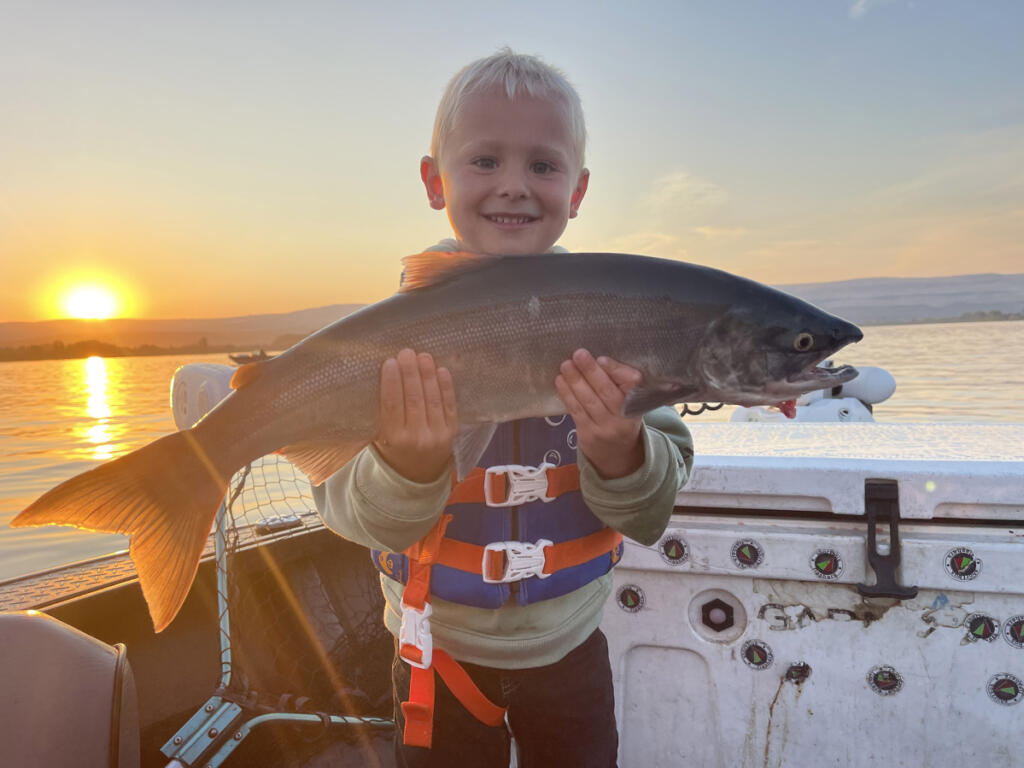
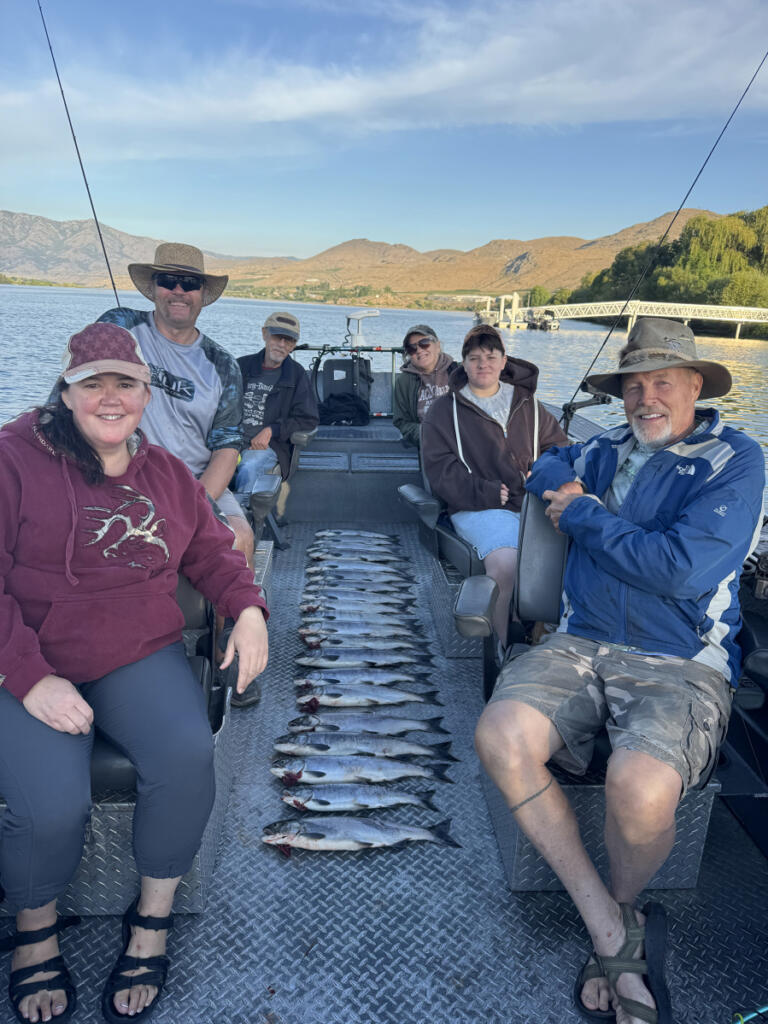
Fishing guide Brad Wagner of Bobber Down Guide Service based in Wenatchee, targets the sockeye fishery in the Brewster Pool of the Columbia River, and he is aware of the possibility of a repeat of 2015.

“It’s a concern, definitely a concern,” Wagner said. “We are worried about the water getting warm. When that happens, we lose our Brewster season.”

He explains that sockeye are a northern species and are susceptible to warm water. There are no sockeye runs farther south geographically than the Columbia.

“Sockeye are not a hardy fish,” Wagner said. “They are a sensitive little bugger.”

He said the run size looks good, but it may come in low, or high.

“The numbers look fairly good,” he said, “but they don’t project sockeye runs very well at all. It’s a wild spawn. It’s hard to predict a wild spawn.”

While the water temps are a concern, Wagner said warm water is needed for the Brewster Pool fishery to come off.

“The fishery up in Brewster relies on warm water,” he said. “You’ve got to have the Okanagan River over 70 degrees for those fish to stay in the pool. It’s a fine line, where you want it to be a little warm.

“You just want it to cool down at some point so the fish go upriver. As of right now, it looks pretty good.”

Wagner said he has options if the Brewster Pool is closed. He said he will start fishing the Hanford Reach for sockeye when it opens on Tuesday. He will fish that reach until the Brewster Pool opens. If it does not, there are other fisheries.

“We’ll be able to fish Lake Wenatchee if we lose Brewster. That is a cold-water lake, and it is 100 feet deep,” he said.

Wagner said the fish can go deep to escape any warm water.

“We will have some options,” he said. “That’s the good thing about sockeye up here is that we do have some options.”

Get the latest headlines in your email every week!

This field is for validation purposes and should be left unchanged.

These fisheries are a trolling game, and Wagner trolls an 8-inch dodger 14 inches in front of a hoochie tipped with coon shrimp.

While the summer options are fairly good in the lower reaches of the Columbia, these upriver options give anglers who are not opposed to the four-hour drive from Vancouver a chance to take more summer salmon. And, sockeye are really popular for their excellent, almost nutty flavor.

August 1 will mark the first of the fall salmon opportunities in-river, when the Buoy 10 fishery gets going. Until then, lower river anglers do have some good options for summer angling, and it could get even better, if the summer chinook run comes in strong enough for a retention fishery.