Camas-Washougal logo tag

State budget cuts imperil Lower Columbia Fish Enhancement Group’s programs, services

Nonprofit has reduced operating budget 30%

By
timestamp icon
category icon Clark County, Environment, Government, Outdoors
Budget cuts approved by the state Legislature could bring an end to some programs and services provided by Lower Columbia Fish Enhancement Group.

Morgan Morris, executive director of the Vancouver-based nonprofit, said popular programs like Seeds to Salmon and habitat restoration projects could be reduced or eliminated if replacement funds are not found. The cuts were approved by the 2025 Legislature and remained in place after this year’s session, despite lobbying by advocates.


“It’s been in the budget for a long time and is money we really rely on,” Morris said of the state funding.

The Lower Columbia group is one of 14 nonprofit organizations that make up the Regional Fish Enhancement Group, created by the Legislature in 1990. The group is tasked with working with communities across the state to recover salmon through partnerships with local, state and federal agencies, tribes, local businesses, community members and landowners.

Each group is a separate nonprofit working within a geographic region based on watershed boundaries, led by a board of directors and supported by its members and volunteers.

Morris said state funding is allocated through the Washington Department of Fish & Wildlife’s aquatic lands grant program, with over 50 percent of the available funds going to the 14 regional groups. The grant program is funded by commercial and recreational fishing license fees, which generate about $53 million annually, according to WDFW.

Last year, the state agency was forced to cut about $20 million from its budget, resulting in 120 staffing cuts, the closure of the Skamania fish hatchery, reduced salmon and steelhead monitoring, and the removal of all funding for the grant program.

“We tried our hardest to raise the alarm bells when they’re still in session, but that didn’t seem to work,” Morris said.

Because of the state funding cuts, Morris said the Lower Columbia group has reduced its operating budget by about 30 percent.

“It funded our outreach and volunteer programs; it funded all of our nutrient enhancement programs. That’s where we work with the hatchery to take volunteers up into the watershed and distribute salmon carcasses to supplement the loss of the marine-derived nutrients to the rivers,” she said.

Get the latest headlines in your email every week!

This field is for validation purposes and should be left unchanged.

While the group has many volunteers coming back year after year to help with the nutrient enrichment program, funding is still important to pay for the trailers, supplies and materials needed, as well as to help with coordinating with hatcheries.

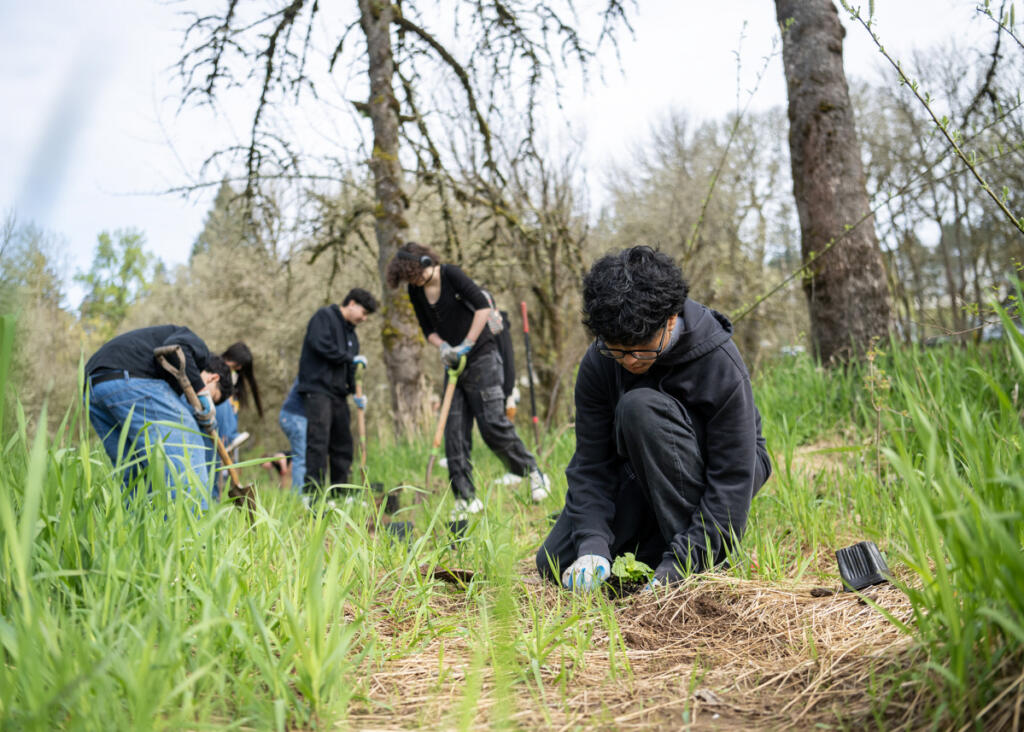
With $40,000 of its annual budget now gone, Morris said programs like Seeds to Salmon — which combines hands-on education opportunities for students ages 9-18 with in-class education — may be eliminated. The program offers about 500 students each year from Clark and Cowlitz counties the opportunity to join a field trip to plant native trees, shrubs and other plants and participate in river and watershed rehabilitation projects.

“We are down to trying to operate on around a little under $100,000 a year, and that’s not going to go very far,” Morris said.

The loss of state revenue isn’t the only obstacle the Lower Columbia group is struggling with. Federal funding for the state program was cut in 2025, although it’s been restored in the 2026 budget thanks, in part, to the efforts of U.S. Sen. Patty Murray and others, Morris said. But even those federal funds have been slow to arrive.

“My understanding is that there’s been additional review put on this funding or any Department of Interior funding, which is where this funding comes from, so there’s just some more hoops that we need to go through,” Morris said.

Whether this is a one-time reduction in state funding or the first year of ongoing cuts, it will shape how the Lower Columbia group moves forward, Morris said. A one-time cut would be survivable, but if the reduction in funding is permanent, the group would have to make some difficult decisions, she said.

“These cuts will hit our organization in every component of what we do. The long-term impact is that we won’t have the funding to develop the projects that we’re doing right now, like the major restoration work on the South Fork Toutle River. We have a whole restoration plan coming to fruition for the Cedar Creek drainage for the Lewis River,” Morris said.