Login
Login
 Newsletters

 Life, News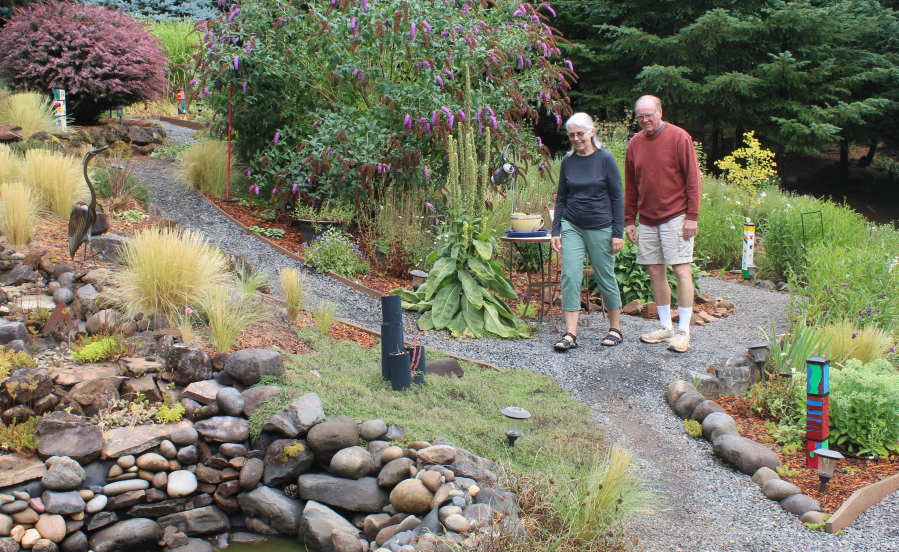
Clark County residents looking for natural gardening inspiration can explore nine local gardens maintained using earth-friendly techniques during this month’s Natural Garden Tour.
After two years of virtual events, the annual event will once again invite visitors to take self-guided tours of urban and rural gardens across the county. Visitors can take free, self-guided tours 10 a.m. to 4 p.m. Sunday, July 17.
- Ken and Marge Crouch’s “Hill of a Garden,” 5310 N.E. 275th Ave., Camas: The Crouches have transformed their 1.7 acres of formerly clear-cut land into a diverse landscape using numerous gardening techniques. Using hundreds of native trees, shrubs and groundcover, they have reforested their hillside property into a lush landscape. Many of the plants found here attract pollinators, in addition to the multiple mason bee houses found on the property. This year the Crouches have begun harvesting rainwater from the roof of their home, which will be used to maintain plantings as needed throughout the summer months. Water is also redirected from their neighbor’s property into holding ponds, which ultimately seep into the ground and increase their groundwater resources. Stroll throughout the property on over 50 feet of paths made from river rocks and locally harvested stone.
- Liz Pike’s Shangri-La Farm, 26300 N.E. Third St., Camas: Different gardens are scattered around the farm, including areas for berries, vegetables, fruit trees and flowers. Vegetables and other starts are birthed in a greenhouse made from recycled materials. As you move through the farm, keep an eye out for free-range chickens and pollinator habitats, such as the various mason bee houses. Since the farm’s last participation in the Natural Garden Tour, a complex composting system has been installed and now on display, providing additional nutrients to everything grown on the property.
- James and Lisa Mahar’s “Cottage Garden Acres,” 3509 N.E. 397th Place, Washougal: Nestled above the Washougal River, this 21-acre farm has the beauty and solitude provided by the local deciduous forest. Features of this property include a flower garden catered toward native pollinators and native and native-compatible plants that provide habitat for winged invertebrates and other critters. The garden pond, fed by rainwater, provides drinking water for pollinators, birds and other amphibians. Rainwater collected from the barn rooftop is used to water the gardens and raised vegetable beds. Food waste and excess plant matter is fed to the chickens and goats, or composted.