Camas-Washougal logo tag

Long-delayed Camas history book ‘Camas Pioneers’ followed a tough trail to publication

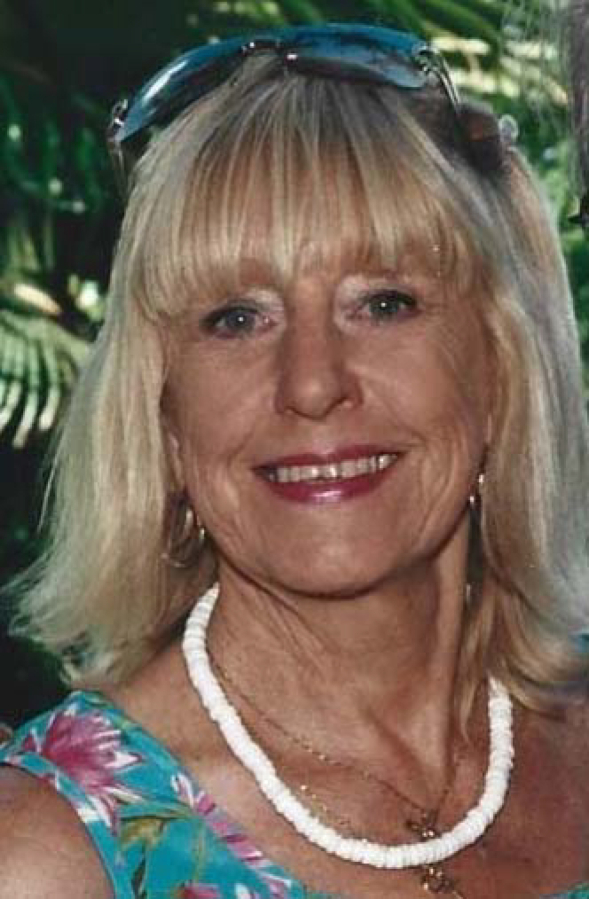
Sally Alves researched, wrote book while living in the iconic Roffler home near Crown Park

By
timestamp icon
category icon Camas, Life, News

Sally Alves’ magnum opus, “Camas Pioneers: Historical Profiles of Prominent Camas Families,” traces the complicated life stories of many east Clark County founding figures. It’s a new book with a long and complicated history of its own.

Alves researched and wrote the book decades ago, in the 1990s, on the heels of her first historical publication, “John Roffler, Camas Craftsman.” At that time, Clark County native Alves and her husband were living in — and restoring — the iconic Victorian-style Roffler home that still stands today at the corner of Everett Street and 15th Avenue near Crown Park. The daughter of local architect and builder John Roffler lived down the street and used to stop by, Alves recalled.

“She used to talk about the hundreds of homes he built in the Camas area. She gave me all this information and I got really interested,” Alves said.

Her interest led to the 1906 Roffler home being listed on the National Register of Historic Places — and to the publication of Alves’ first book, about Roffler, by what was then called the Clark County Heritage Trust. The book is out of print now, but “John Roffler, Camas Craftsman” is what got Alves going on “Camas Pioneers,” an even larger historical project.

“I was never a historian before, but I guess I found my groove,” Alves said.

Researching the Roffler book introduced her to many inspiring Camas pathfinders — settlers and farmers, builders and bankers, wealthy industrialists and humble shopkeepers — who deserved a book of their own, she decided.

“There had never been a book before that investigated all those important Camas families,” Alves said.

With wind in her sails from the success of the John Roffler book, Alves took an even deeper dive into the archives and collections of historical and genealogical societies, museums, libraries and newspapers. She visited historic sites, original homesteads and pioneer graveyards. She perused property records. She reviewed oral-history recordings and, eventually, conducted many of her own interviews with the descendants of the historical figures she wanted to include in her book.

“The whole process was very painstaking and costly, but I was determined that this book would be totally accurate … and of great value as a historical resource for the community,” Alves writes in the book’s introduction.

But Alves, who is 89 now and living in Arizona, ran into several significant roadblocks on the way to publication, including a busy career at PacifiCorp in Portland, and a diagnosis of breast cancer.

“I was doing chemo and radiation when I was doing research and interviewing people for this book,” she said. “Actually, I don’t know how I did it.”

Another roadblock was money. It takes some investment to publish a book, but nobody could come up with a grant or other funding for “Camas Pioneers.” A higher priority for east county history boosters at that time was raising money for an eventual east county museum, which became the Two Rivers Heritage Museum in Washougal.

So Alves’ manuscript idled for 20 years, she said. By then, she and her husband had retired and left Camas for adventures that took them to Arizona, then Mexico, then back to Arizona. (Based on those adventures, Alves published an entirely different sort of book in 2012: “So, You Want to Own a B&B? Think Again!”) She was completely surprised to hear from historical folks back in Camas who, decades later, were interested in publishing her book.

When Alves returned to her computer to get busy again, it crashed. Alves lost her entire electronic file, including the completed manuscript and all scanned photographs. But folks in Camas were waiting, and Alves did have a printout of the whole book, so her only option was to literally retype, word by word, the entire 241-page manuscript. Then she shipped everything to her historical contact in Camas, expecting to hear about progress toward publication at last.

Instead, what Alves heard was silence. More years went by. Alves eventually learned that her Camas contact had died, and all the book materials had disappeared inside that person’s house. The house was sold and the “Camas Pioneers” materials never resurfaced.

“It was one thing after another,” she said.

Finally, in 2020, she was contacted again by a new group of local history lovers — including Madeleine Mesplay, the lead research volunteer at the Two Rivers museum, and Rene Johnston Carroll, author of “Legendary Locals of Camas and Washougal” — to say they wanted to proceed with publication. Yes, again.

“I gave them all the rights. I don’t need the proceeds. It was a labor of love,” Alves said. “It was 30 years later, and I wanted to see it published before I die.”

Mesplay and Carroll edited the manuscript and located photos for it. Published by the Camas-Washougal Historical Society, “Camas Pioneers: Historic Profiles of Prominent Camas Families” is available for $19.95 plus tax at the Two Rivers Heritage Museum, 1 Durgan St., Washougal (open noon to 4 p.m. Saturdays only) or at the museum’s table during monthly First Friday in downtown Camas. It’s also available through online booksellers.

Time for a spree?

“Camas Pioneers” represents a lovingly local approach to compiling history, written with pride and affection for pioneer Papermakers. The book is loaded with the sorts of hard facts — birth and death dates, places of origin and migration, specific addresses in town — that Camas history buffs will love. Many of those facts go unattributed, and there’s no index in this book, but there is a long list of source materials, including the author’s own oral history interviews with the descendants of her subjects.

Alves said she not only checked all her facts with descendants, she also secured their approvals of what she wrote.

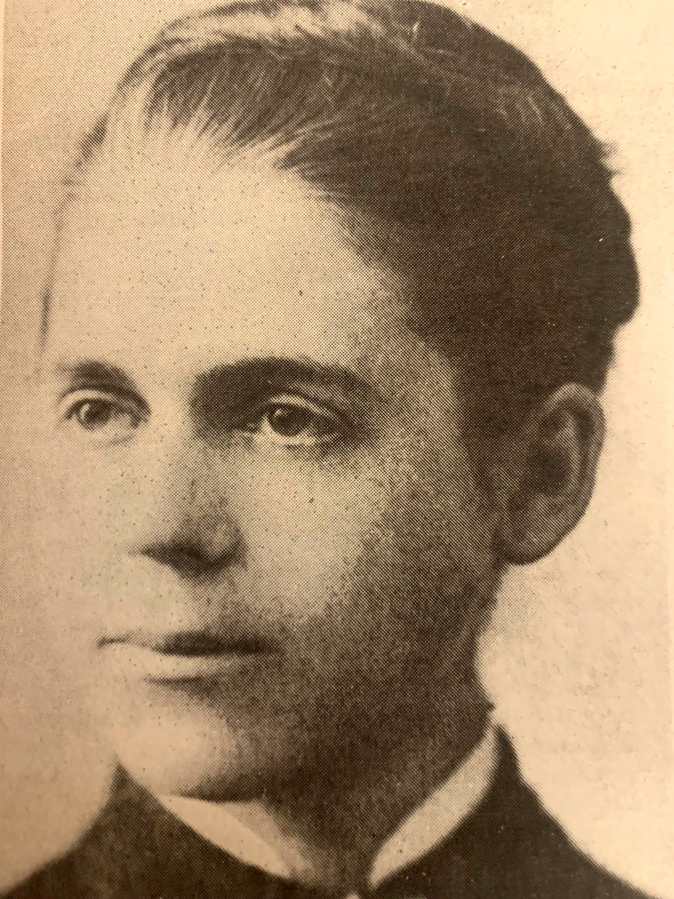
Embedded within the many dates and facts of “Camas Pioneers” are illuminating historical nuggets, both charming and terrible. You may have heard of east county settler and businessman Lewis Van Vleet, but have you heard of the stubborn courage of his daughter, Louise “Lutie” Van Vleet? Lutie saved up to attend medical school and became a practicing doctor at age 23 in the 1880s, a rare attainment for a woman of that time.

“Her practice was an immediate success and she was kept busy delivering babies and tending to sick patients within a wide radius from LaCamas to Yacolt,” Alves writes.

Although she struggled with successive bad marriages, Lutie Van Vleet became a beloved figure and community leader in Camas. She served as city health officer and, although she never campaigned, came within one vote of being elected mayor. Tragically, Lutie was kicked by a horse and killed on Memorial Day 1913.

“Her funeral was held at her home in Parker’s Landing. It was attended by many folks in the area including Native Americans who came in canoes,” Alves writes.

Historians saved Lutie Van Vleet’s historic Parkersville home from bulldozers through 1978, but eventually it burned down.

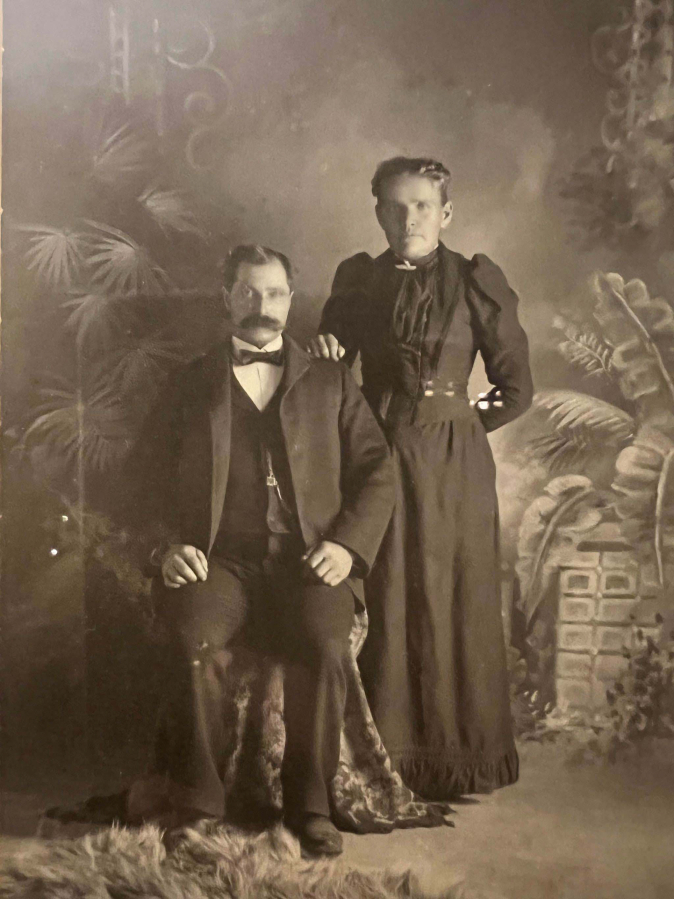
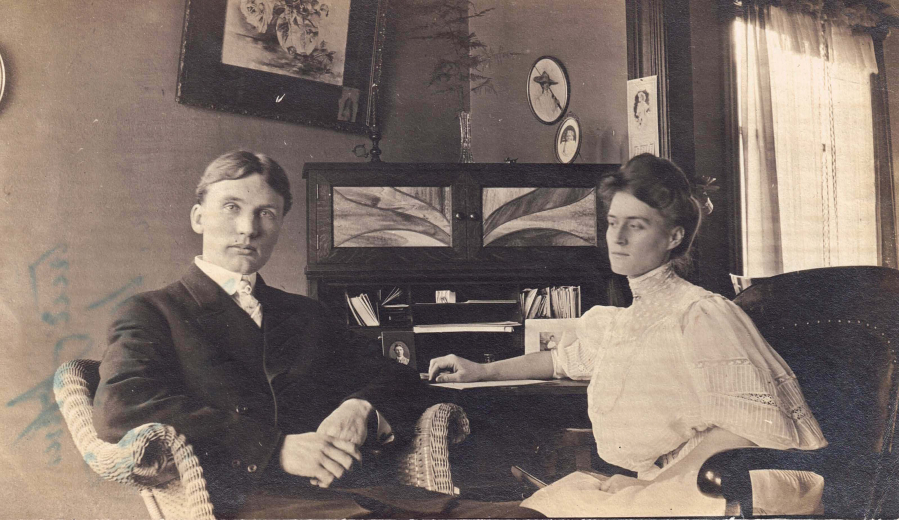
There’s also the story of Oscar Johnson and his bride, Beatrice Bauman. As a youth in Minnesota, Oscar loved music but was told it was a “sissy’s subject,” Alves writes, so he went into banking instead. That’s where he met Beatrice, a bank employee and former school principal (who had been advised that banking was a better field with better pay than education). Eventually, Oscar pursued greater opportunity in the Northwest, Beatrice joined him, and the married couple arrived in Camas by steamer in January 1908. Oscar became a “leading citizen” who built Camas’ first bank, Alves writes. But he also suffered his fair share of troubles, including earning a local pastor’s eternal condemnation for the crime of playing cards with his wife at home.

Although Oscar Johnson built substantial wealth and many buildings in downtown Camas, he only realized his musical dreams through his grandson, Don Ellis, a renowned jazz trumpeter, bandleader and composer who dedicated a Christmas Day piano piece to his grandfather.

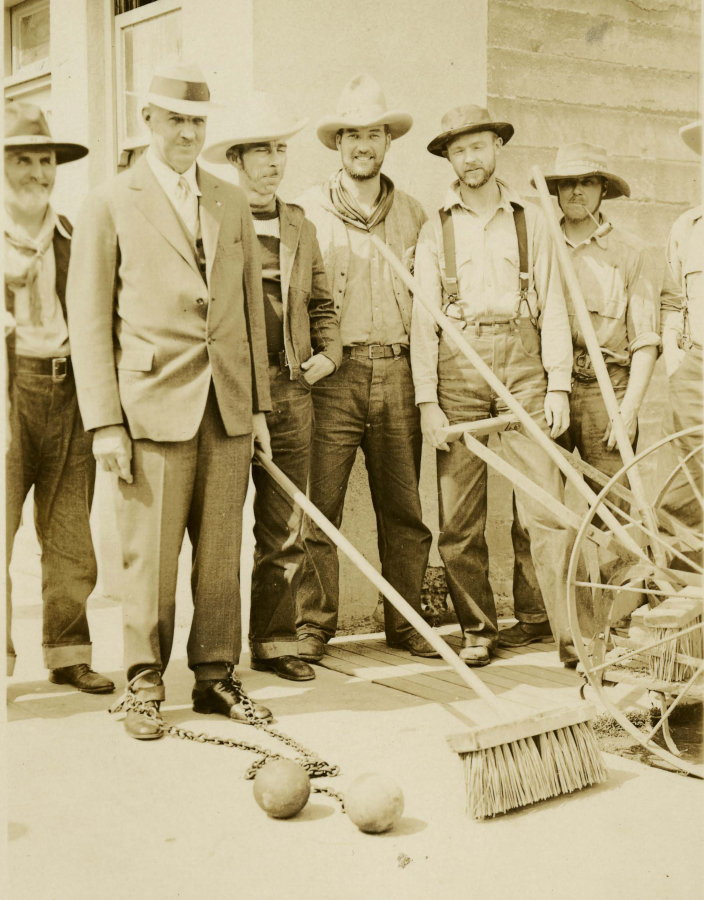
Finally and tantalizingly, Alves’ book briefly mentions in a couple of places a hairy event called “The Wild Spree of ’33.”

“Most of the men of town grew beards during this fifty-year celebration of Camas’ beginnings,” she writes.

But banker and businessman Robert Carmack either couldn’t or wouldn’t cultivate any chin growth, so he’s immortalized in shackles, and surrounded by his smiling (bearded) captors, in a 1933 photo taken on the street.

Get the latest headlines in your email every week!

This field is for validation purposes and should be left unchanged.

“At long last ‘Camas Pioneers’ has finally come to life,” Carroll said. “Sally’s research and storytelling are excellent. It’s very well written and fascinating to read.”

Camas leaders and history lovers, take note: Is there any possibility of a Wild Spree of 2033?

Scott Hewitt: 360-735-4525; [email protected]