Camas-Washougal logo tag

Power producer: Longtime leader of Martha’s Pantry expands its services to help anyone in need

Camas' Vicki Smith has been the guiding force behind HIV food bank Martha's Pantry for decades.

By
timestamp icon
category icon Clark County, Health, Life

How many times have you sat close by while someone has died?

Vicki Smith has had that painful, existential experience nine times, she said.

“There’s never a day I forget about that,” Smith said. “You realize how fragile things really are. Without God in my life, I could not do all the things I do.”

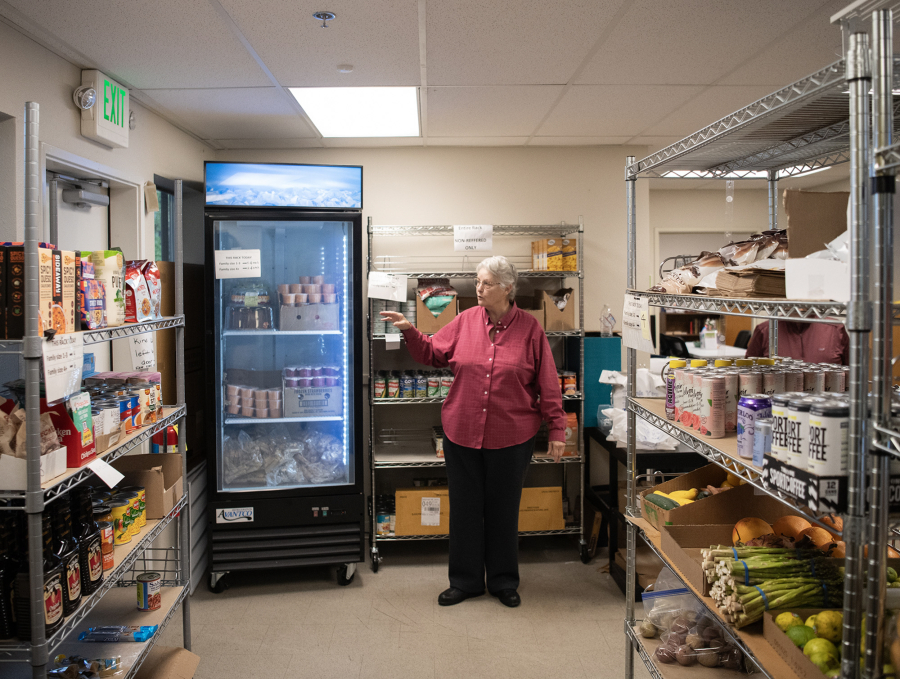
Camas resident Smith is the longtime leader — usually official, occasionally informal, always crucial — of Martha’s Pantry, Clark County’s homegrown food bank and community center for people with HIV/AIDS. When Martha’s Pantry launched in 1986, AIDS was a full-blown health emergency for the gay community, and an almost certain death sentence.

Fortunately, Smith said, that’s no longer true. Because HIV is now a chronic but livable condition — and because hunger and need are more widespread than ever — Martha’s Pantry has evolved to serve the general public, while also retaining its primary mission to feed and nurture people with disease, Smith said.

“We never turn anybody away,” Smith said. “Our only rule is respect for every single person, whether it’s a member of our family or a drunk off the street.”

Smith, 71, has evolved too. She’s retired from a long, diverse technical career with the Bonneville Power Administration and, before that, the U.S. Army Corps of Engineers. She’s also retired from 28 years active duty in the U.S. Air Force/Oregon Air National Guard. She deployed overseas and reached the rank of lieutenant colonel.

“I’m this weird pacifist. I thought, if we’re strong enough, everybody will be safe,” she said. “I served because I wanted peace in the world.”

Head and heart

Smith grew up in what she proudly insisted is “the real Nevada”: Reno and Carson City, not Las Vegas. Her single mother raised four children while working two jobs and running a boarding house.

“My mother raised us all, on her own, with an attitude of respect and service,” Smith said. “You have to look at the whole world with love and care.”

It was a faithful upbringing and a conservative one, Smith said. Smith did well in high school and tried to enlist in the U.S. Army during the Vietnam War but discovered she was still too young. She wound up attending the former Columbia Christian College in Southeast Portland. But eventually Smith left Columbia Christian, and it wasn’t just because she was running out of money.

“The reality is, I was a woman who loved other women,” she said. “I wasn’t going to be accepted for who I really was.”

Fully realizing who she was took until she was 19, Smith said. Before that, she’d always been popular and plenty busy with a big social circle.

“I loved my friends,” she said. “I always love my friends deeply, whether they’re men or women. I loved a lot of men. But I wasn’t attracted to men.”

She went on dates with guys, she said, but never felt any sparks.

“You don’t control your own heart,” she said. “One day you meet this person and it’s, ‘Wow!’ That started me down a different path.”

The person who permanently wowed Smith’s heart was Jeanie Harman. The couple have now been together for 48 years. When they first came to Clark County in 1999, Harman preceded her as Martha’s Pantry’s executive director until their natural niches quickly clarified. Smith took over as executive director in 2000. Harman became operations manager.

“I’m the head. I get the paperwork done,” said Smith. “Jeanie is the heart. She gives out the hugs.”

Power production

When she was young, Smith was eager to become a mechanic because she never wanted to have to depend on anyone else to fix her car. She earned a degree in diesel mechanics in Michigan and, eventually, another in electrical engineering at Eastern Oregon University. She apprenticed and worked as a mechanic and electrician at Ice Harbor and Lower Monumental Dams in Eastern Washington.

In 1976, she tried enlisting in the Army again, but by chance she stepped into an adjacent U.S. Air Force recruiting office first.

“I think God guides us in ways we really can’t see at the time,” she said with a smile.

As an active-duty reserve soldier in the Oregon Air National Guard, Smith worked as a power technician in many places around the globe, from Egypt to Italy to the Pentagon. Eventually, she was commissioned as an officer and promoted to senior communication commander.

“I’ve been all around the world,” she said. “I love to travel. But it was never easy.”

Attitudes in some foreign countries could be challenging, she said. A Saudi military officer worked closely and respectfully with her on base, but warned her that outside in rigid Saudi society, Smith (a woman) must never greet him (a man) nor even acknowledge that she knew him.

But domestic attitudes turned out to be toughest for Smith. “Don’t ask, don’t tell,” the policy allowing gay people to serve in the military as long as they remained firmly closeted, was still in effect in 2004 as Smith was cultivated for a unit-commander role. That’s when a male colleague whispered: “You need to retire now, or I’ll tell the general that you’re gay.”

Smith said she isn’t sure which thing that fellow actually objected to more: her homosexuality, or the simple fact that she was a successful woman in a military leadership role.

“He was brought up in the same church I was,” she said. “Very, very conservative.”

Whatever his motive, the result was the same. While Smith didn’t retire just yet, she pursued a transfer instead of the promotion.

“So many people have faced that in their lives,” she said.

Martha’s role

When HIV/AIDS appeared in the 1980s, Smith recalled, conservative leaders of the day like the Rev. Jerry Falwell declared that it was God’s retribution against gay people.

Here in Clark County, a man named Jerry West got busy. He started delivering groceries and other supplies to shut-in sufferers of the disease out of the trunk of his car. As the need grew, West turned to a small local church organization for help.

That’s the Metropolitan Community Church of the Gentle Shepherd, first launched in 1968 in Los Angles by a pastor who’d realized he was gay, came out to his community and wound up shunned. In response, Metropolitan Community Church was designed as a church for absolutely everybody, especially those who feel marginalized and unwelcome in other church settings. There are 172 Metropolitan Community Church churches in 20 countries today, according to the organization’s website.

“It’s the church for outcasts of all kinds,” Smith said. “The primary focus is taking care of gay and other disenfranchised people.”

Martha’s Pantry started as a Metropolitan Community Church project, but spun off as a nonreligious, independent nonprofit agency that could apply for grants, Smith said. When she and Harman moved to Clark County, Martha’s Pantry was renting low-key storefront space near downtown Vancouver. But eventually both Martha’s Pantry and the local Metropolitan Community Church found their way to Hazel Dell, where they’ve long shared a home — a whole complex of downstairs rooms — at the Vancouver United Church of Christ on Northeast 68th Street.

Along the way, Smith said, Martha’s Pantry has faced down a whole lot of prejudice and resistance, sometimes even from people in the charitable community.

“They had to experience a different culture,” Smith said with a grin, “but they discovered we’re not so bad, once they got to know us.”

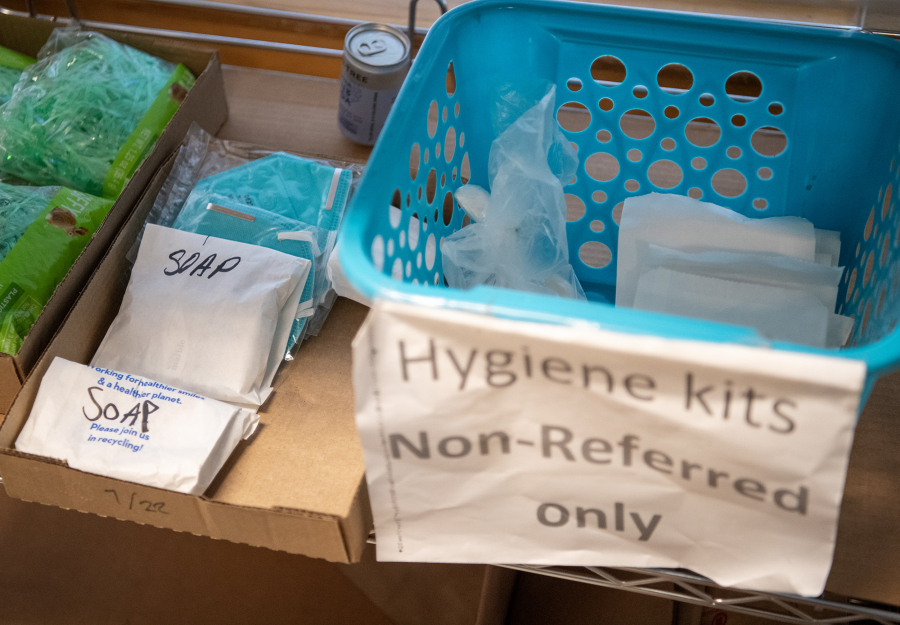
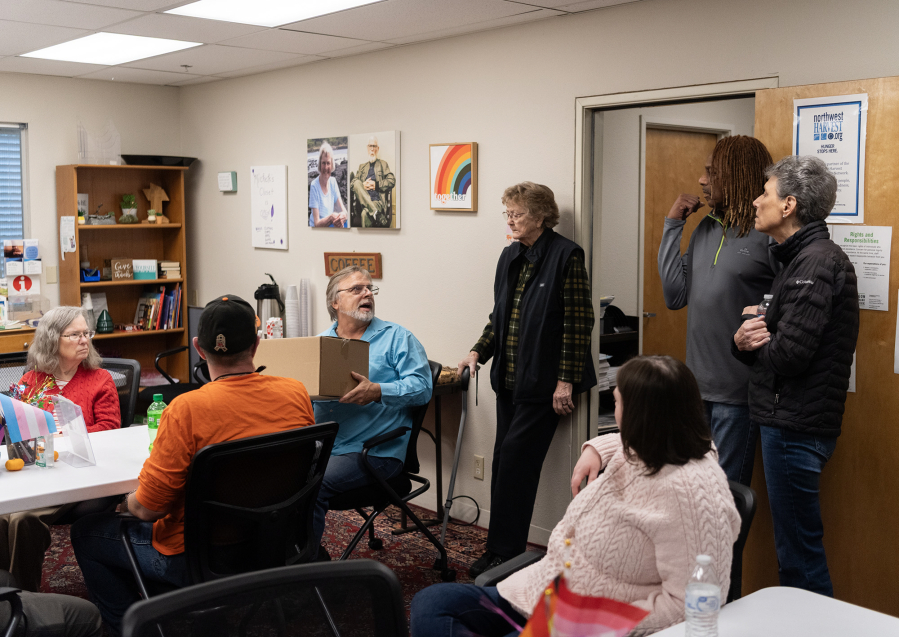
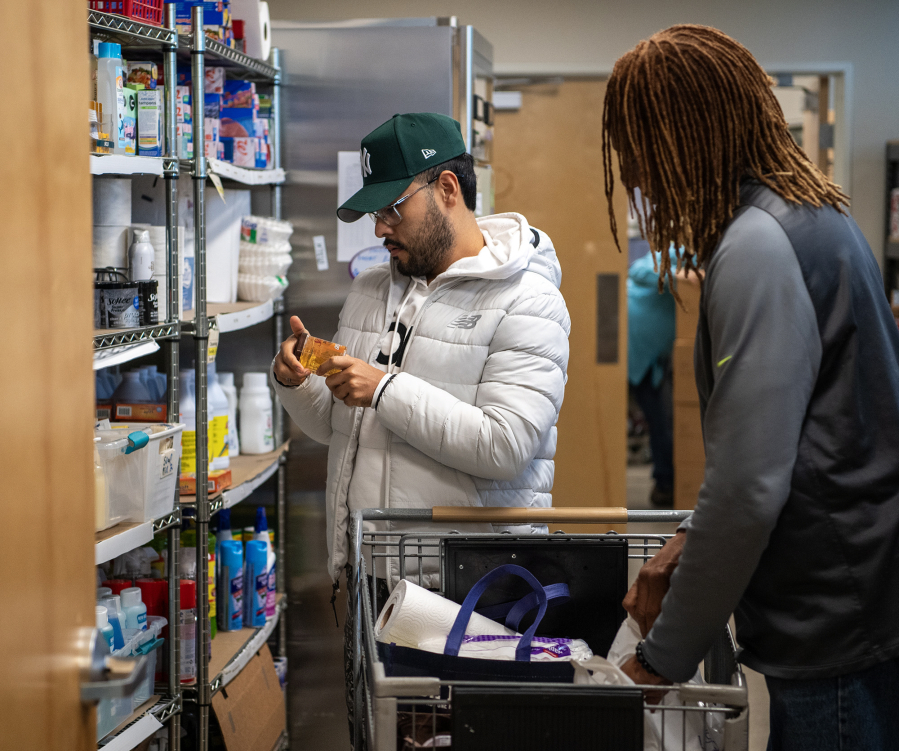
While an arson at the Hazel Dell church forced Martha’s Pantry to relocate for a few years (to another welcoming local church), it only came back stronger. It formalized in 2019 a special partnership agreement — a “covenant” based on compatible missions — with the Metropolitan Community Church and with both agencies’ landlord, the Vancouver United Church of Christ. The pantry offers a lot more than just food, Smith emphasized. In addition to the cleaning and household supplies that can be crucial for someone with a compromised immune system, the pantry is a meeting place and social scene. It even has a van that — in addition to going on shopping runs and picking up donated supplies — has been used for field trips to the Oregon Coast and to Multnomah Falls.

“We don’t just provide food. We provide family,” Smith said.

Smith served as executive director at the pantry, more or less continually, from 2000 through spring 2023. That’s more than enough time for one person to be at the helm of a nonprofit, she said. She’s tried at times to step back, but need never goes away and her deep experience keeps proving valuable. So today she calls herself a consultant.

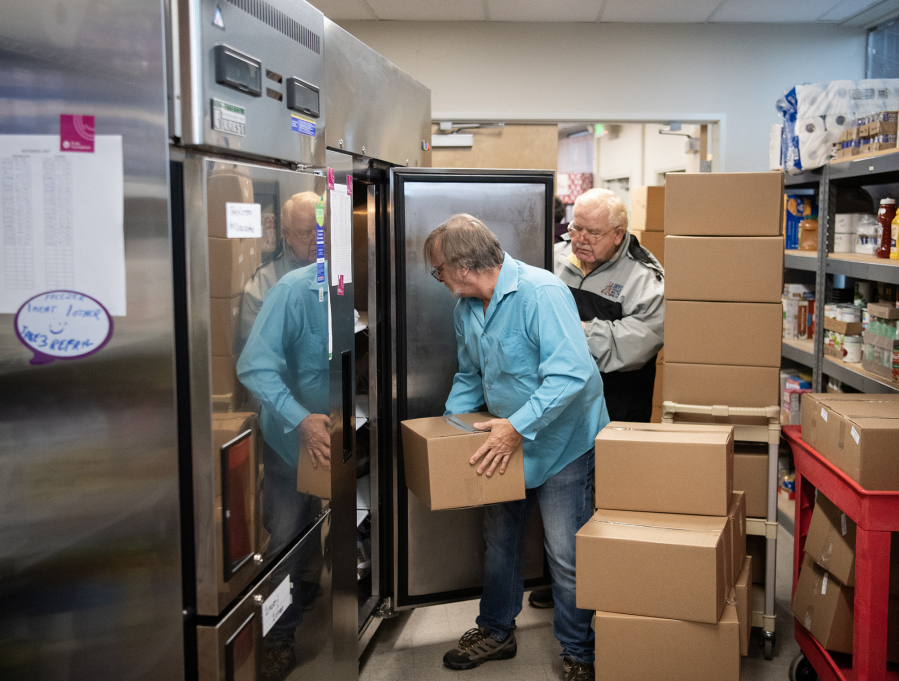
“We used to serve 30 to 40 clients with HIV per month,” she said. “Now we serve 57 families each day we’re open. The demand has increased exponentially.”

Which means there’s always a role for Martha, Smith said. Martha is the New Testament figure who’s known for being faithful, generous, industrious — and just a little cranky about all that.

“She did what she had to do, even if she didn’t want to,” Smith said. “So, we keep working.”