Camas-Washougal logo tag

Washington, Oregon legislators irked at lack of cost update for I-5 Bridge replacement

Officials note cost of materials, labor are increasing

By
timestamp icon
category icon Clark County, Government, News
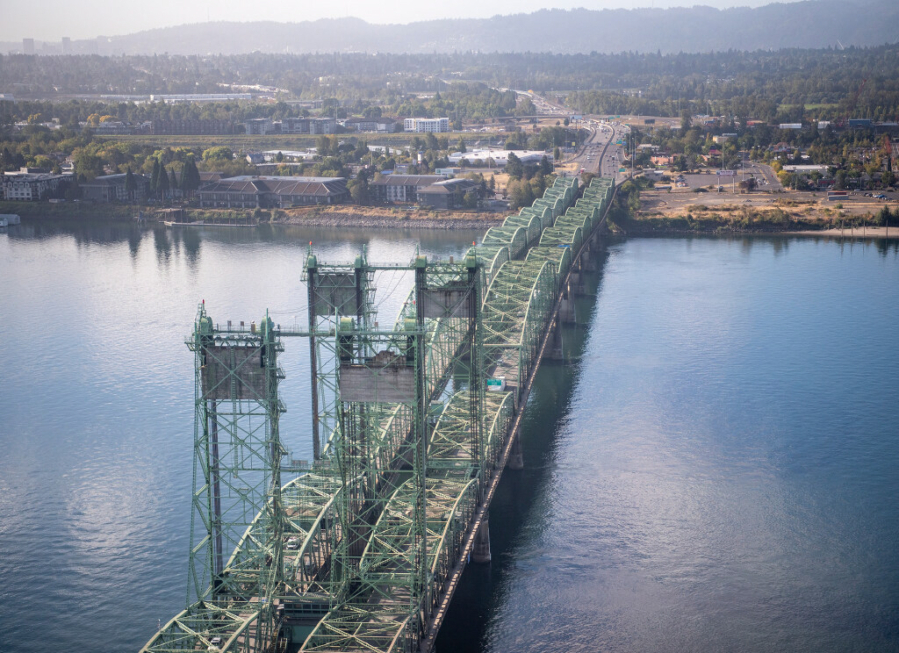
The Interstate 5 Bridge crosses the Columbia River on Oct. 11, 2022. (Taylor Balkom/The Columbian files)

Legislators on both sides of the Columbia River expressed disappointment Monday after Interstate Bridge Replacement Program leaders failed to provide a long-awaited cost estimate update during their bistate legislative committee meeting.

“I’m hoping you can get us a budget estimate in January so we have something to go by,” Oregon Rep. Thuy Tran, a Democrat representing the state’s 45th Legislative District in Northeast Portland, told incoming IBR Program Administrator Carley Francis during the remote committee meeting. “I’m not expecting you to have a finite budget plan, but you can’t punt this down the road. … I want a date, and I want a report. Otherwise, I would say your team is not doing its work.”


The total cost of replacing the two aging, seismically vulnerable spans of the Interstate 5 Bridge that stretch over the Columbia River between North Portland and downtown Vancouver is unclear. The most recent $5 billion to $7.5 billion estimate is about 3 years old and does not take into account recent inflation or increased material and labor costs.

Francis said Monday the price of steel and concrete has jumped in recent years. She pointed to a Federal Highway Administration report showing that construction costs in general increased 70 percent between 2020 and 2024.

“We are watching industry trends,” Francis told legislators, “and we are committed to keeping you informed as work progresses.”

In September, outgoing IBR Program Administrator Greg Johnson told the bistate legislative committee that the bridge replacement’s current cost estimate could balloon given what he called an “inflationary spiral” on major transportation projects in the United States.

A recent Baltimore bridge replacement project, Johnson said, increased from its original cost estimate of $1.5 billion to more than $5 billion.

“These are the types of things we’re tracking,” Johnson said. “The megaprojects around the country are helping to inform how we project risk.”

Given the September discussion, many committee members had expected to see updated cost estimates Monday.

Republican Rep. John Ley, who represents Washington’s 18th Legislative District, said Monday he was “extremely disappointed” by the lack of new cost information.

“The states need to have a financial plan,” Ley said. “If costs are going up, the two states may be asked to contribute additional money.”

Ley was not alone in his frustration.

“This bridge is getting out of control on spending,” said Oregon Rep. Shelly Boshart Davis, who represents the 15th Legislative District. “We’re at a place where (you) can’t give a cost, can’t tell Oregonians and Washingtonians the cost of what we’re looking at. … This is craziness, and I’m trying to wrap my mind around where we are today.”

The legislators had good reason to expect to hear cost estimate updates Monday.

During the group’s September meeting, Frank Green, an IBR Program assistant administrator, told legislators his team was working on updated cost estimates for both a fixed-span bridge design and a more expensive moveable bridge, and he expected to share that information with legislators in December.

Two weeks later, the federal government went into a 43-day shutdown, thwarting the IBR team’s plans.

Awaiting Coast Guard

On Monday, Johnson told legislators his team had submitted an updated navigational report to the U.S. Coast Guard in early October. The government shutdown impacted the Coast Guard’s ability to process that report, open a public comment period and issue a decision on the required bridge height.

Get the latest headlines in your email every week!

This field is for validation purposes and should be left unchanged.

The height requirement will determine the type of replacement bridge necessary to meet river users’ needs. If a moveable bridge is necessary, the costs are likely to go up by at least $500 million, IBR Program leaders said Monday.

Johnson said the Coast Guard opened its public comment period last week and is expected to issue a decision within 30 days of the comment period’s Jan. 11 closing date.

Rep. Jake Fey, D-Tacoma, asked Francis if she could provide updated cost estimates within 60 days of the Coast Guard’s decision.

“That seems reasonable,” Francis said. “Our team is still mapping it out right now. We will share it as we know it.” (Francis, the Southwest Washington region administrator for the Washington State Department of Transportation, is taking over as interim IBR Program administrator in January until the team can find a permanent replacement for Johnson.)

State legislators Monday also expressed concerns about how a potential cost estimate increase might impact Oregon’s and Washington’s budgets, but IBR Program leaders have their own time crunch when it comes to updating the financial plan for the replacement bridge.

IBR Program leaders are required to obligate $927 million from a $1.5 billion federal infrastructure grant by the end of September 2026, or they risk losing those critical funds, said Ray Mabey, an assistant program administrator.

“We’re watching that date and working with federal partners to achieve these milestones,” Mabey said Monday.

Economist Joe Cortright accused IBR Program leaders of dragging their feet on providing new cost estimates.

“The Coast Guard has already told you this fixed-span (bridge) is unreasonable. The Coast Guard is likely to reject this proposal and force you to have a much more expensive project that will push (costs) into the $9 (billion) to $10 billion range,” Cortright said.

He told legislators he’s worried the grants approved by the Biden administration will be pulled if IBR Program leaders fail to meet the September deadline.

“Be prepared for some very, very bad news,” he told the legislators. “In short, they know the cost estimate is going to be much higher, and they’re not sharing that with you.”