Camas-Washougal logo tag

Point-in-Time report finds number of homeless in county jumps 12%

Count in January 2024 found 5 percent increase

By
timestamp icon
category icon Clark County,
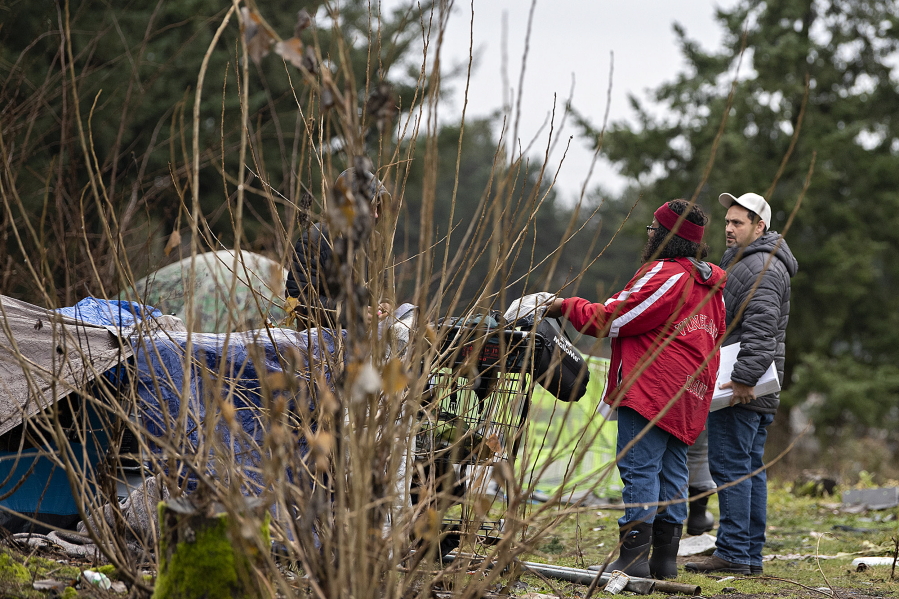
Council for the Homeless outreach team members Magellan Rankin, in maroon, and Brian Starbuck offer supplies to a man at an encampment near Interstate 205 on Jan. 25, 2024, while conducting the Point-in-Time Count. In 2025, the annual survey showed a 12 percent increase in people experiencing some form of homelessness in Clark County. (Amanda Cowan/The Columbian files)

The number of homeless people in Clark County rose 12 percent to reach 1,500 this year, a much bigger spike than observed last year, according to data released this week.

On Thursday, the Vancouver nonprofit Council for the Homeless released its 2025 Point-in-Time Count report, an annual head count that takes place on a single day in late January. The jump in the homeless population exceeded last year’s growth of 5 percent. However, the data also showed more people made their way into emergency and transitional shelters.


Leaders said the lack of affordable housing for low-income residents and soaring rents are to blame for the rise in homelessness, which the city of Vancouver has declared to be an emergency.

The fair market rent for a one-bedroom apartment in Clark County is $1,750 per month, according to Council for the Homeless. A Clark County renter would have to earn more than $33 an hour or work 83 hours a week at minimum wage to afford a one-bedroom apartment, according to a Thursday report by the National Low Income Housing Alliance.

“We’re not just facing individual crises but a systemic one,” said Jamie Spinelli, the city’s housing response manager. “It’s the predictable outcome of decades of underinvestment in housing and a social safety net that was already full of holes long before COVID made them bigger and put a great big spotlight on them.”

A closer look at the numbers

The number of domestic violence survivors and older adults who were homeless jumped this year.

Data showed a 55 percent increase among domestic violence survivors — from 98 to 152 people.

Beth Landry, YWCA Clark County’s vice president of domestic violence programs, said her agency is receiving ever more requests for domestic violence services.

“The available assistance is not adequate to meet the immediate needs of survivors in our community,” Landry wrote in an email to The Columbian.

Older adults experiencing homelessness also increased from 2024. In 2025, 133 people 62 and older were living on the streets. Widows and widowers are especially vulnerable to housing instability, as living costs are difficult to manage on one income.

“It was very clear in the data: With likely cuts to Medicaid and other support systems, our most vulnerable — seniors, youth and people with medical conditions — are going to be directly impacted,” said Adam Kravitz, founder of homeless assistance nonprofit Outsiders Inn.

Get the latest headlines in your email every week!

This field is for validation purposes and should be left unchanged.

People of color — who face disproportionate barriers to housing stability, including housing discrimination, higher rates of poverty and language barriers — made up 38 percent of the homeless population in 2025, even though they account for only 25 percent of Clark County’s overall population.

Veterans experiencing homelessness, as well as unaccompanied minors, held steady between 2024 and 2025. The county tallied 39 homeless veterans and six unaccompanied minors.

Unsheltered homelessness increased 11 percent, with 742 people living on the street on the single day in January.

Residents of two homeless camps told The Columbian on Thursday that every corner seems to have more people setting up shelter, making it harder to find space.

‘The need is relentless’

People entering emergency shelters increased 16 percent to 560 people, partly because of the growth of winter and severe-weather overflow shelters, which added 45 more beds. Nearly 230 people were living in transitional housing in January 2025, a 7 percent jump from the prior year.

“It’s clear — we’re always stemming the tide,” Kravitz said. “For every person we house, there’s still someone waiting. We’re doing the work, but the need is relentless.”

Spinelli said efforts to add more shelter capacity have stepped up since 2021. The city of Vancouver plans to open a shelter in summer 2026 that will add 120 beds.

She also said the city’s outreach continues to focus on direct engagement with people living outside to help build trust needed to connect people to housing and other resources.

“To be clear, none of these efforts are silver bullets. But they are smart, targeted and grounded in the understanding that shelter, housing and services need to work together vs. in isolation,” Spinelli wrote in an email Thursday. “Ultimately, we also need far more local housing stock to pair with those supports. So while we can’t fix a regional housing crisis overnight, we can keep adapting our local response to meet the moment.”

Mia Ryder-Marks; 360-735-4547; [email protected]