Camas-Washougal logo tag

Clark County council hears report on agriculture lands

Parcels under pressure to become residentially zoned

By
timestamp icon
category icon Clark County, Environment, News
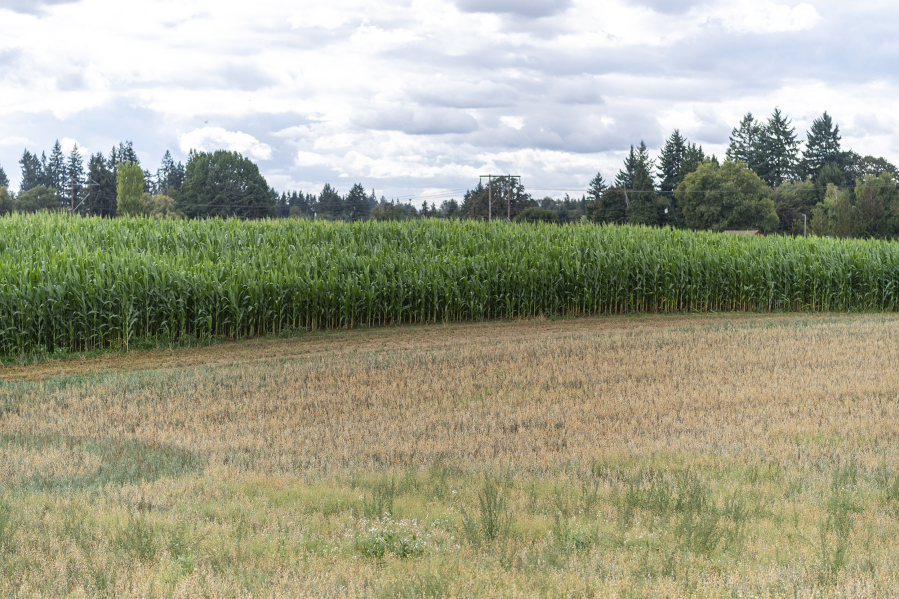
A study of Clark County’s agricultural land has found that 98 percent of it is well suited to farming. (Taylor Balkom/The Columbian files)

A long-awaited study of Clark County’s agricultural land found almost all of it is well suited for farming, although it’s fractured into small parcels that undermine commercial viability.

Portland consultant ECOnorthwest presented the study to the Clark County Council on Wednesday.

The study is required by the state’s Growth Management Act before agricultural land can be designated for other uses. As councilors update the county’s 20-year growth plan, the cities of Ridgefield and La Center, as well as developers and builders, are seeking to convert lands currently zoned for agricultural use to residential lands.

The last comprehensive agricultural resource lands study undertaken by the county was in 1994, when the growth plan initially was adopted.

Barrett Lewis of ECOnorthwest told councilors that 98 percent of the land his firm surveyed is agriculturally viable.

“From a soil-capability perspective, the vast majority of lands identified in the study area are physically well-suited for agricultural production,” according to ECOnorthwest’s report.

The report looked at about 130,500 acres of agricultural lands in unincorporated Clark County, or about 34 percent of the county’s total acreage. Nearly 29,000 acres were excluded: rural centers (such as Hockinson or Amboy), Cowlitz tribal lands, the Columbia River Gorge National Scenic Area, and dedicated forest lands or lands with mineral resources. The study considered whether the remaining 101,844 acres are currently being used or are capable of being used for agricultural production in the future.

“In terms of supporting local agriculture, zoning is one factor, but I don’t think it’s the only factor,” council Chair Sue Marshall said.

The study considered factors such as soil, crop coverage, parcel size, tax status and county assessor records, as well as proximity to land with commercial uses. The study also looked at methods that other Washington counties have used to determine agricultural viability.

“Land fragmentation is a primary obstacle to the long-term viability of commercial agriculture,” the report stated. “A significant portion of all agriculturally capable land is fragmented.”

In order for land to be developed, it must be “dedesignated” as agricultural land. The study did not include recommendations on land designation but rather provided the data to make those determinations.

The Clark County Council will consider this preliminary report as well as future reports in its decisions.

“This is a discussion we’ll continue to have,” Marshall said. “I don’t think this report means we’re making sweeping changes across the landscape.”