Camas-Washougal logo tag

Camas student club posts signs at Lacamas Lake

'Seeing the lake progressively get worse felt like a call to action'

By
timestamp icon
category icon Environment, News

Audreen Tsai has positive memories from her experiences, mostly hiking, at Lacamas Lake. But she’s discouraged that some of her classmates can’t say the same.

“My friend’s dog drank the algae and died,” said Tsai, a senior at Camas High School. “And a few of my other friends got various infections or got sick from the water.”


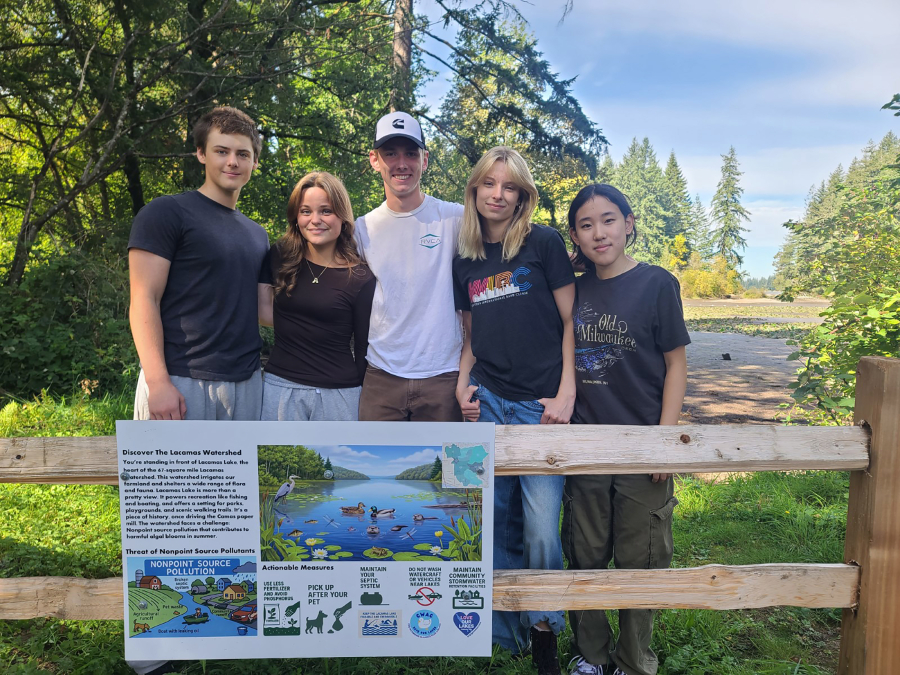
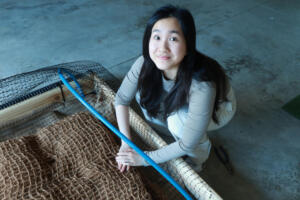
Tsai’s distress over the lake’s worsening algal blooms led her to found the Camas Watershed Alliance Club. The group worked with the city of Camas to create new informational signs at Lacamas Lake.

“Seeing the lake progressively get worse felt like a call to action,” Tsai said.

The Camas Watershed Alliance Club works to address water quality in the Lacamas watershed by educating residents about sources of pollution.

“When I was younger, in elementary school, I don’t think I ever even heard of there being pollution in the lake at all,” said Tsai, who plans to study environmental science in college. “Now that we’re hearing more about it and seeing the progression, and hearing about people getting sick. It’s like, ‘Dang, our lake is really changing, and we really want to fix that.’ ”

Tsai reached out to the city in October 2024 to discuss ways that her group could help inform the public about nonpoint source pollution, which occurs when rain washes contaminants into waterways.

City leaders responded with enthusiasm, said Bryan Rachal, the Camas’ director of communications and public affairs.

“If we can have an opportunity to control nonsource pollutants, to restrict some of the things that are getting into our water, let’s do our part to help that,” Rachal said.

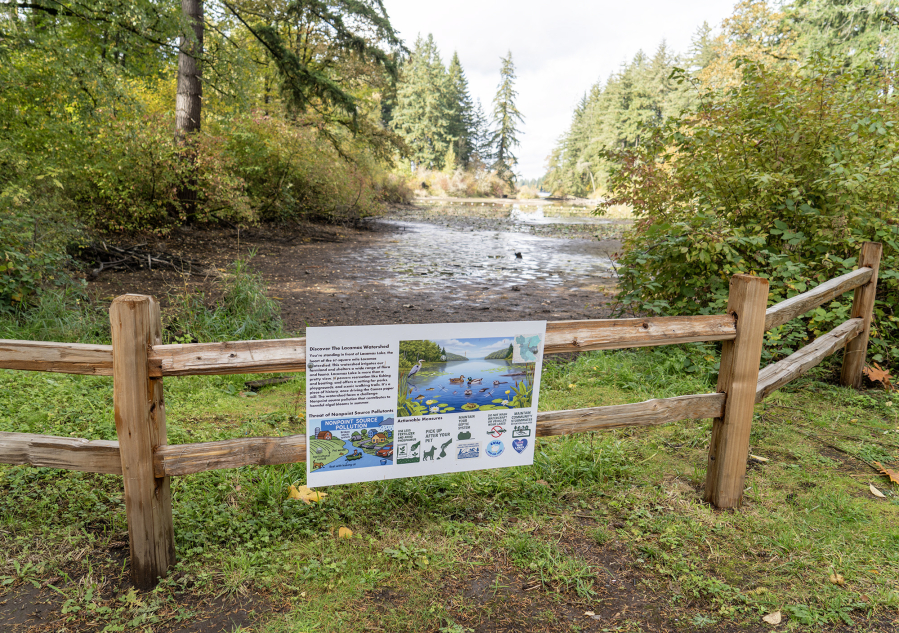
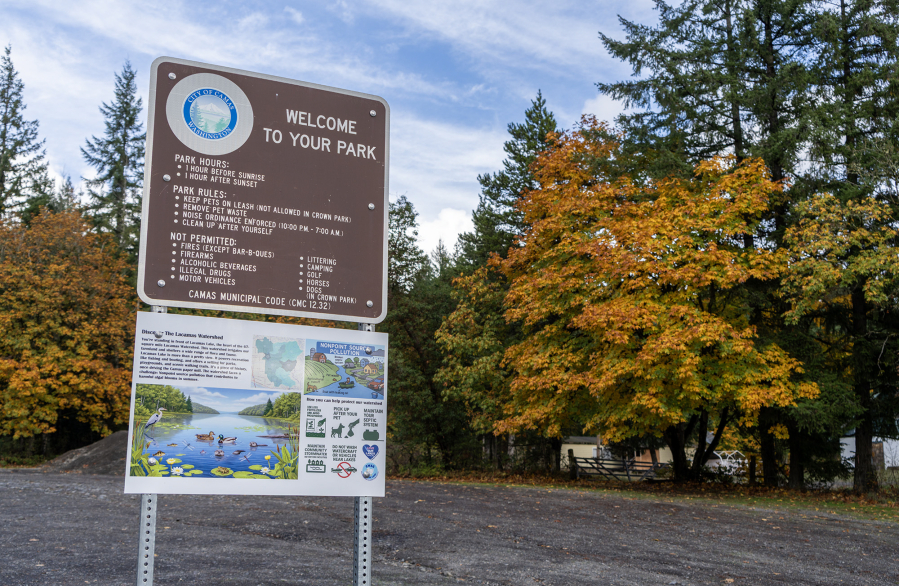
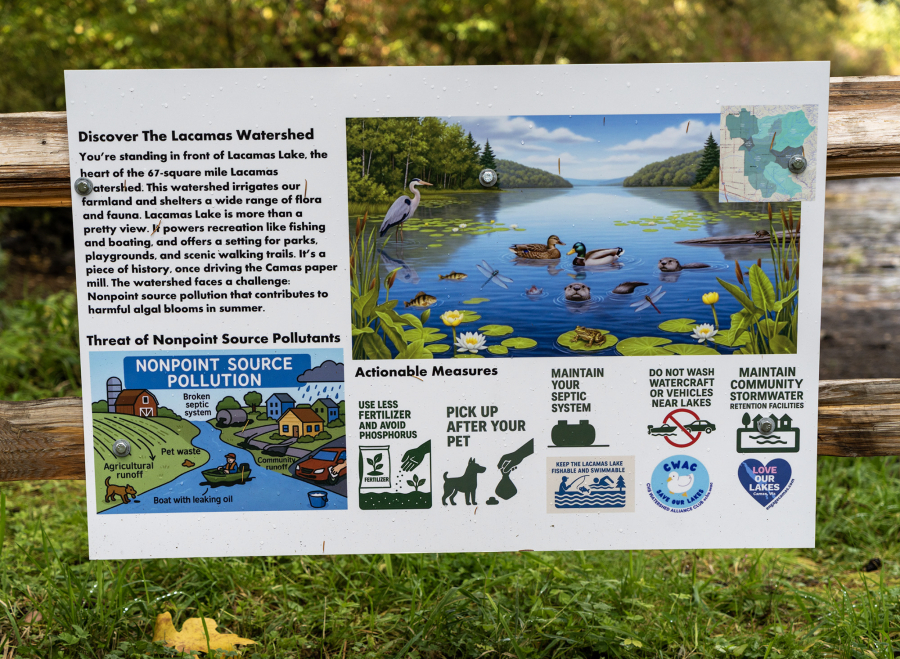
Using the city’s “Love Our Lakes” motto as their guide, the students created two signs that explain the threat of nonpoint source pollution and list actionable steps the public can take to help reduce contaminants from entering the watershed — and ultimately, the lake.

Sources of pollution include fertilizers and pesticides from farms, golf courses and residential subdivisions; animal waste; motor oil, chemicals and metals form roads; failed septic systems; inappropriate waste disposal; discharges and fuel leaks from boats; and leaking storage tanks, according to the club.

“The excess nutrient runoff and pollutants running into the lake is causing cyanobacteria blooms to become increasingly large, especially during the summertime,” Tsai said. “The easiest, lowest-cost way to prevent that is for the community to work together to avoid dumping things down drains into the lake, or avoid washing their cars and letting the excess runoff go into the water sources.”

The signs were erected in the Cove area at Heritage Park and the parking lot on Leadbetter Road on Sept. 21.

“Because they’re placed in areas where it’s common to see people go swimming or boating, I do think that when people see them, maybe they’ll think, ‘If we just clean up our boat before getting into the water, we can contribute less to the pollution,’ or, ‘Maybe I don’t want to swim in this area because it has a lot of algae and it might be dangerous, and I can do something to prevent that so I can go swimming in the future,’ ” Tsai said.

Rachal said that community collaborations are “a huge benefit” to the city, highlighting previously established partnerships with the Camas Ivy League and the Lacamas Watershed Committee.

“Students have a reach that we don’t have because they can talk to their friends and parents to help explain this issue and what the city is doing,” Rachal said. “Anytime we can have more amplification of what we’re trying to do, we’re definitely going to take it. And we love helping students.”

Camas High science teacher Ali Coker, the club’s adviser, admitted that the students have needed little advising so far.

“It’s really amazing that they’ve gone through a lot of this without a lot of my help,” Coker said. “They’ve been self-motivated. It’s really impressive that they’ve put in the work, they’ve made the connections and they’ve made a difference.”

Tsai said the club has established an ambitious next goal — creating a school-level foundation to recognize and reward students who make a measurable impact on public education about best management practices.

The group also hopes to host educational seminars and fundraising campaigns to support citizen volunteer groups that monitor, test and report water quality in creeks and lakes; experiment on aquatic plants to reduce nutrients in lakes; assist the city’s lake cleanup efforts; and exchange ideas about best management practices with nationwide organizations via field trips.

“To see these kids at this young age not only want to get involved, but to have this knowledge, to have this idea of what they want to do, it’s just really impressive,” Rachal said. “It makes me excited for the future, and it makes me excited to see what these kids are going to do in college. These kids are going to go on to do some big things, there’s no doubt about it.”