Camas-Washougal logo tag

CytoDyn makes waves in breast cancer care

Vancouver company’s leronlimab in Phase 2 trials with FDA

By
timestamp icon
category icon Business, Clark County, Health, News

Four short years ago, Vancouver-based CytoDyn was embroiled in scandal. But a group of executives fought to bring the biotech company back from the brink and now hope its leronlimab drug can provide a pathway to remission for one of the most lethal forms of breast cancer.

CytoDyn has spent years developing leronlimab, which became entangled in company drama involving an attempted board takeover by shareholder activists, an ousted CEO and a public shaming by the U.S. Food and Drug Administration.


CytoDyn’s executives have worked to move past that period, with leronlimab now in Phase 2 studies with the FDA for treatment of both triple-negative breast cancer and colorectal cancer. The FDA requires four phases of clinical trials before a company can apply to bring a drug to market.

Leronlimab is a therapeutic antibody, which helps immune systems fight disease. CytoDyn is studying the drug’s usage against several different types of cancer.

But it was its pandemic-era research on triple-negative breast cancer that helped shape the focus of the company today.

‘It’s a miracle to me’

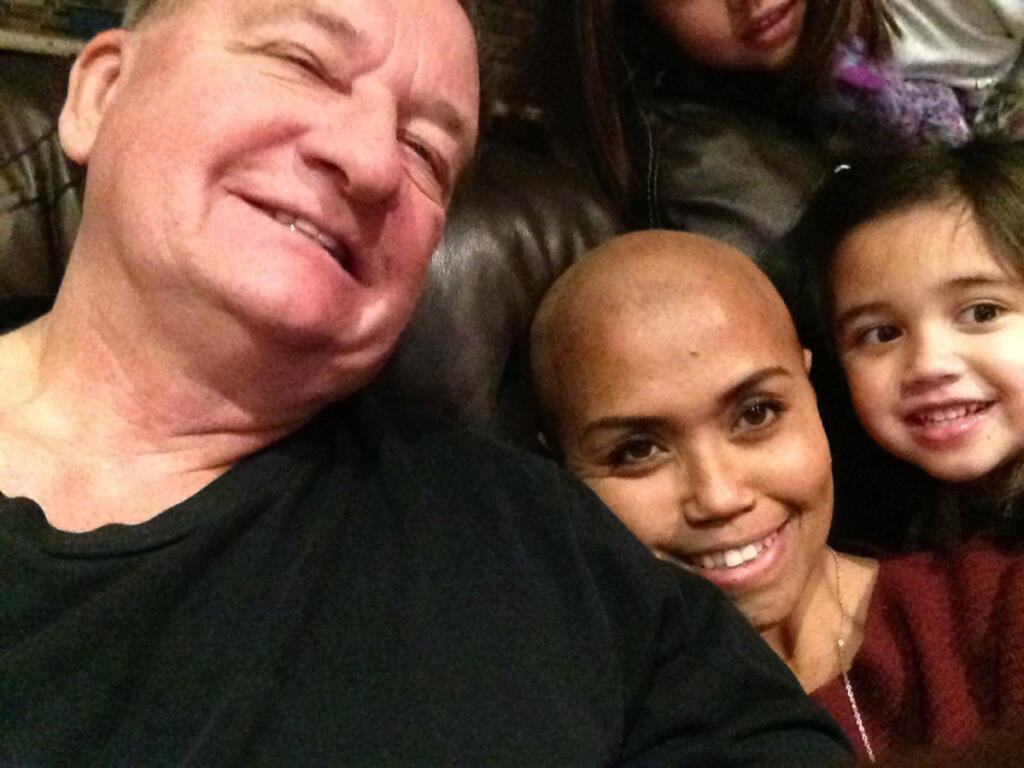
Doctors first diagnosed Wina Peterson of Calgary, Alberta, with triple-negative breast cancer in 2018. The wife and mother of two underwent surgery, chemotherapy and radiation — only for the cancer to return and spread to her lung.

Peterson and her husband, Les, were looking for a drug trial when they came across leronlimab in a Facebook group for triple-negative breast cancer patients. They contacted CytoDyn and — in the midst of the global pandemic — boarded a near-empty plane to San Francisco so Wina Peterson could be evaluated for the program.

Having been approved for the drug trial, she started taking leronlimab that November, while also participating in another trial for an immunotherapy drug, Tecentriq, in Canada.

The handful of women in the trial who survived, including Peterson, took that accompanying immunotherapy drug known as a “checkpoint inhibitor” and had induced PD-L1, a protein the National Cancer Institute said acts as a “brake” to keep the body’s immune responses under control.

“She’s been cancer-free ever since,” Les Peterson said.

Wina Peterson’s side effects have been nearly nonexistent.

She is still taking both drugs today.

“We’re scared to quit,” Les Peterson said.

A new focus

Dr. Jacob Lalezari was working as a clinician in California when he volunteered to become CytoDyn’s CEO.

“I believed in (leronlimab), and I believe that it didn’t get a fair shake last time around,” he said.

When Lalezari first joined CytoDyn, the company carried debt, had high overhead and its image was tarnished by a clinical hold from the FDA.

“But I believed in my heart that the drug worked,” he said. “The question was: Which indication were we going to pursue to demonstrate that to the world?”

The company has pursued a variety of potential illnesses to treat with leronlimab, including Alzheimer’s, stroke, HIV and COVID-19, the latter ultimately leading to its business struggles.

The U.S. Food and Drug Administration issued a statement in May 2022 “that the data currently available do not support the clinical benefit of leronlimab for the treatment of COVID-19.” The leronlimab FDA trials for COVID are currently paused.

The company only had one bite left at the apple, Lalezari said.

“We had to sort through where we were going to spend our very limited resources,” he said.

Executives were about to pursue treatment for inflammation when they discovered a group of women with triple-negative breast cancer who had participated in a leronlimab drug trial and survived.

That’s when CytoDyn decided to become an oncology company, focusing on solid tumor cancers.

“We’ve also made significant strides in other solid tumors,” Lalezari said.

Robert Hoffman joined the company as chief financial officer after retiring from a career in the pharmaceuticals industry. He’d already left retirement once to work for a company studying treatments for glioblastoma. But the effort proved not to perform better than the standard form of care, so he retired again.

He met with Lalezari, however, and went over the data for leronlimab. He was convinced to join the team.

Hoffman said when he considered the situation, he thought, “This may be my last opportunity for that company that changes the landscape for helping women, in particular, with cancer.”

Lalezari said leronlimab doesn’t appear to have any significant toxicity. It could be taken in conjunction with another drug or on its own. And he’s optimistic it could create a “pathway to sustained remission.”

“I know that’s a big statement, but more and more I feel like leronlimab is going to change the way that many solid tumors are treated,” he said.

‘A huge web’

Finding a cure for cancer isn’t a simple task.

Cancer may have been cured in mice millions of times, said Sanjay Malhotra, co-director of the Center for Experimental Therapeutics at the OHSU Knight Cancer Institute in Portland.

Malhotra isn’t specifically familiar with CytoDyn or leronlimab but has years of experience in oncology research, as well as a doctorate in chemistry and chemical biology.

“It has not been duplicated in humans, which means something is missing,” Malhotra said.

Hundreds of people are working on cures, Malhotra said. The Knight Cancer Center itself is working on many different types of cancers, including triple-negative breast cancer.

Lalezari said what sets leronlimab apart from other treatments is its mechanism, monoclonal antibodies, which bind to specific targets to block that target’s activity or change how the body’s immune system responds to it.

Leronlimab targets CCR5, a receptor that’s been associated with the development and spread of cancer. The company thinks blocking this receptor could support anti-tumor immune activity.

The impact of a cure for triple-negative breast cancer would be huge, Malhotra said. That particular subtype is very aggressive, he added, and the cancer cell itself is exponentially complex.

“It’s a huge web,” he said.

Scientists have made many advances in cancer treatment, moving past the days of intense chemotherapies and surgeries given universally.

Malhotra said scientists still need to know more about triple-negative breast cancer and its biology to develop more therapeutic approaches.

“We need to know what the problem is first,” he said.

CytoDyn recently announced funding for its expanded access program, bringing leronlimab to a group of eligible patients with triple-negative breast cancer who have the advanced disease but wouldn’t otherwise meet the enrollment criteria for CytoDyn’s clinical trials.

If leronlimab gains approval for treating triple-negative breast cancer, Hoffman said the company aims to partner with another pharmaceutical company to market it to patients.

The Petersons hope more people can get access to the drug.

“It’s a miracle to me,” Wina Peterson said. “I thought I was going to die sooner than later.”