Camas-Washougal logo tag

Good vibrations: Sound baths use ancient techniques for creating calm

‘Nine times out of ten they leave much calmer’

By
timestamp icon
category icon Camas, Life

Bubble baths are a time-honored way to reduce stress, as is the Japanese practice of “forest bathing,” or immersing yourself in nature. Now sound baths — a therapeutic practice using sound to a calming effect — are popping up all over Clark County as people seek new ways to relax in these anxiety-ridden times.

Andrea Kintzley, owner of Soul Space Wellness in Vancouver, said she’s seen a resurgence in sound healing in recent years and added sound baths to her wellness services in 2022.

“A lot of people I encounter are really curious,” Kintzley said. “My experience has been that people are looking for space to come back to themselves, not looking for answers outside of themselves, but looking to their own rhythms and how they feel.”

Ancient method, modern science

Metal or crystal “singing bowls” have been used for thousands of years in meditation practice, but musician Don Conreaux is credited with creating the modern sound bath in 1975. He called it “holistic resonance,” gong therapy or a gong bath and later authored “Magnum Opus of the Gong,” among other gong-related books.

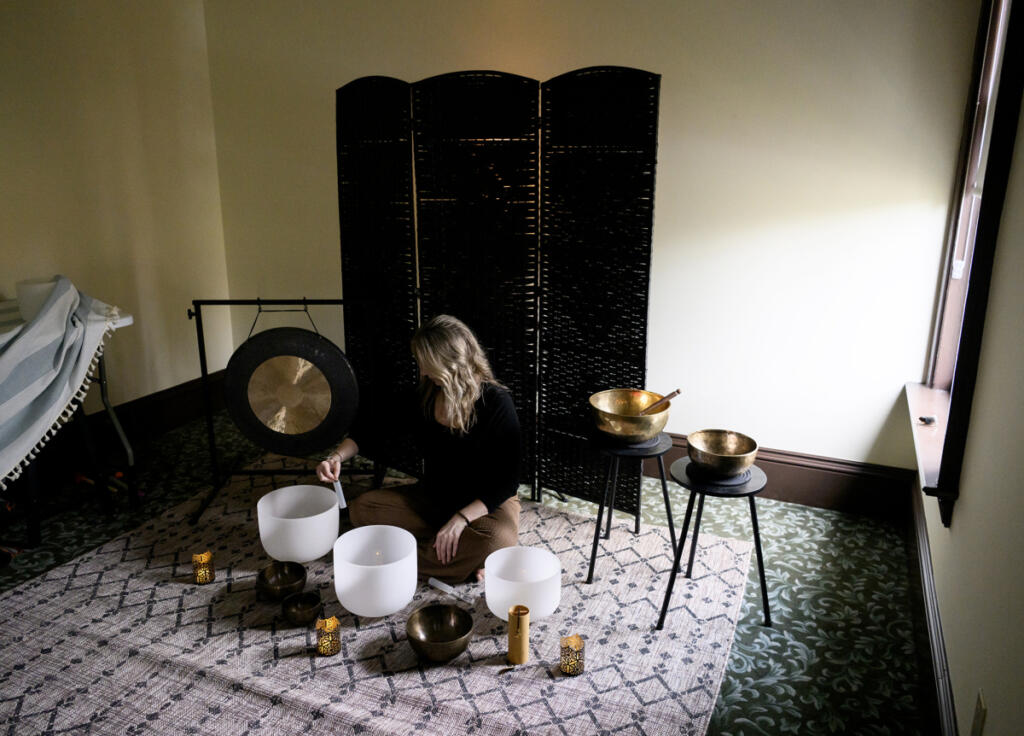
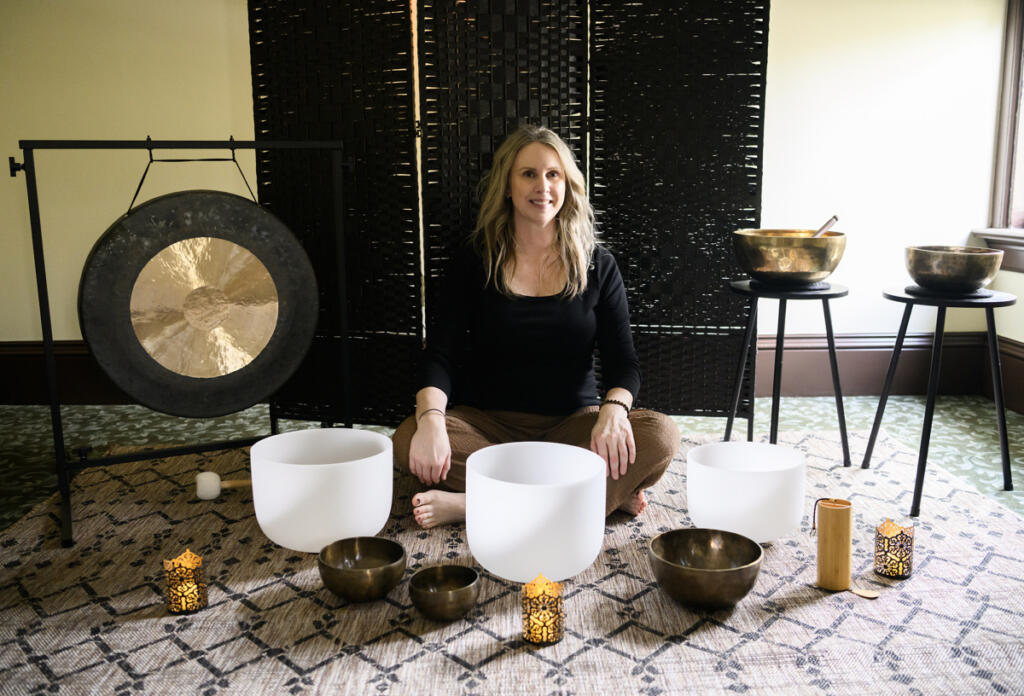
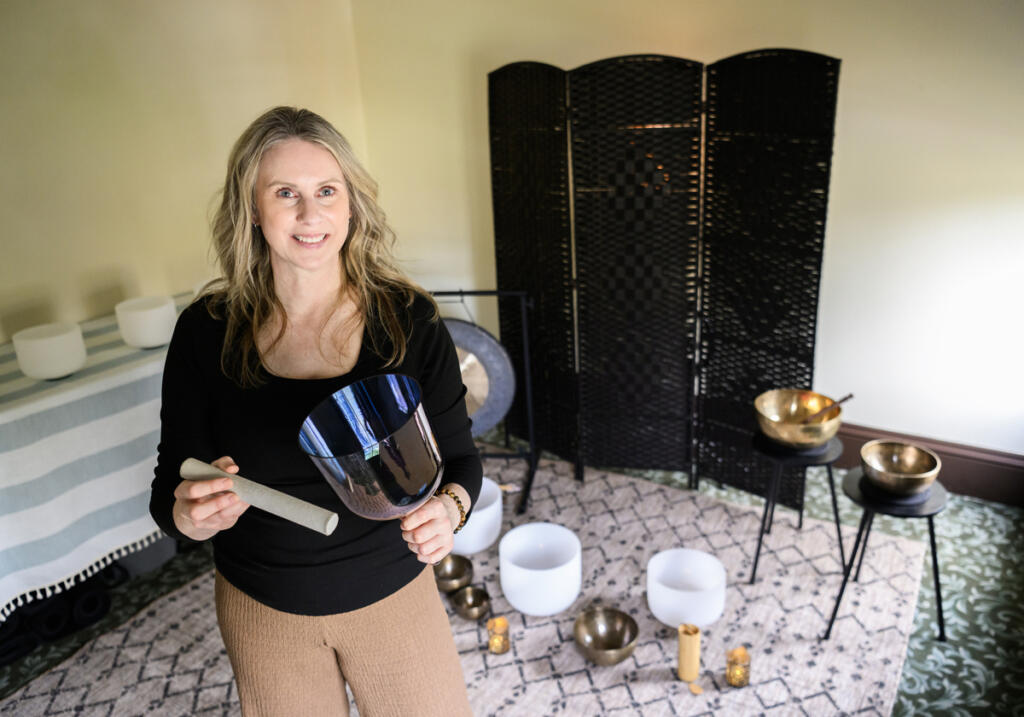
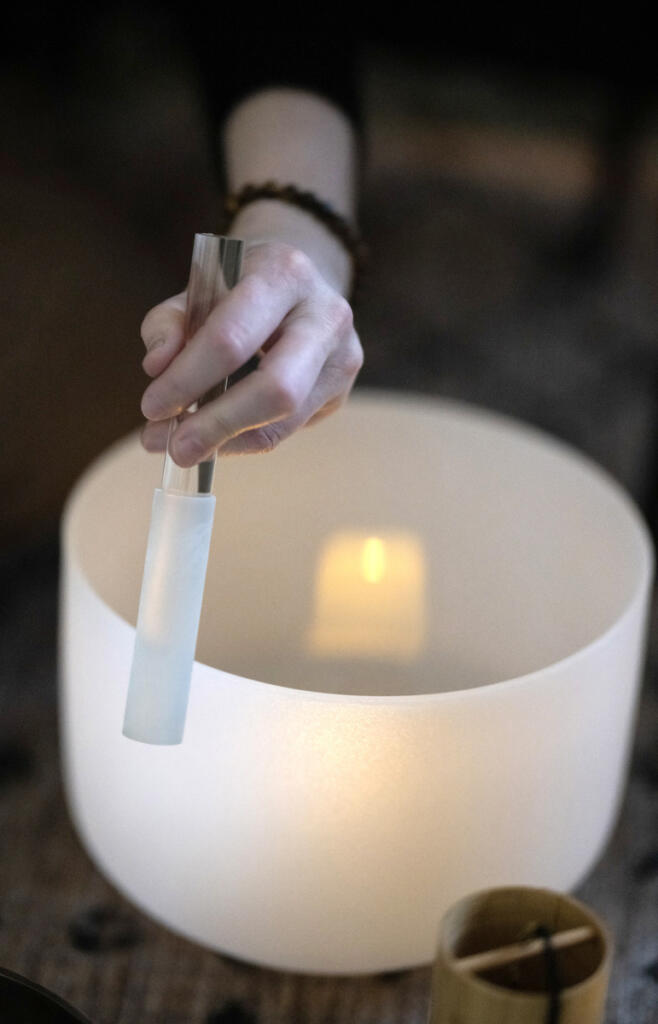
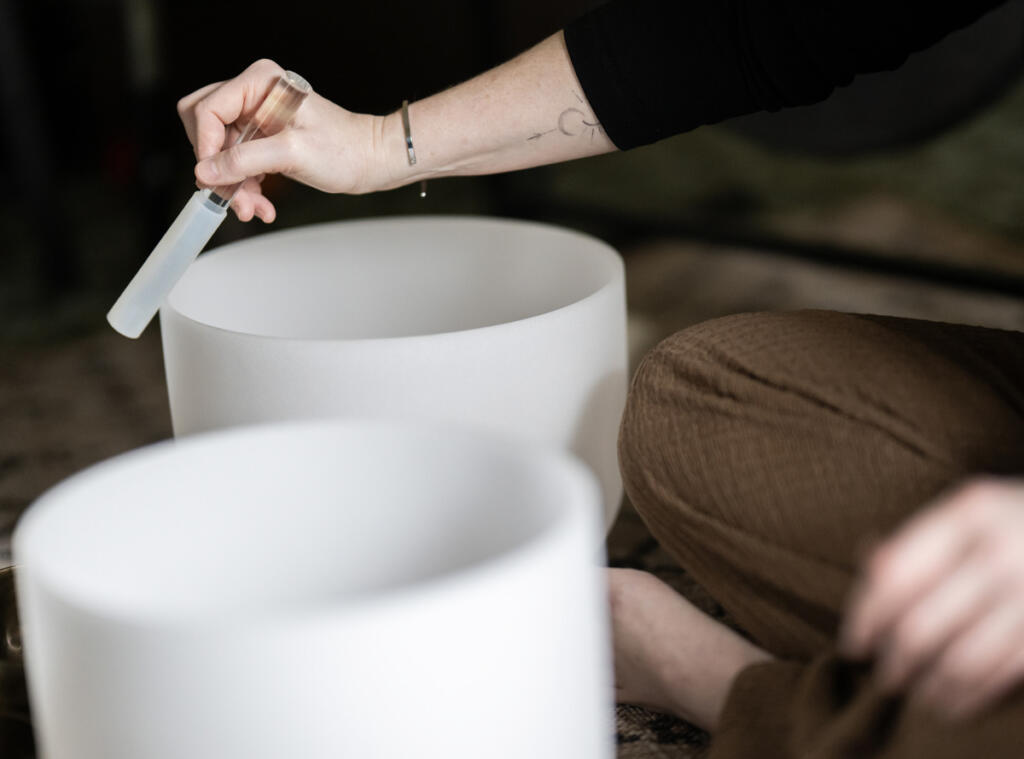
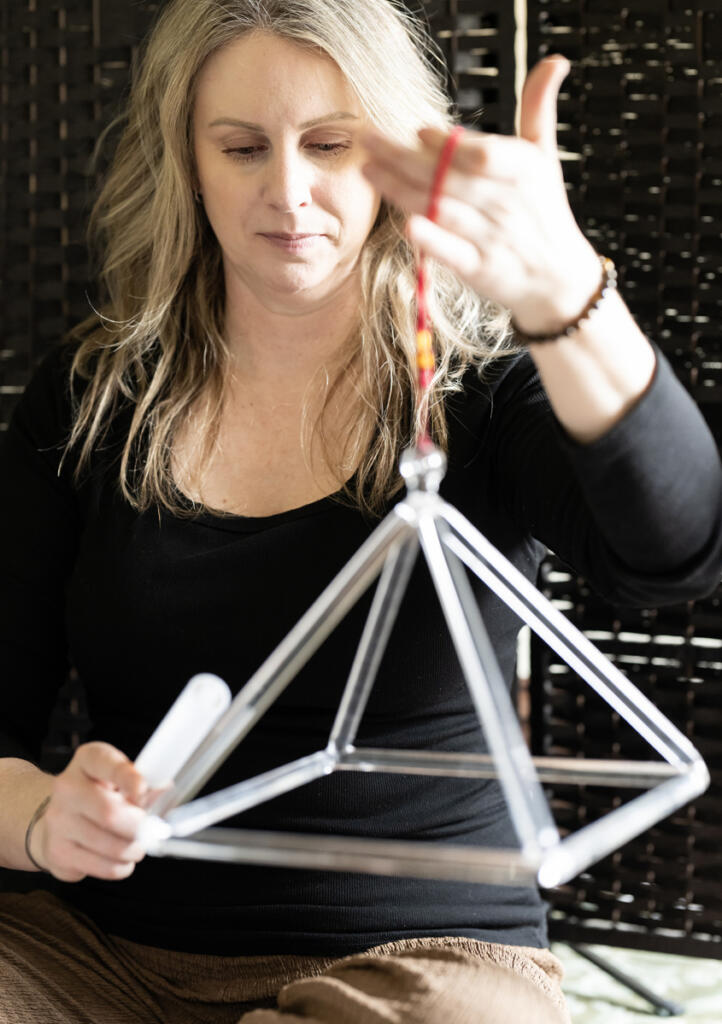
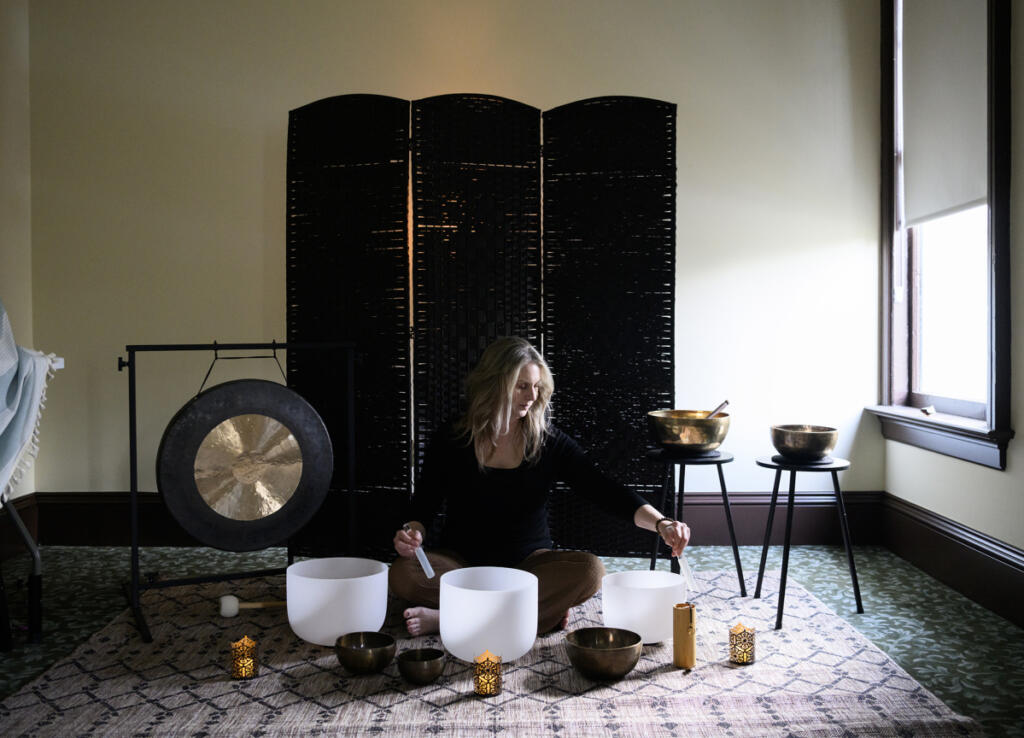
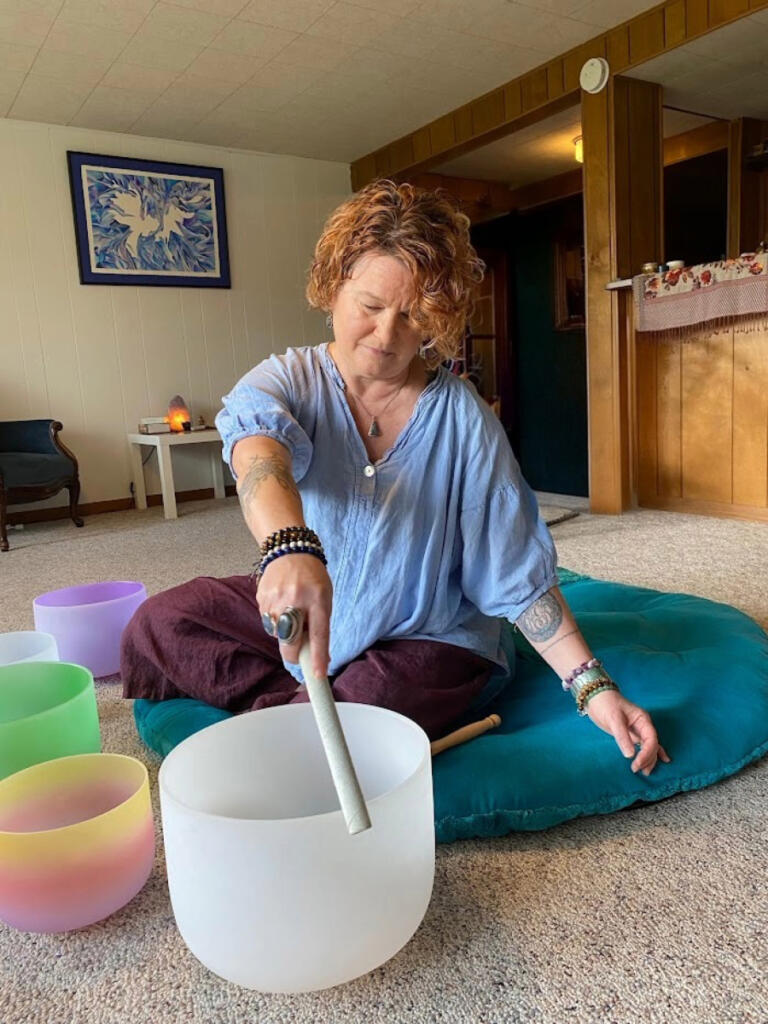
Kintzley does ring a gong during her sound baths, but she mainly plays a set of white quartz singing bowls. Kintzley uses silicone-coated mallets to coax sound out of the bowls, either by striking the bowls or dragging the mallet around the outside, creating vibrations that result in a continuous tone. It’s the same principle as running your finger around the rim of a crystal goblet, Kintzley said.

It may sound like hippie hokum, but there are a great many studies into the science behind how the body processes specific frequencies and whether they may have healing benefits. The Cleveland Clinic published an article about the therapeutic effects of sound baths in 2022 and Psychology Today confirmed in a 2024 article that certain sound waves can lower stress. The International Wound Journal even published an article in 2025 exploring the use of sound to help heal wounds.

To sum up: It’s not a cure-all, but the relaxed state brought on by a sound bath could reduce stress and boost mood, bolstering the immune system and the body’s general restorative functions. In short, it will probably make you feel pretty darn good.

Soothing frequencies

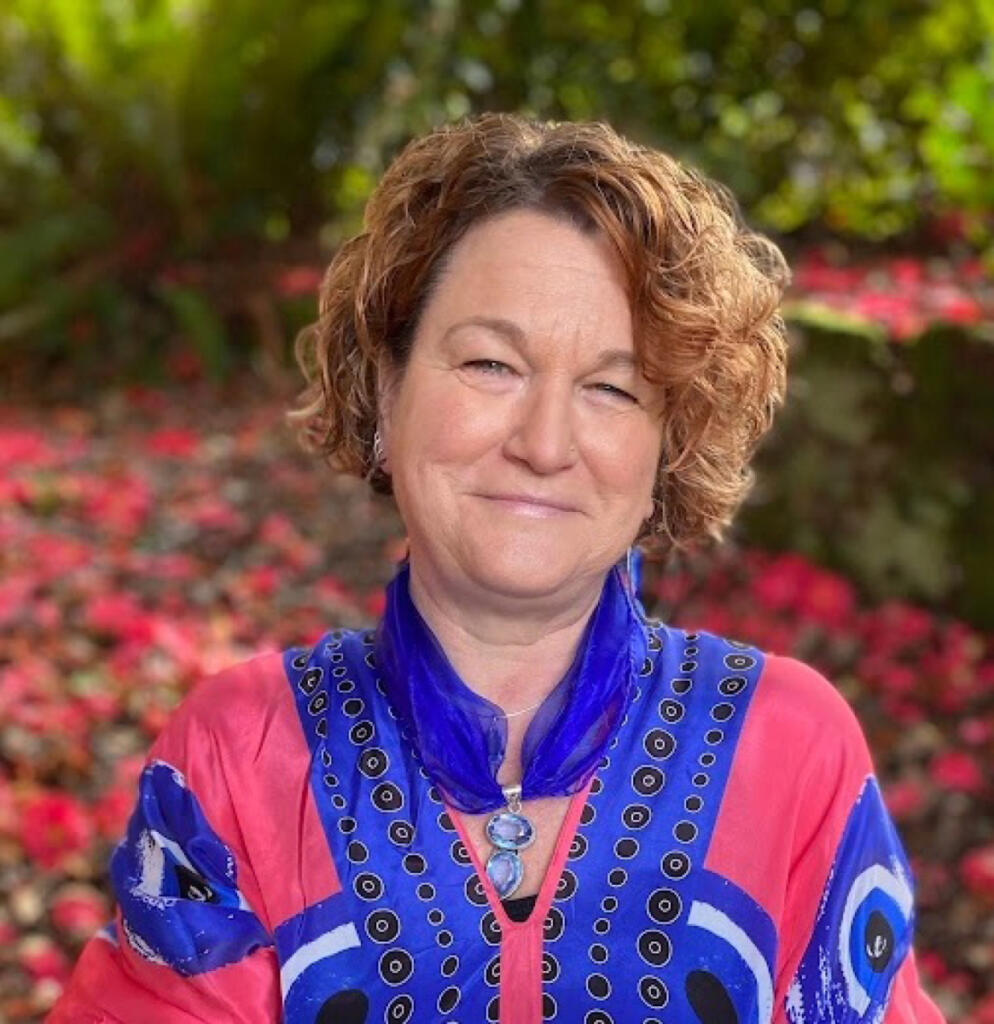
“The frequencies are similar to alpha waves, which are associated with deep sleep and dreaming,” said Rachel Fouts-Carrico, who offers sound baths in her Vancouver home and at The Lilith House holistic wellness center. “People kind of move beyond their rational, day-to-day thinking and tap into that creative, intuitive side of the brain during the sound bath.”

I considered this while I was taking my own sound bath with five other women at Kintzley’s Soul Space Studio, in the O.O. Howard House on Officers Row. The woman next to me almost immediately fell asleep — or at least I think she did, judging by her deep, even breathing. My own eyes were closed and covered by a lightly weighted velvet eye mask. I lay on the floor, a yoga mat underneath me, a fluffy blanket on top and a pillow under my knees.

After the hourlong class, I talked with my neighbor, a 44-year-old ER nurse from Camas named Amy Rothkopf. It was her first sound bath, yet she let go of her worries like a pro.

“I have a busy brain, so I have a hard time with traditional meditation,” Rothkopf said. “Something about the sound fluctuations helped me to calm my brain down.”

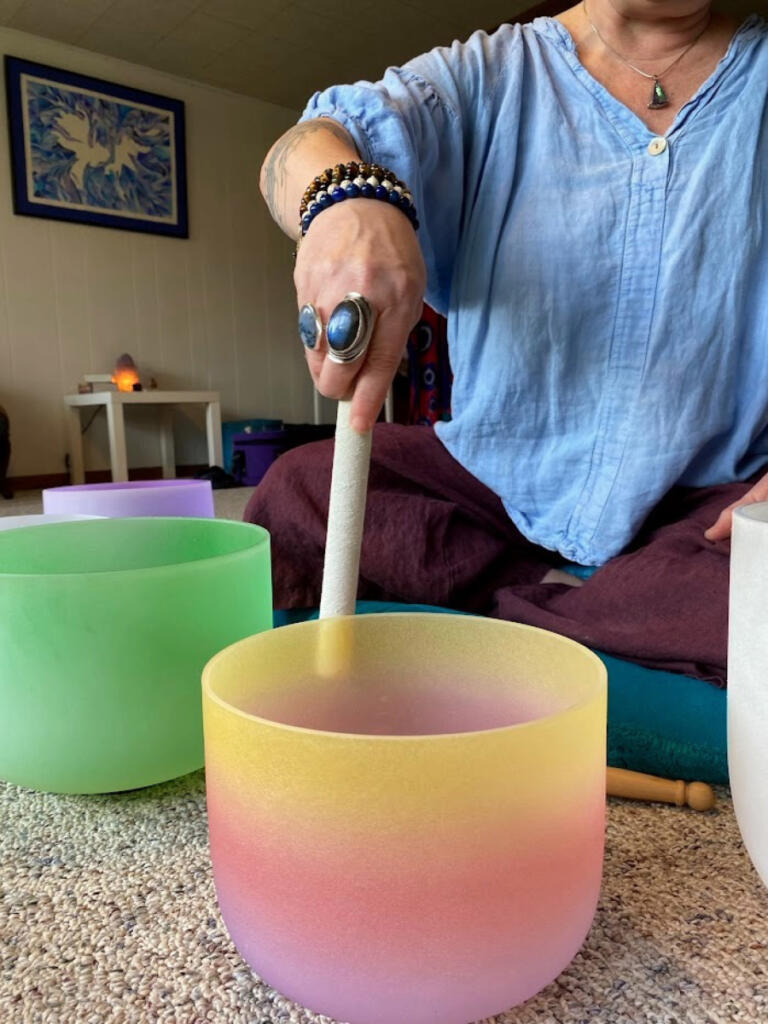
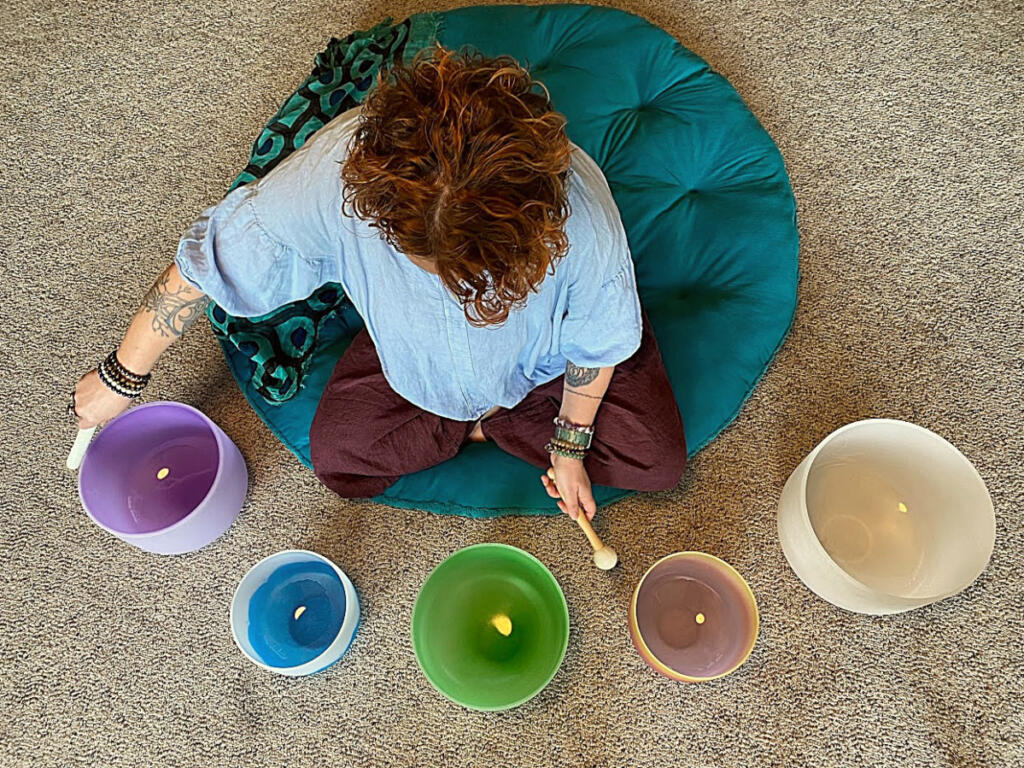
As for my brain, I found it difficult not to stew over deadlines, bills, laundry and whether I ought to start brushing my cat’s teeth. However, I also experienced extended periods when I thought only of the gentle vibrations traveling through my body. I imagined a dark field illuminated with luminescent puffballs of purple, yellow, green, pink and blue.

Fouts-Carrico said that some listeners “experience this explosion of color through their minds.” She’s not necessarily surprised by this phenomenon, she said, because each of her five singing bowls is attuned to a particular chakra (or energy center, in yogic teaching) and each chakra has its own color. Whether people see colors or just drift into dreamland, Fouts-Carrico said her clients leave with a more positive, energized mood.

“Nine times out of ten they leave much calmer and much more balanced compared to how they felt coming in,” said Fouts-Carrico. “I love seeing it. It helps me to feel like what I’m doing is helping people.”

Singing bowls

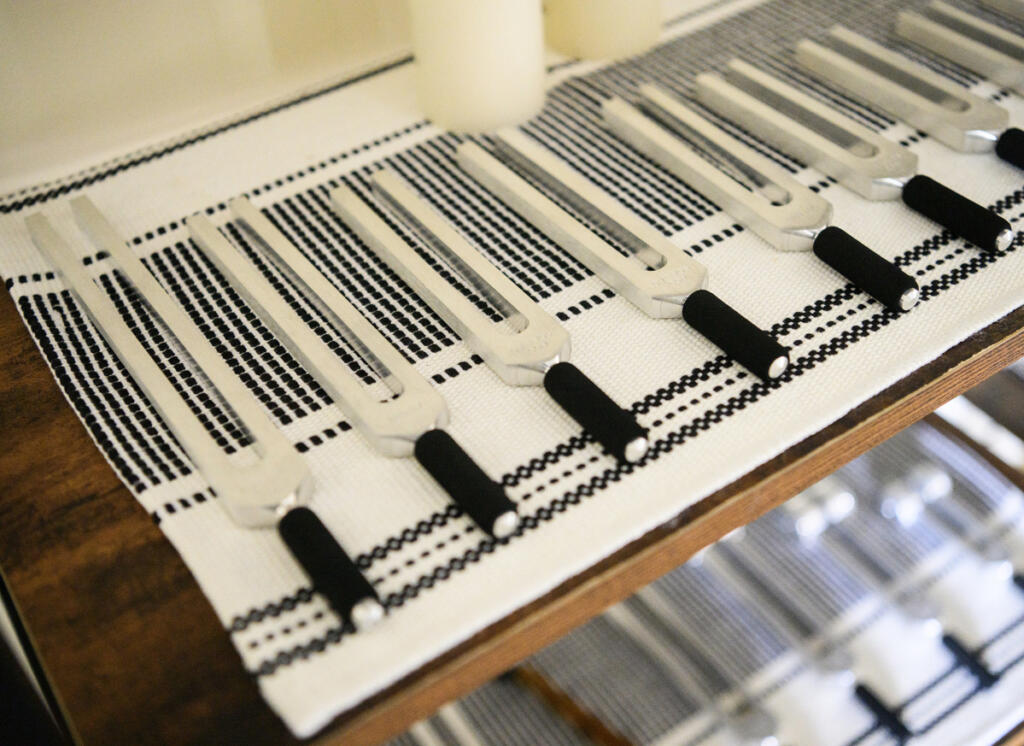
Fouts-Carrico said she sometimes places a special tuning fork on the sound bather’s body, so vibrations can be felt as well as heard. Kintzley also uses tuning forks during one-on-one sessions. She rang one of the forks and touched it to my shoulder. I felt the sound waves move down my arm and into my clavicle. It was quite pleasant and I could have easily spent another hour being massaged by tuning forks.

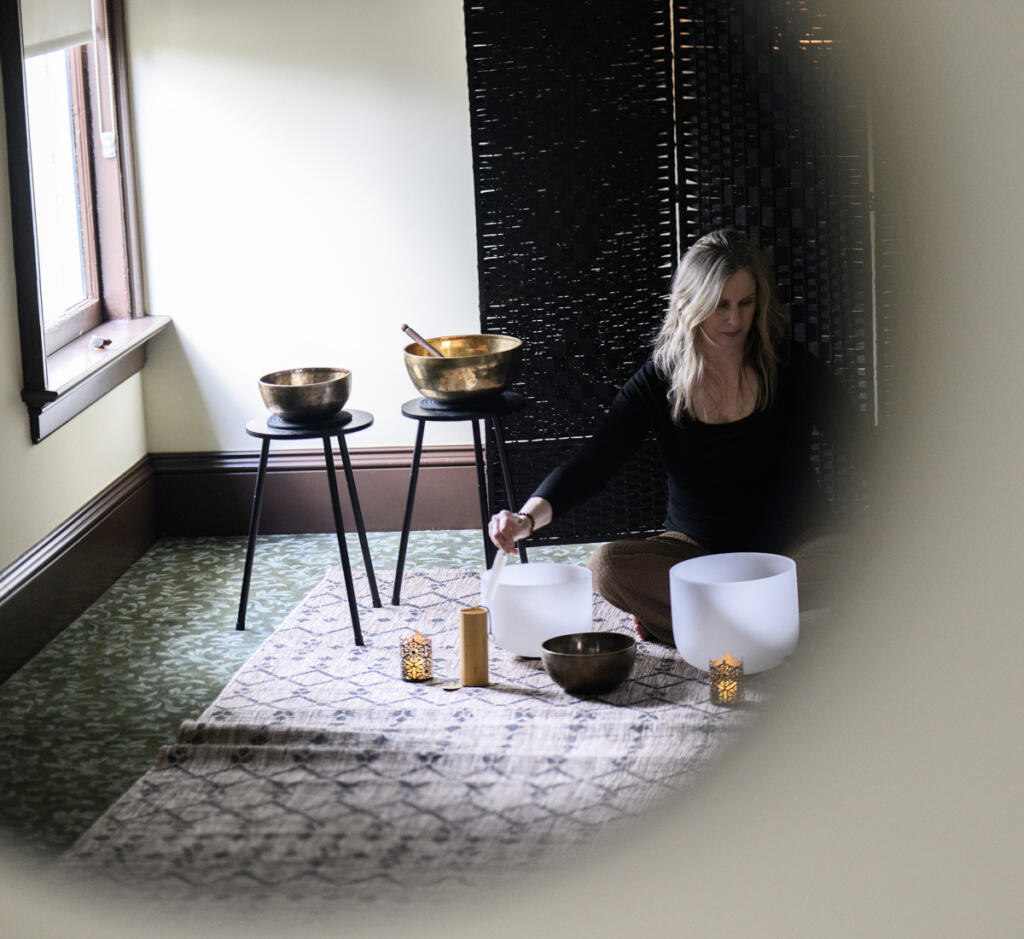
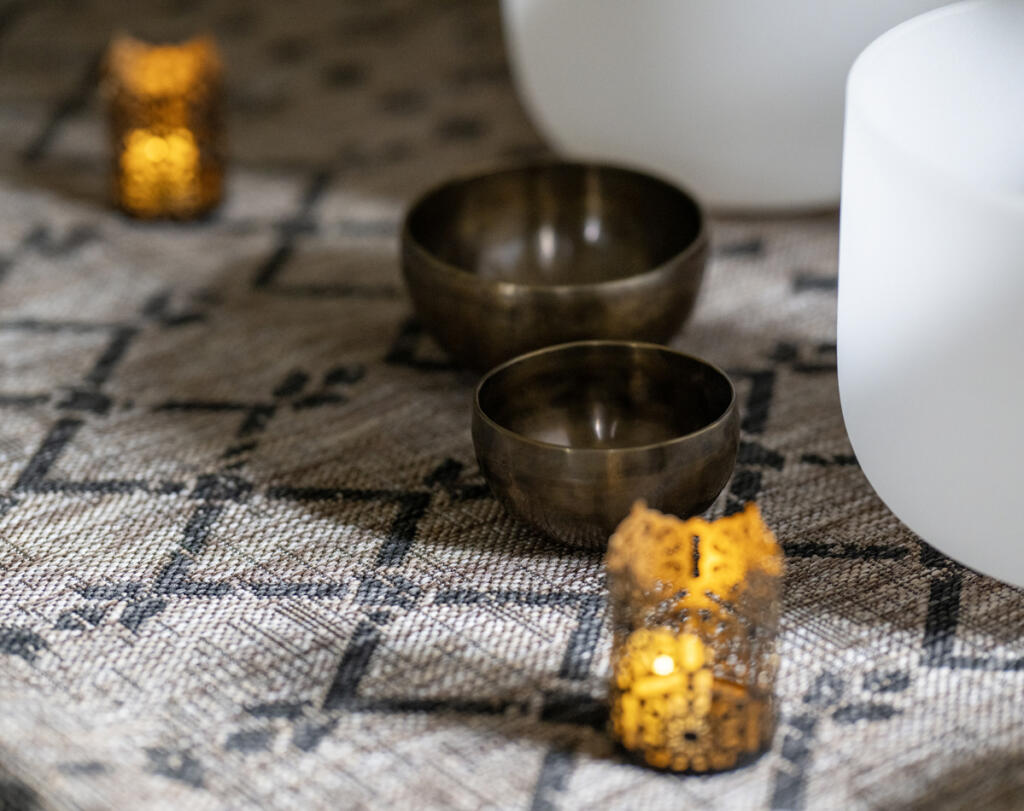
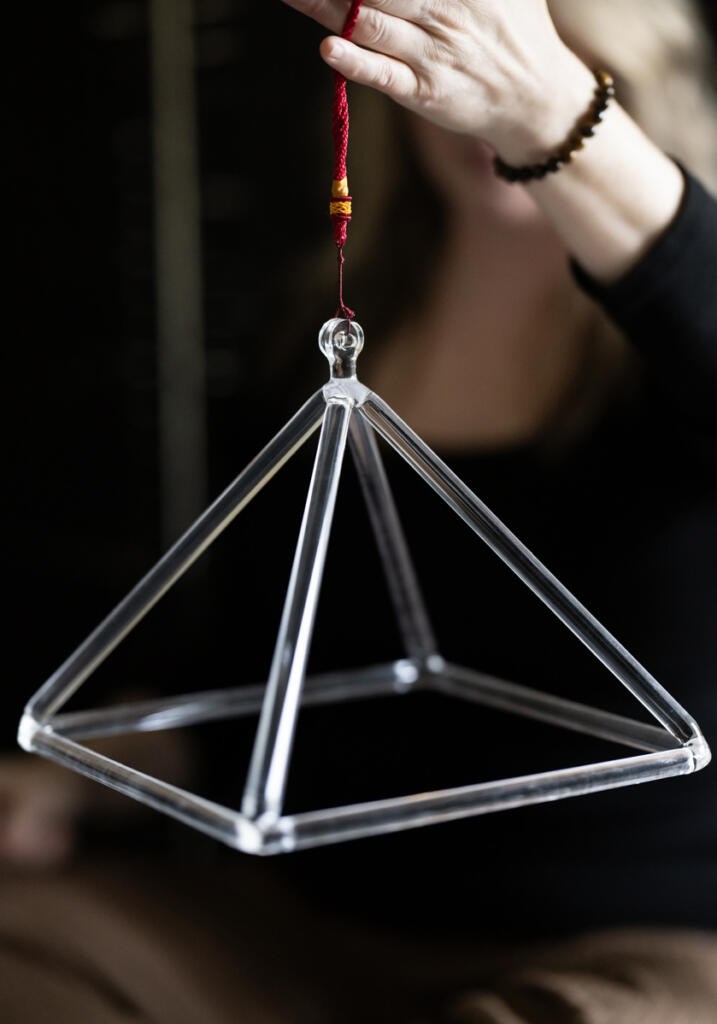
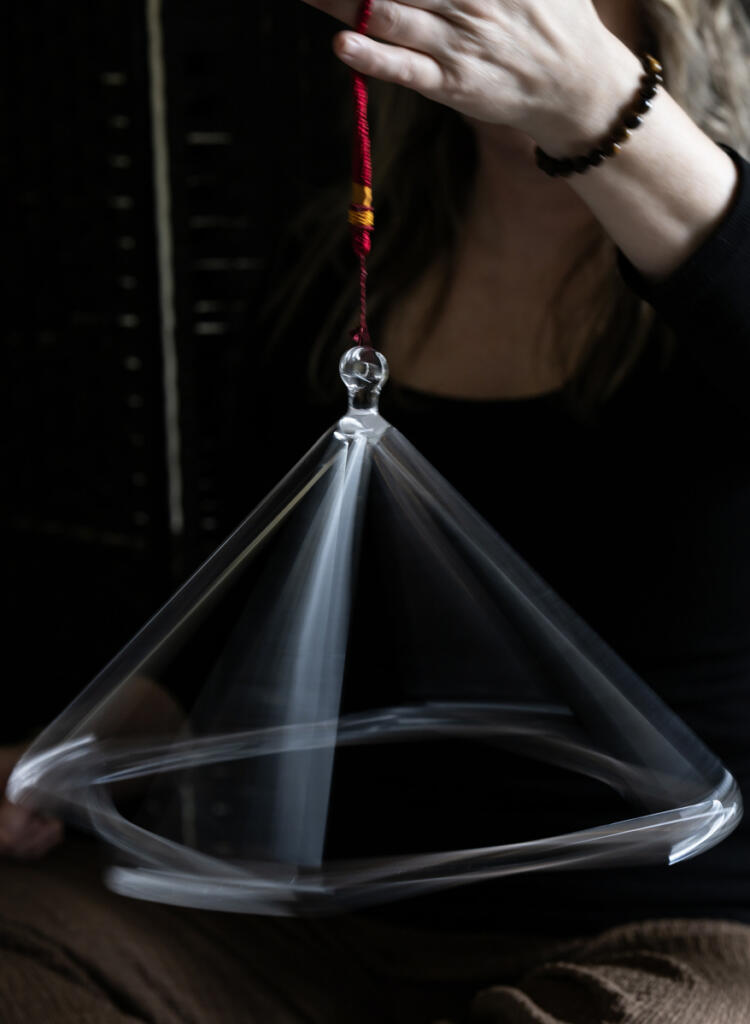
Other instruments Kintzley played during her sound bath included a large, deeply resonant gong; several small Tibetan metal bowls; a set of ethereal koshi chimes that brought to mind breezy summer evenings; handheld crystal bowls like giant handbells; and a quartz crystal pyramid, struck with a mallet and allowed to spin, spreading sound vibrations (I imagined) like a lawn sprinkler.

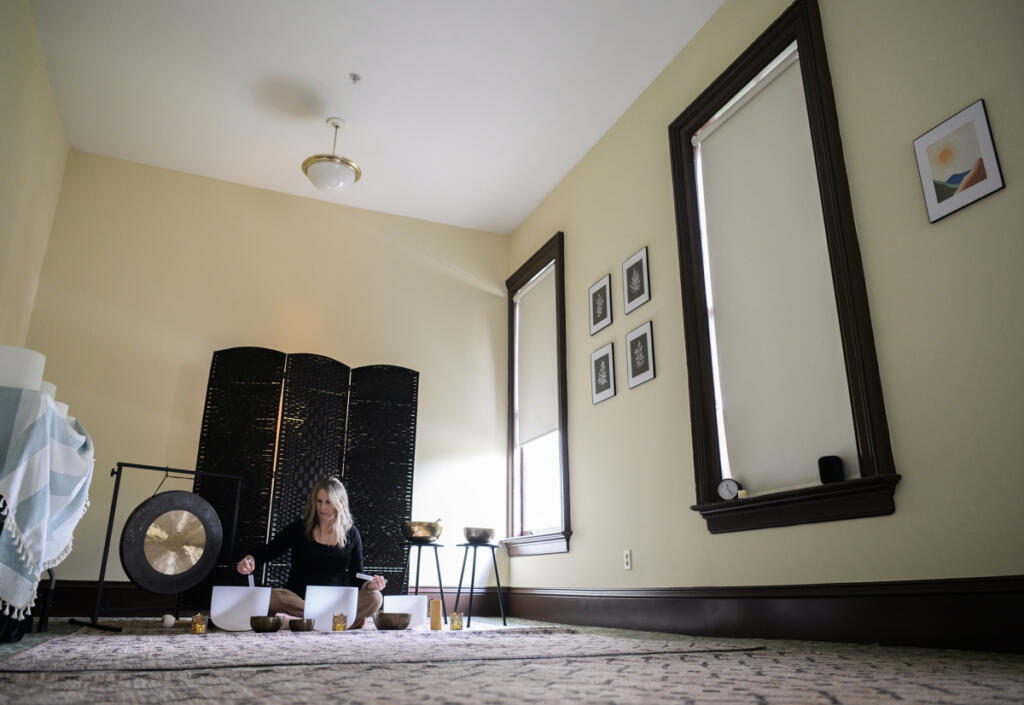
Kintzley said she aims to create a calming atmosphere before the sound bath even begins. I did feel the adrenaline of the working day slither off as soon as I entered the studio. The space was lit only with LED candles, including several inside the singing bowls, making them gleam in the darkness like a celestial vision. A small fountain trickled softly in the corner. The room smelled clean and slightly woodsy, a blend of patchouli and orange oil.

Kintzley said a few words of welcome, we all got comfortable and Kintzley began to play. She coaxed single tones from the bowls at first, striking their sides to encourage resonance. Then she slowly set several bowls ringing at once and allowed their vibrations to fill the room. I heard the sound but also felt it in my belly and sternum.

“Everyone in the room will be hearing the exact same thing, but everyone is going to be having a different experience because we’re all individuals in our own phase of life,” Kintzley said. “However it makes you feel is exactly how you should feel.”

Affordable tranquility

The price of all this relaxation is relatively inexpensive: $45 for an hourlong group session with six people in Kintzley’s studio (though pricier couple’s sessions are $199). Fouts-Carrico charges $40 for a 90-minute group session in her home or at a client’s home.

Kintzley started as a massage therapist in 2008 but was exposed to sound baths in 2021 while learning how to do reiki or energy healing. Fouts-Carrico, meanwhile, encountered her first sound bath 25 years ago at a gong meditation session in Hawaii.

“It was just really beautiful, being encased in the sound of this really large gong and how it would resonate,” Fouts-Carrico said. “It was very relaxing and very grounding.”

Kintzley and Fouts-Carrico both trained with mentors who taught them how to play the singing bowls and other instruments. However, there’s no educational requirement and no governing body granting certification for sound bath practitioners. It’s more of a learn-by-doing situation, Kintzley said — but even though there’s no expensive certification process, providing sound baths isn’t cheap. A set of professional-grade singing bowls starts at $1,000 and goes up from there, Kintzley said.

Community vibes

Kintzley’s bowls are tuned to vibrate at 432 hertz, which she said is “a healing frequency for connecting with the human body.” Science is undecided on this point, though a 2019 study in “Explore: The Journal of Science and Healing” did show that subjects felt slightly calmer after listening to music at 432 hertz as opposed to the usual 440 hertz.

Of course, anyone can listen to 432 hertz sound baths online, and if that’s how they’re able to access soothing vibrations, Kintzley said, that’s how they should do it. But Kintzley said that there’s something lovely about experiencing a sound bath with others.

“One of the things I wasn’t anticipating about the sound baths was this sense of community and connection they create,” Kintzley said. “I have people that come to my sound baths and know each other’s names. Maybe they’re not best friends outside of sound baths, but it’s creating this community when they come here. I love that part of it.”

Indeed, after Kintzley’s sound bath, several women lingered to chat in soft voices so as not to disturb the session’s peaceful aftereffects. None had ever taken a sound bath before, except for Laura Jordhen, 53, from Camas. This was her third sound bath. Maybe the mechanisms by which sound interacts with the body and mind aren’t fully understood, she said, but that doesn’t make the experience any less restorative.

“I am open to letting the things I can’t explain still be healing,” Jordhen said.