Camas-Washougal logo tag

Healthy Youth Survey shows local progress

County students see better mental health, substance use drop

By
timestamp icon
category icon Clark County, Health, News, Schools
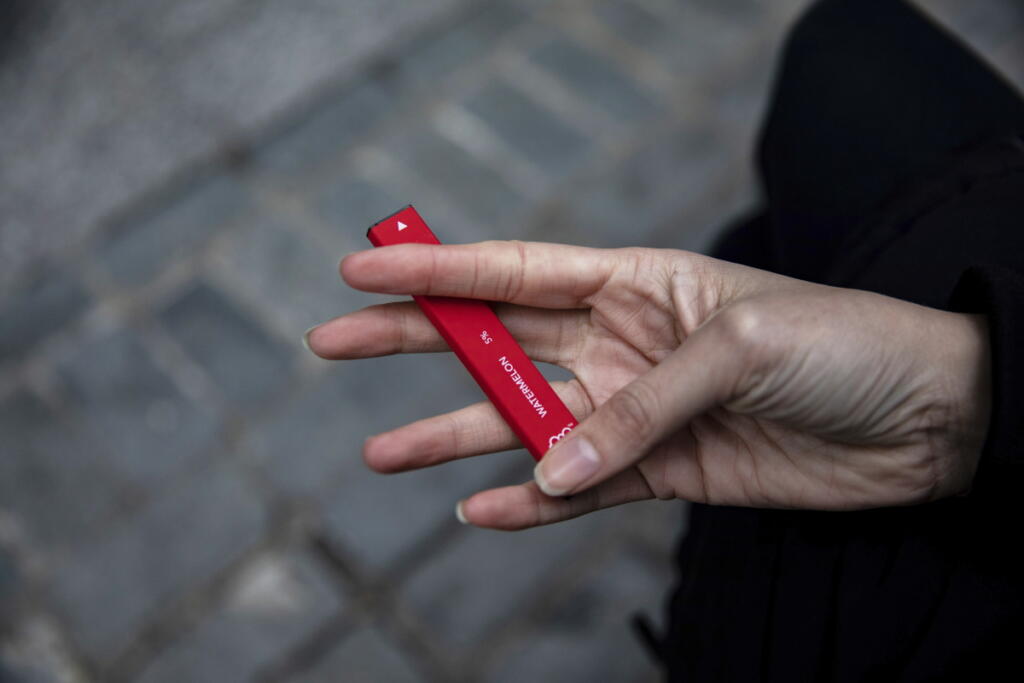
AP Photo/Marshall Ritzel, File Vaping increased among Clark County 10th graders, according to Washington’s new Healthy Youth Survey.

Students in Clark County reported lower rates of depression and suicidal feelings compared with recent years, according to the Washington State Department of Health’s latest “Healthy Youth Survey.”

The survey, which was released last week, is conducted once every two years to gauge the health and wellbeing of kids in Washington. More than 213,000 students across grades six, eight, 10 and 12 statewide participated in the survey, including nearly 12,000 in Clark County.

The 2025 survey shows a continued downward trend in feelings of depression and suicide coming out of the COVID-19 pandemic.

On the topic of depression, students were asked, “In the past 12 months, did you ever feel so sad or hopeless almost every day for two weeks or more in a row that you stopped doing some usual activities?”

The survey said 29 percent of Clark County 12th graders responded “yes,” down from 31 percent in 2023.

Additionally, 12 percent of 12th graders reported seriously contemplating suicide in the past year, compared with 16 percent in 2023 and 21 percent in 2021.

“It is always encouraging to see any decline in the number of young people reporting persistent feelings of sadness, depression and suicidal ideation,” Jennifer Bell, the youth program manager of National Alliance on Mental Illness Southwest Washington, said in an email. “At the same time, this report still indicates that nearly 30 percent of 12th graders report persistent feelings of depression, and about 1 in 8 seriously considered suicide in the past year, which is significant.”

Substance use also dropped across multiple age groups.

The steepest decline in alcohol use in Clark County was seen in 12th graders, dropping from 19 percent in 2023 to 15 percent in 2025. Cannabis use decreased by about 3 percentage points among Clark County 10th and 12th graders to 5.9 percent and 12.9 percent, respectively.

Conversely, e-cigarette and vape use increased from 8 percent to 9 percent of 10th graders in Clark County between 2023 and 2025, which is 3 percentage points higher than statewide. There was no change in eighth grade (5 percent) and sixth grade (2 percent) in the two most recent surveys.

Meanwhile, a higher number of students believe regular use of alcohol, e-cigarettes and other substances is harmful.

Twelfth-grade Clark County students who reported “great risk” of harm from drinking alcohol daily jumped to 65 percent in 2025, up 17 percentage points from 2023. There was also an increase in the percentage of students across grades eight, 10 and 12 who perceived “great risk” of smoking e-cigarettes or vaping regularly. (Sixth graders weren’t asked this question on the survey.)

“We’re encouraged to see progress in youth mental health and continued declines in youth substance use,” Teesha Kirschbaum, Washington State Health Care Authority Division of Behavioral Health and Recovery director, said in last week’s news release highlighting the survey results. “This reinforces the importance of prevention efforts like community-based programs, youth engagement, and early intervention that support behavioral health, reduce risk factors and expand access to care across the state.”

Academic progress

State Superintendent of Schools Chris Reykdal said in last week’s news release the latest survey shows “encouraging” data in academics and mental health among Washington youths.

In statewide survey data, 79 percent of 10th graders reported that they tried to do their best work in school “often” or “almost always,” a 5 percent improvement from 2023. In Clark County, that figure was 75 percent for 10th graders in 2025.

Clark County students also reported an increase in support from adults across grades eight, 10 and 12. The survey measured that support by asking students if they had an adult in their neighborhood or community they can talk to about something important.

All grades saw an increase between 3 and 4 percent from 2023 to 2025, including 12th graders, which increased to 69 percent in 2025.

“When students feel supported at school and they know how to access additional help when they need it, their academic outcomes improve,” Reykdal said. “Washington state has been intentional about supporting wholechild wellness, and these survey results are a strong indicator of progress.”

Locally, Bell said the survey is a reminder to continue strengthening youth mental health education and support. NAMI Southwest Washington offers several programs in schools and communities. The organization also works with schools to establish NAMI on Campus clubs for “more wraparound support,” Bell said.

“It is essential that we continue working together as a community to strengthen prevention efforts and ensure young people have access to timely support, know where to find resources, can lean on trusted adults and receive mental health education,” she said.