Camas-Washougal logo tag

‘We’re creating life’: Dirt Hugger turns yard, food waste into nutrient-rich compos

Dallesport compost company uses yard, food waste to create ‘black gold’

By
timestamp icon
category icon Business, Clark County, Environment, News, Outdoors
DALLESPORT — For Pierce Louis, work is a dirty business.

As co-owner and co-founder of Dirt Hugger, a Dallesport commercial composting and landscape supply company, Louis has spent the past 16 years learning the ins and outs of turning yard and food waste into black gold, the nutrient-rich compost gardeners and farmers rely on.


“Our whole purpose for why we’re in business is a positive environmental impact through world-class composting,” Louis said. “Anything we do, we want to do in an environmentally responsible way.”

Dirt Hugger processed 57,000 tons of compost materials in 2025, Louis said. About 15,000 tons came from the Vancouver area, with about 5 percent of that being food waste, including what’s collected by Clark County’s We Compost program. Dirt Hugger turns it all into nutrient-rich soil sold at independent nurseries and landscape supply businesses in the county, as well as Dirt Hugger’s supply yard in The Dalles, Ore.

Founded in 2010, Dirt Hugger has grown to be one of the largest commercial composting businesses in the state. It’s also one of a limited number of commercial composting facilities allowed to accept both household and commercial food waste.

According to the Washington State Department of Ecology, about 1.2 million tons of food waste is created statewide each year. Sadly, much of that ends up in landfills. An estimated 17 percent of material sent to landfills comes from food waste.

Composting isn’t the most obvious choice for Louis or his business partner, Tyler Miller.

Louis holds a bachelor’s degree in psychology from the University of Virginia and a master’s in business administration from the University of Oxford’s Saïd Business School in England. Miller is a mechanical design engineer with Bachelor of Science and Master of Science degrees from Oregon State University.

“We both worked in the aerospace business; we worked at a drone business. When we were still working at that job, we were exploring different businesses that we wanted to do and we stumbled on composting and thought it seemed cool,” Louis said.

Miller headed off to a weeklong training program in California. The two also toured composting facilities across four states to better understand the industry and later attended an annual conference.

“We just fell in love with the industry. It’s a very open and collaborative environment. Because most places don’t have competition, they’re very willing to share stories and ideas,” Louis said.

The two have put their business and engineering acumen to good use, creating a business that produces “precision crafted soils.”

Creating soil from dead leaves, twigs, branches, grass clippings, food waste and other materials requires a mix of chemistry, biology and technical know-how, along with physical labor, heavy machinery, time and help from Mother Nature.

“We always say we don’t do the work, that microbes do. We’re just optimizing the environment for the microbes,” Louis said.

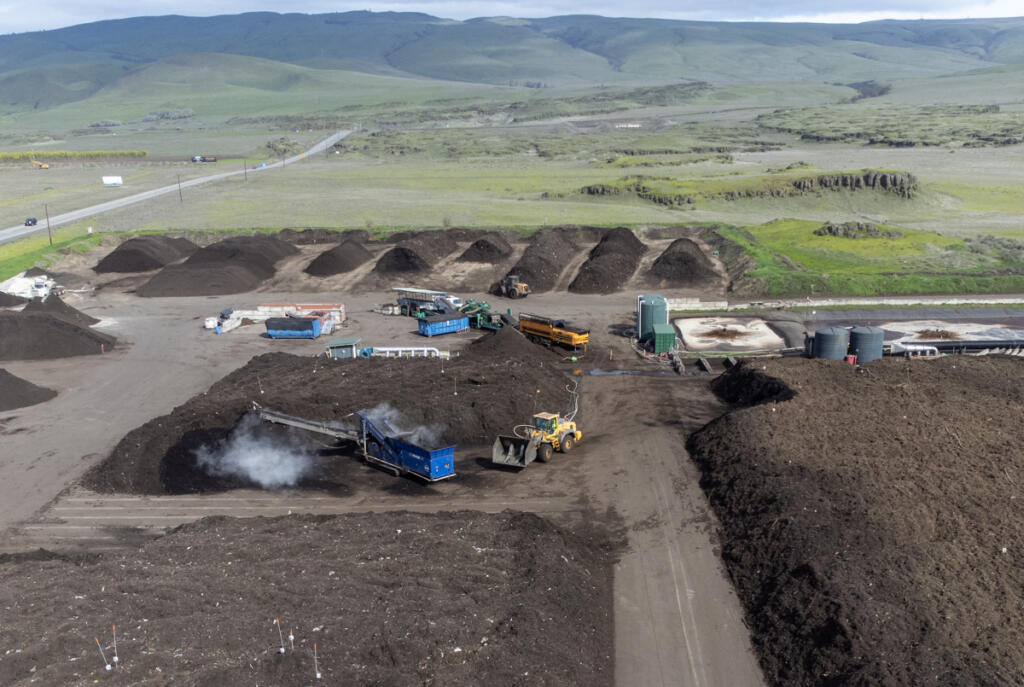
Trucks arrive with yard debris and food waste, much of it coming from Vancouver and Ridgefield, as well as pallets of pears, apples and other fruit from neighboring farms. The materials are placed in large rows and covered with a foot-thick blanket of finished compost to reduce odors and prevent material from blowing into other areas. Most recently, pears have been arriving daily by the ton.

“We’ve been calling it pear-mageddon,” Louis said. “We’re getting like 300 tons of pears a week.”

The entire site is aligned to ensure winds sweeping up from the Columbia River Gorge don’t carry raw materials into the area where finished compost is stored to eliminate the risk of contamination. Wind can also cause moisture in the stockpiled materials to evaporate.

Screening

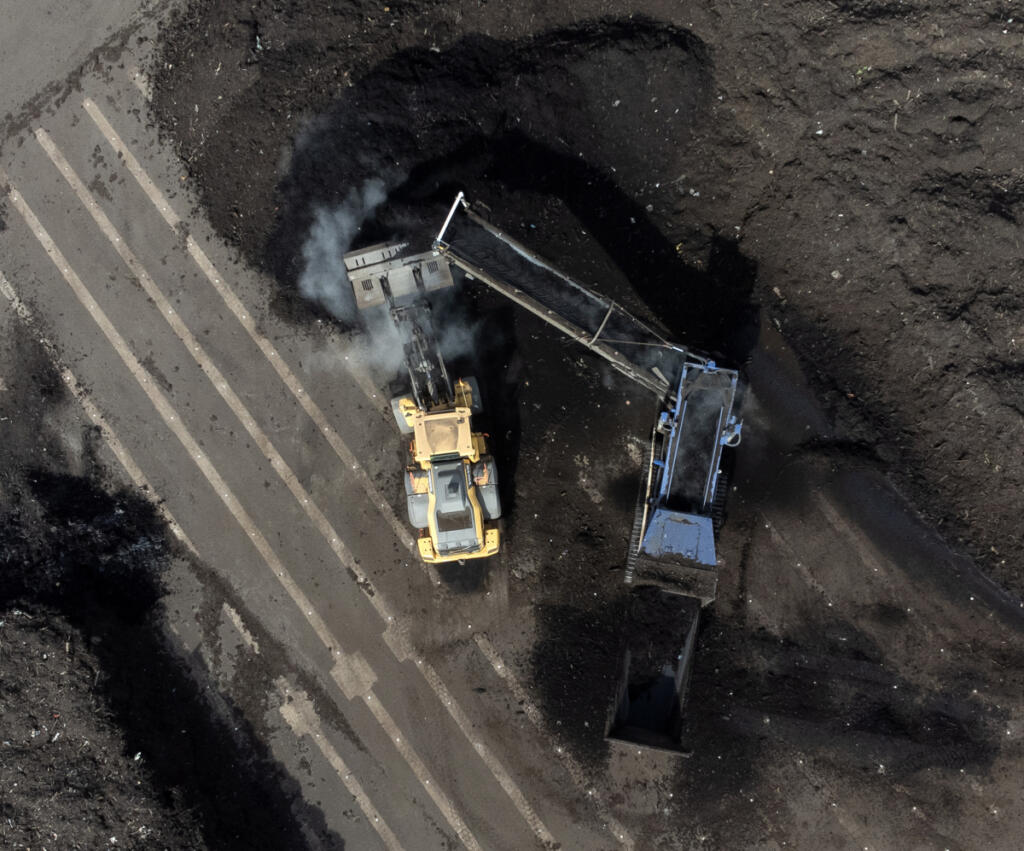
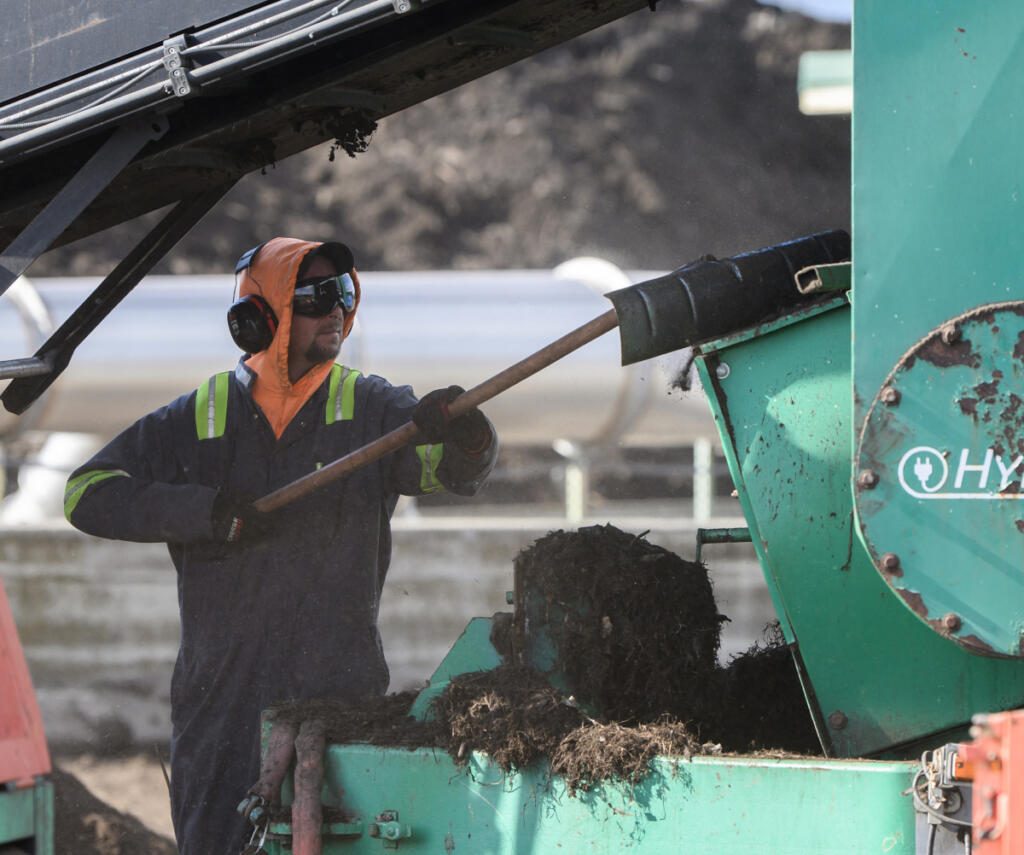
The raw material goes through two initial screenings where larger pieces of plastic, glass, cloth or fabric, metal and other nonorganic materials are removed. The screening uses specialized heavy equipment, but workers also pick through the materials to remove smaller pieces by hand.

“There’s typically two or three people hand-removing contaminants. They’re hand-pulling out contaminants that come in somebody’s yard debris cart. They may pick up a shoe or a dog toy, or there’s plastic in there or bottles,” Louis said.

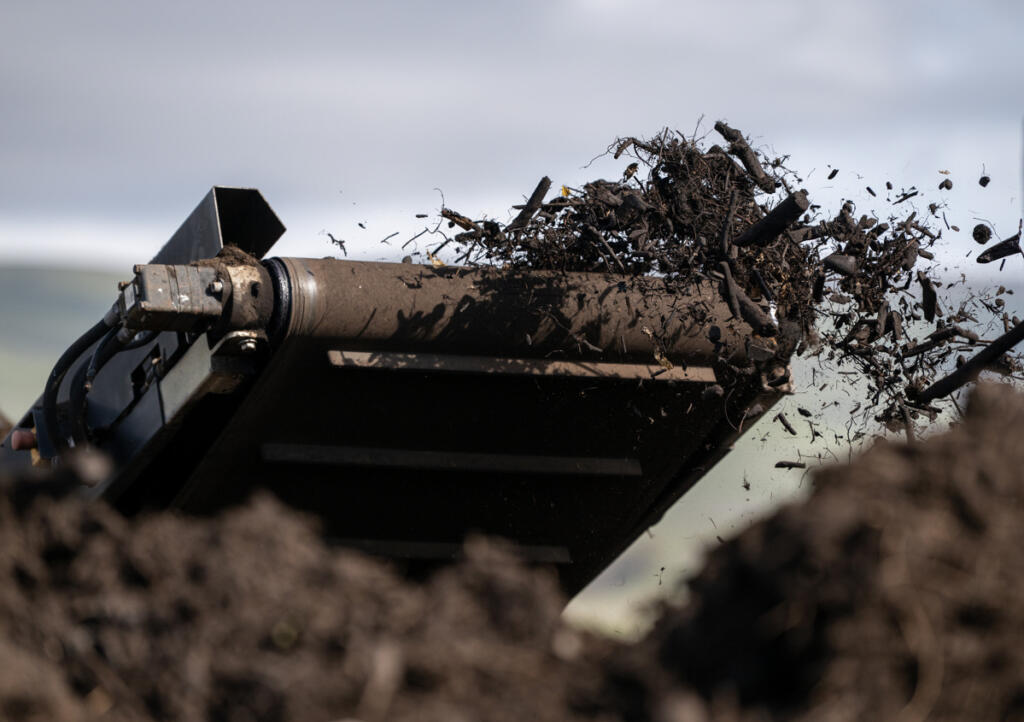
From there, the material is shredded and screened again. Once it’s ready for composting, the materials are mixed and combined to ensure the correct balance of nitrogen, carbon, oxygen, moisture and other variables. “Greens” — food waste, grass clippings and the like — produce a lot of nitrogen but tend to break down quickly, Louis said. “Browns” — leaves, paper, twigs and bark — produce more carbon and break down more slowly.

“We’re taking in all these different materials, but in the end, we have to make the exact same product. Our customers want the same output so you have to change and tweak the recipe to make it,” Louis said.

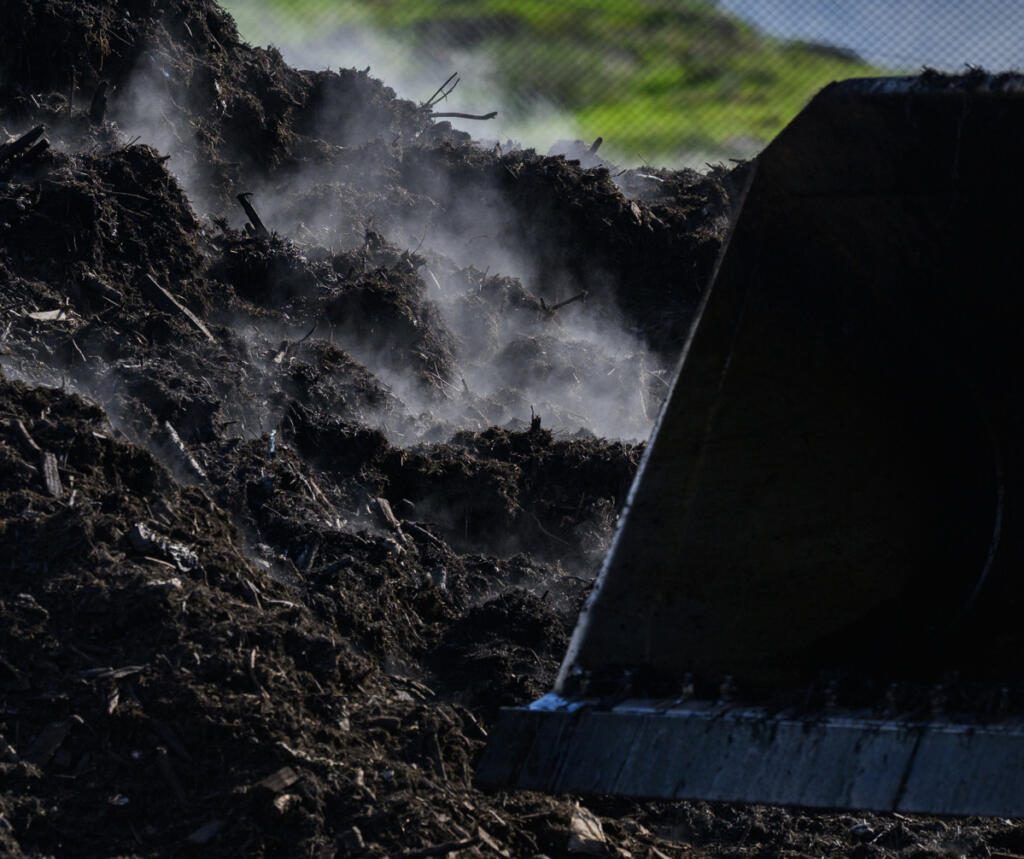
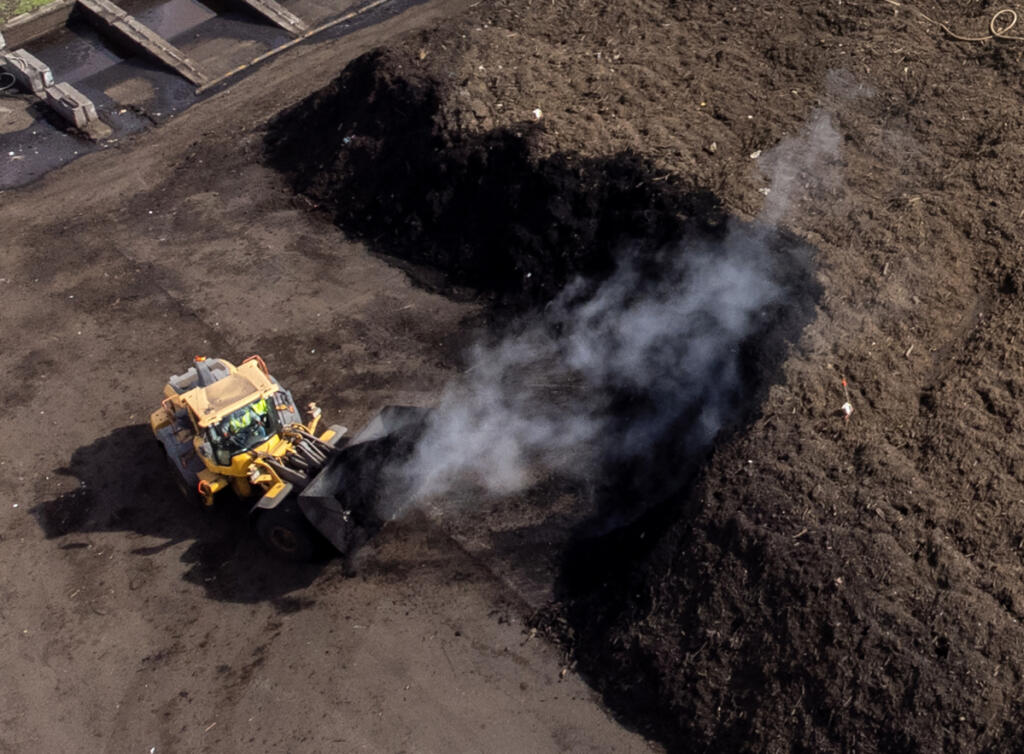
A key piece of the composting process is the natural decay and breakdown of organic matter. That’s the work of microbes, such as bacteria, fungi and other organisms, present in the material. As the microbes break down the material, they generate significant heat with temperatures reaching up to 200 degrees. Left unattended, the stockpiles could easily catch fire.

To control the temperature while keeping the microbes alive, Dirt Hugger uses an underground network of pipes connected to a large fan used to cool the stockpiled materials.

“We turn it to full speed, and it’s cooling the piles by pushing air up through them. When we’re done, at night, we flip the fans to negative, and it pulls the air down through and then it goes down through a biofilter,” Louis said. “It pulls the heat off, but it also scrubs the odors, it scrubs the (volatile organic compounds), it scrubs ammonia. It’s like a giant air hockey table.”

Moisture is another key element of the process, both in terms of keeping the composting material cool but also keeping the microbes healthy and alive. Louis said the ideal humidity level is 55 percent. Dirt Hugger hydrates the material with such liquids as fruit juice and beer, as well as water from a leachate pond that collects all stormwater runoff. A sprinkler system injects liquid into the stockpiles.

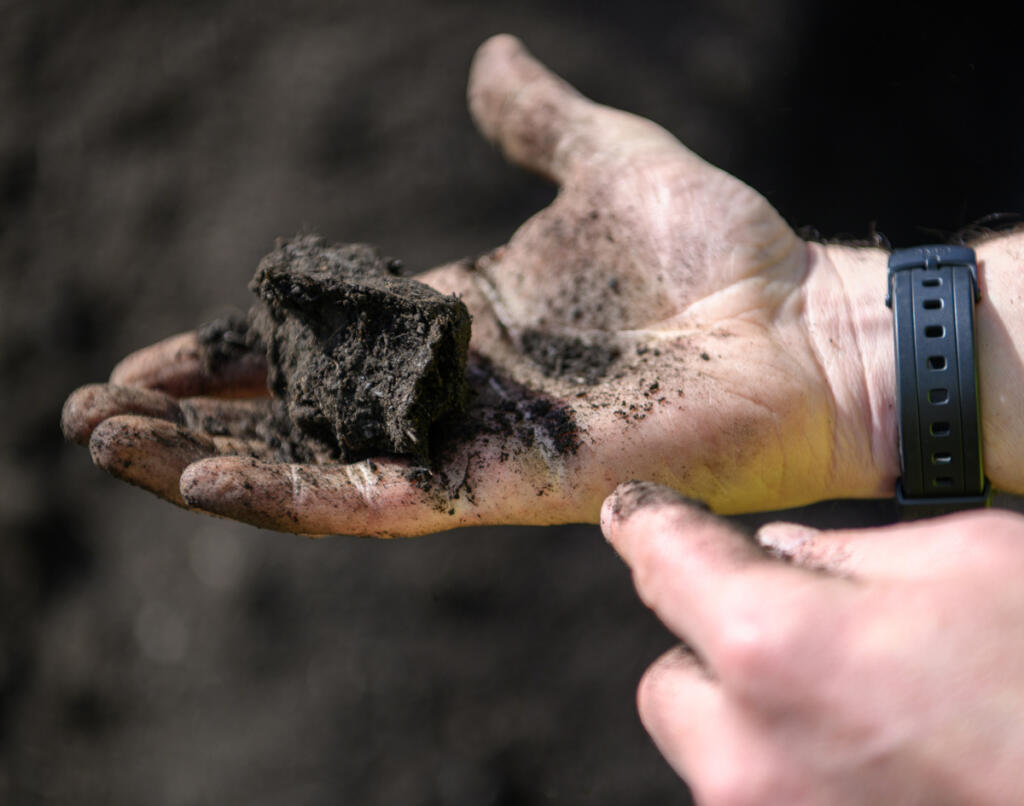
“If it drips water, it’s too wet. But if it clumps, that’s pretty much perfect moisture,” Louis said.

Dirt Hugger monitors both temperatures and humidity level hour by hour, day by day. Probes placed every few feet in the stockpiles enable live monitoring via a laptop or phone. If the heat reaches 145 degrees or higher, the probes signal the fans to turn on. Louis and Miller also fly drones over the property weekly to track the amount of feedstock, materials in process and finished material on hand. Every week, the piles are turned as well.

Renewable

All of the equipment now runs on renewable energy from either The Dalles Dam or onsite solar panels. Louis said the company recently transitioned away from using diesel fuel. Heat from the compost piles is pumped to Dirt Hugger’s offices in the winter.

“We’re a net positive power producer,” Louis said.

As the compost materials approach the 45-day mark, the time it takes to make compost, the material is again screened to remove any nonorganic materials left behind. At the end of the 45 days, new soil has been created.

“Last year, we processed about 50,000 tons of material. That equates to about 45,000 yards of compost,” Louis said.

He said it takes about 4 cubic yards of material to produce 1 cubic yard of compost.

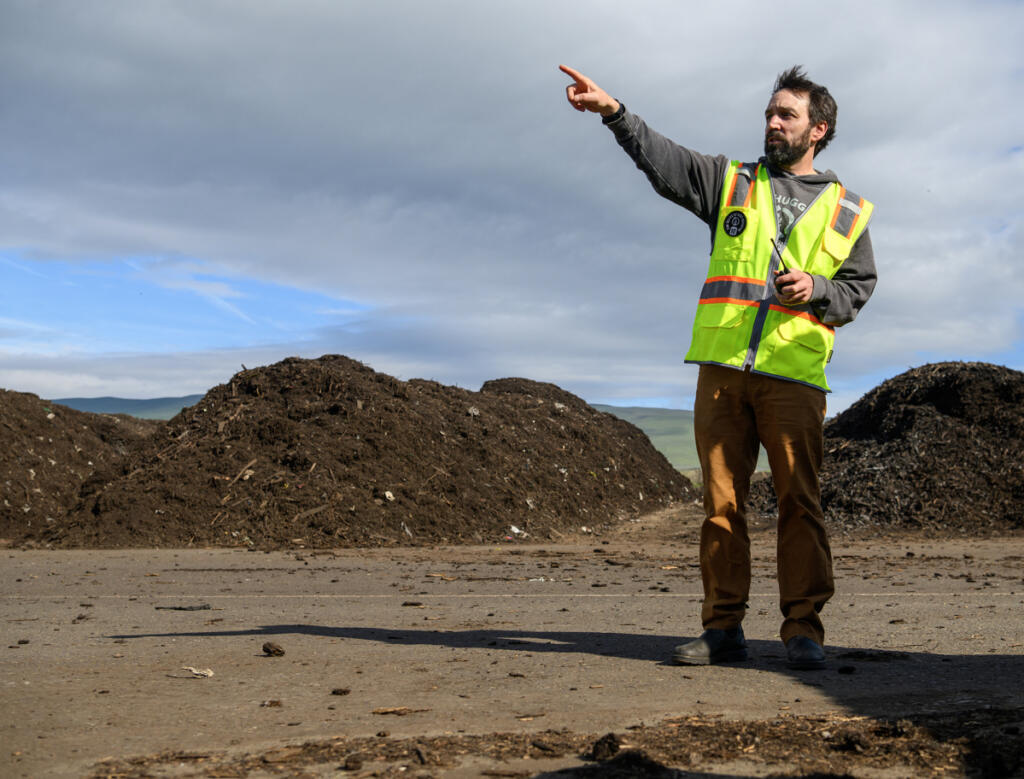
“We’re creating life. This whole pile is alive,” Louis said, pointing to one of the finished material piles. “People look at it like, ‘Oh, it’s dirt.’ No, actually, it’s compost.”