Camas-Washougal logo tag

Clark County approves fund for GPS and alcohol monitors

$422,400 to cover devices as state grant to expire

By
timestamp icon
category icon Clark County, Government, News, Public Safety
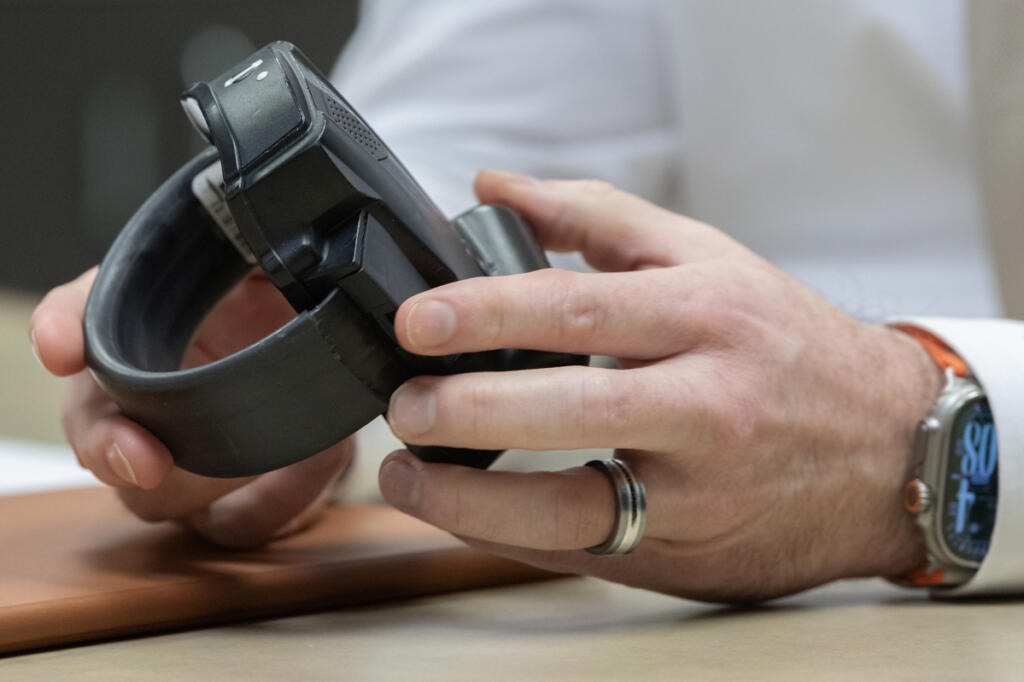
Clark County uses electronic devices to monitor domestic violence offenders to ensure they are complying with orders not to contact their victims. (Amanda Cowan/The Columbian files)

The Clark County Council voted unanimously last week to authorize $422,400 in emergency funding for District Court’s electronic monitoring programs, after current funding was set to run out by the fall.

The one-time allocation from the general fund serves as a financial bridge following the expiration of state grant funding. The move guarantees that local courts can keep utilizing continuous alcohol-sensing technology, as well as real-time GPS tracking in domestic violence cases, for defendants with pending cases or people on probation.

The council unanimously approved a measure Aug. 4 to seek nearly $4.8 million in state grant funding aimed at sustaining the county’s two electronic monitoring programs through July 30, 2028. District Court has requested to work with the auditor’s office to jointly apply with the sheriff’s office for a portion of a $100 million state grant pool.

The vote addressed the immediate need.

Participation in the county’s electronic monitoring programs has surged.

Domestic violence cases

Over 1,000 individuals were monitored in domestic violence cases in 2025 — a nearly fourfold increase since 2023, according to a county staff report. Data provided by District Court shows community-based supervision offers notable savings over housing inmates at the county jail. The domestic violence monitoring program saves $14.66 million a year, while the alcohol monitoring program saves $5.57 million a year.

In domestic violence cases, GPS ankle monitors establish virtual perimeters around a victim’s home or school. Any breach triggers an audible alarm on the victim’s phone and alerts law enforcement immediately.

For those with alcohol-related charges, transdermal wearables sample sweat every half hour to confirm sobriety. This allows individuals to maintain employment and family obligations rather than occupying space in a crowded jail.

District Court Administrator Marianne Clear said that under state law, DUI offenders who violate their probation must serve 30 days in jail unless this alternative supervision is available.

Clear said while affluent defendants can manage private monitoring fees — which can climb to $600 a month — the loss of public funding would leave indigent participants with no alternative to incarceration. Clear expressed concern that this creates a significant disparity in the justice system.

The council indicated that a successful award through the Washington State Criminal Justice Training Commission’s grant pool could potentially reimburse the general fund.