Camas-Washougal logo tag

First emerald ash borer seen in Washington

Found in Vancouver, beetle has killed 100 million trees in U.S.

By
timestamp icon
category icon Clark County, Environment, News
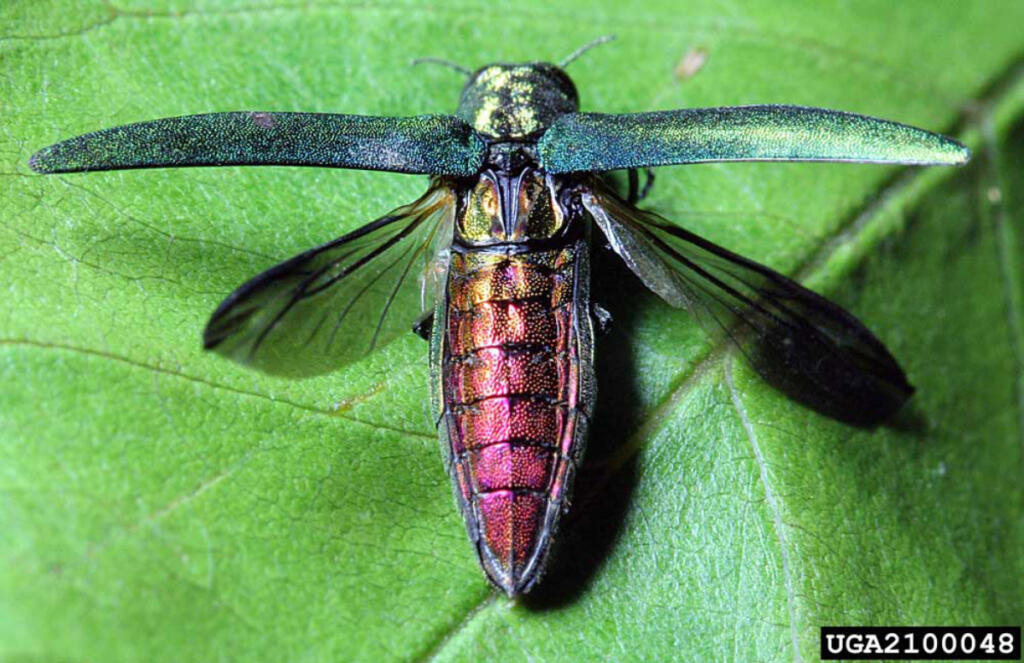
An emerald ash borer. The invasive and destructive pest has been spotted in Vancouver, according to the Washington State Department of Agriculture. (Contributed photo)

The invasive and destructive emerald ash borer has been spotted in Vancouver, the Washington State Department of Agriculture announced last week in a news release. The bright green beetles, which originate from northeastern Asia, were initially detected in the United States two decades ago in Michigan. Since then, the beetles have killed 100 million ash trees across the country.

Will Rubin, spokesman for the state Department of Ecology, said the Vancouver sighting is the first confirmed report in Washington.

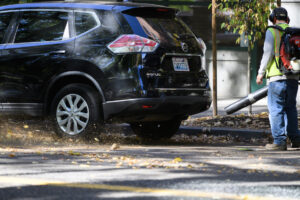
Two people spotted the insect on their windshield Aug. 3, according to the news release. After learning it was invasive and should be reported, they collected the specimen and submitted a report to the Washington State Invasive Species Council, which alerted the state Department of Agriculture.

On Tuesday, the state Department of Agriculture adopted a firewood quarantine to prevent the introduction and spread of invasive insects and diseases. The agency advises land managers and homeowners to not plant new ash trees.

A Washington State Department of Natural Resources analysis found that without taking action to manage an outbreak, a municipality should expect to lose 90 percent to 100 percent of its ash tree inventory within 10 to 12 years of an initial infestation, according to the news release.

“We anticipated it would only be a matter of time before emerald ash borer arrived in our state,” said Sven Spichiger, pest program manager for the state Department of Agriculture. “This is yet another example of how alert, observant members of the public help us detect new, invasive pests.”

Unfortunately, there is no treatment or prevention method available to protect native ash species that lack natural defenses needed to survive an infestation.

During late spring and early summer, adult beetles emerge from infested trees, where they feed on ash leaves before mating. After mating, the female beetle lays eggs in the tiny crevices and cracks of the ash tree’s bark. A single female can lay between 40 and 200 eggs, which measure about 1 millimeter.

After approximately two weeks, the eggs hatch, and the newly emerged larvae immediately bore through the outer bark layer into the nutrient-rich tissue directly beneath known as the phloem and cambium layers. This entry point puts the larvae within the tree’s vascular system, which becomes the zone of catastrophic damage.

After the invasive pests were spotted in the Portland metro area in 2025, Washington’s Department of Natural Resources released a pest readiness playbook to prepare city and county governments for the species’ eventual arrival in the state.

The agency said emerald ash borer beetles often are present in forest lands for three to five years before detection. The playbook also recommended local jurisdictions stop planting ash trees wherever possible.

Charles Ray, Vancouver’s urban forester, said the city stopped planting ash trees and implemented a management plan in 2022 after meeting with the state Department of Agriculture.

“When we met with Washington Department of Agriculture shortly after it was identified in Forest Grove (Ore.) in 2022, they stated, ‘Act like it is here; it is only a matter of time,’” Ray told The Columbian in 2025. “I took that to heart.”

A state of Oregon model showing the beetles’ westward progression estimated it would take up to two years for the insects to cross into Washington.

Ray said many of the ash trees found in Vancouver and Clark County are native Oregon ash trees, typically found along creeks, rivers and wetlands, where they help stabilize habitat. Ray said an inventory of Vancouver’s trees found fewer than 500 individual ash trees on public property, which is 4 percent of the total. However, he said the tree inventory does not include all street trees or those in any natural areas, nor ash trees on private property.

Get the latest headlines in your email every week!

This field is for validation purposes and should be left unchanged.