Camas-Washougal logo tag

Lifeline writes off losses to balance books

Health services provider says accounts strong

By
timestamp icon
category icon Clark County, Health,
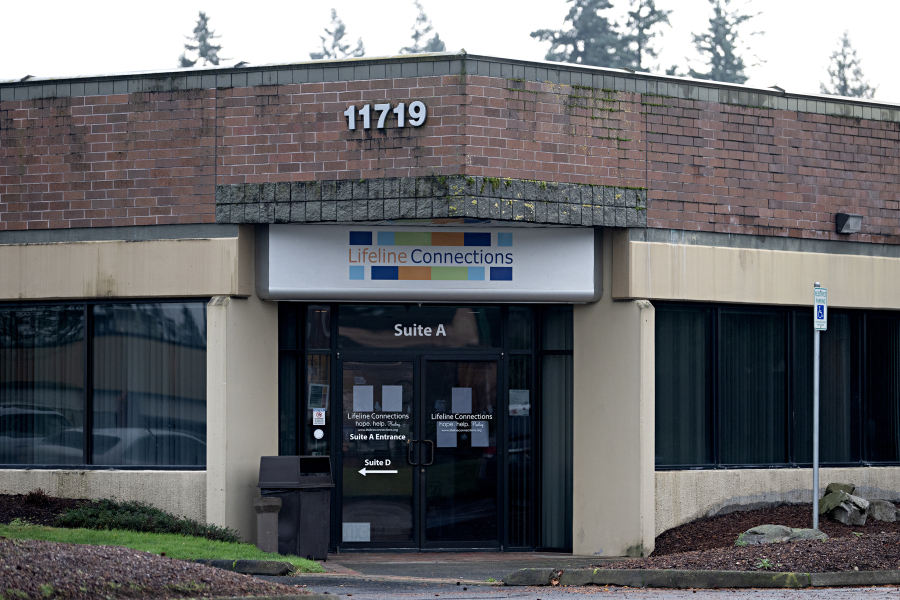
Vancouver nonprofit Lifeline Connections provides behavioral health services to 5,000 patients a year. (Amanda Cowan/The Columbian)

A major Vancouver provider of behavioral health services has used accounting measures to balance its books after having trouble getting patients and insurers to pay their bills.

Lifeline Connections, which serves people struggling with addiction and mental illness in Clark County, wrote off $3.2 million in expected losses for billed services, according to Andrea Brooks, the nonprofit’s president.


The organization cares for more than 5,000 patients a year.

Brooks said that despite the write-off, the organization’s financial health is in good condition, which also is noted in a 2024 audit.

She said Lifeline Connections’ situation is different from the crisis that unfolded at another Vancouver nonprofit mental health services provider. In March, financial woes forced Columbia River Mental Health Services to suddenly suspend operations, leaving thousands of people who rely on the nonprofit for counseling and psychiatric treatment in the dark.

Brooks said that unlike Columbia River Mental Health Services, Lifeline Connections has not received any emergency funding and is not experiencing a budget deficit. Public tax filings show that it earns more revenue than it has expenses.

Lifeline Connections had a growing, aging accounts receivable balance, Brooks said. The older the balance, the less likely it is to be collected. The board of directors signed off on a one-time write-off this fiscal year to have “more of a clean slate.”

“We provide services first, and then we submit claims retroactively to bill a managed care organization,” Brooks said.

This approach means the organization naturally accounts for revenue losses it might endure from insurance claims getting denied, which can happen for a variety of reasons, Brooks said.

The revenue from bills overdue by 90 days has a strong chance of never getting collected, according to the Corporate Finance Institute.

Brooks said the aging accounts receivable balance grew in part because of an increase in patients the organization has seen since the COVID-19 pandemic.

Lifeline Connections’ leadership was aware of the growing allowance, which is an estimate set aside by a company to reflect money it does not expect to collect, but was unsure of how to address it. Meanwhile, the amount of uncollected money continued to grow.

Publicly available tax filings for Lifeline Connections mirror what Brooks said.

In the organization’s financial audits, independent auditors found receivables, or money owed, over 90 days old totaling $1.4 million in 2020, $1.5 million in 2021 and $1.2 million in 2022 — a combined total of $4.1 million.

A 2024 financial audit found a slight increase. The auditors said the accounts receivable net total as of July 1, 2022, was $4.9 million.

“The requirements of third-party insurance carriers and laws governing third-party billings are very complex,” the audit stated. “Management is knowledgeable about these requirements and laws, and takes a conservative approach in calculating the related billings. However, there is at least a reasonable possibility that recorded estimates could change in the near term.”

In all of their publicly available financial audits, independent auditors found Lifeline Connections presented financial statements fairly and complied with accounting principles generally accepted by the federal government. A financial audit for this fiscal year is not yet available.

Lifeline Connections is taking steps to ensure it’s not in the same position again, Brooks said. The nonprofit is having weekly meetings with managed care organizations to understand insurance denials and working with state and county partners.

“All the risk is on the nonprofit organizations,” Brooks said. “The risk isn’t on the managed care entities. That’s where it’s like part of the system is broken. But my goal at the end of the day, as a social worker, is always to protect who we serve.”