Camas-Washougal logo tag

Melnick fearful of vaccine rollbacks

Immunization rates for county students are falling

By
timestamp icon
category icon Clark County, Health, News

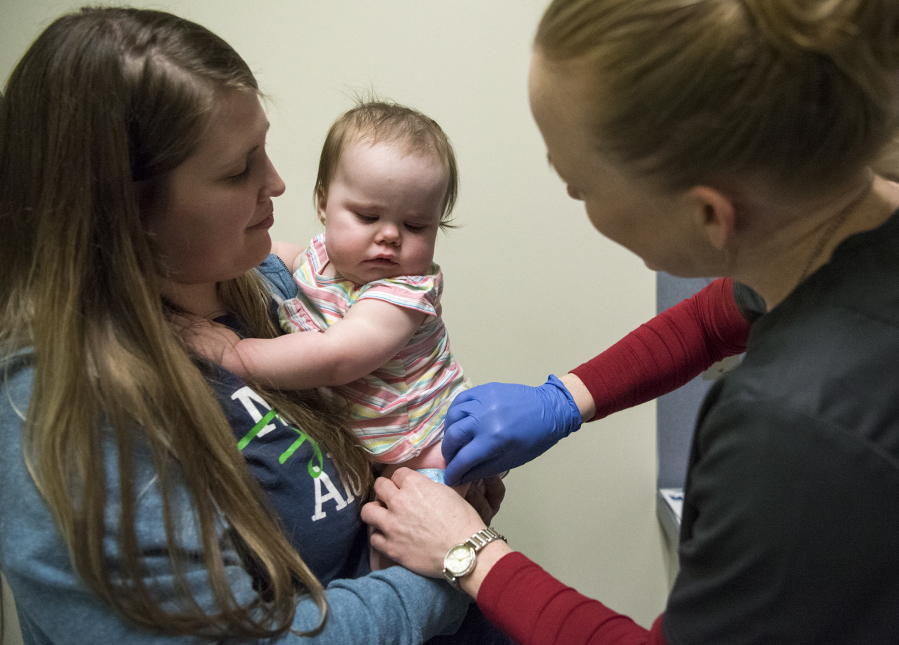
Vaccination rates for Clark County’s K-12 students have been slipping over the past five years, and with recent federal rollbacks in childhood immunization recommendations, local health officials fear there will be serious, long-term impacts on community health.

“My concern is that by not recommending them routinely anymore, we’re going to see a drop-off in vaccination rates, and children are going to die because of this,” Clark County Public Health Director Dr. Alan Melnick said.


The Centers for Disease Control and Prevention announced the changes Monday. The organization that heavily influences public health policy will now recommend vaccines to protect children against 11 diseases instead of the previous 17. The CDC now recommends children be vaccinated against diphtheria; tetanus; acellular pertussis, or whooping cough; Haemophilus influenzae type B; pneumococcal conjugate; polio; measles, mumps and rubella; human papillomavirus, or HPV; and varicella, or chickenpox.

Other vaccines protecting against respiratory syncytial virus, or RSV; hepatitis A; hepatitis B; dengue; and two that target bacterial meningitis are now recommended only for “high-risk groups.”

Immunization for COVID-19, seasonal influenza and meningococcal disease, as well as hepatitis A and hepatitis B, require a consultation with a clinician.

In the 2024-25 school year, about 83 percent of K-12 students were up to date on their overall vaccinations in Clark County, the lowest completion rate for vaccines in the past five years, according to data from the Washington State Department of Health.

More than 11 percent of students were out of compliance, meaning students did not provide proof of vaccination for the required vaccinations and do not have an exemption. For comparison, during the 2023-24 school year, about 90 percent of students were up to date, and only 2 percent were out of compliance, according to the state health department.

In the 2024-25 school year, about 88 percent of Clark County K-12 students were up to date on their vaccinations for hepatitis B, which is now recommended only for “high-risk groups.” It was the lowest completion rate over the past five years for that disease, state health department data shows.

Melnick said he worries that the recent CDC changes could lead to further mistrust and hesitancy for vaccines, leading to further drops of overall completion rates and confusion on what medical advice to follow.

Hepatitis B can be particularly dangerous for children and infants, Melnick said, using that to illustrate the vaccine rollbacks’ potential harm. It can cause liver damage, liver cancer and death. After the CDC recommended universal hepatitis B vaccination for newborns in 1991, that disease rate plummeted by 99 percent in children.

The disease can be easily spread through household contact or through a child’s mother, Melnick said. If infants contract the disease, they are at a higher risk of developing chronic hepatitis B, which can cause more damage.

“The infection is much more damaging in infants, and that’s why routine hepatitis B … vaccination is critical,” Melnick said.

In a statement about the recent federal changes, the state Department of Health warned that they were made without “the standard scientific review process involving the Advisory Committee on Immunization Practices, pediatric experts, or public input, and are not based on new evidence about vaccine safety or effectiveness.”

Melnick urged Clark County families to continue following the vaccination recommendations made by the West Coast Health Alliance, a public health partnership between Washington, California, Oregon and Hawaii.

The alliance said Monday that it would uphold vaccine recommendations based off the current American Academy of Pediatrics child and adolescent immunization schedule.

The federal changes fulfill a directive issued by President Donald Trump last month calling for Health and Human Services to “align with other developed nations” and recommend fewer vaccines.

Melnick said those countries were “cherry picked” and that the new recommendations are “not based on any science or evidence at all.” He said other countries have different risks and disease rates, as well as differing access to health care.

Health and Human Services Secretary Robert F. Kennedy Jr. has long claimed that U.S. children receive “too many” vaccines and has falsely linked vaccines with autism. Last year, Kennedy fired Susan Monarez as director of the Centers for Disease Control after she clashed with him on vaccine policy.