Camas-Washougal logo tag

3 vie for Clark Public Utilities board, discuss future

Two challengers, incumbent face off in August primary

By
timestamp icon
category icon Clark County, Government, News

Two retired energy industry insiders are challenging longtime incumbent Clark Public Utilities Commissioner Jane Van Dyke in August’s primary election.

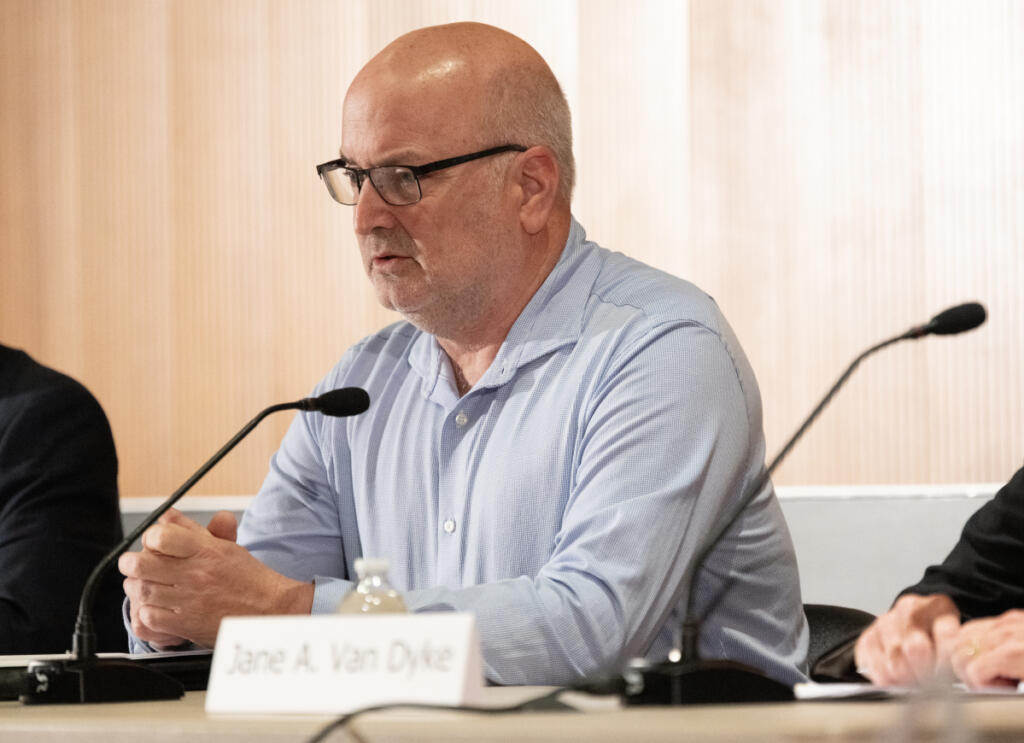
Gordon Matthews used to work for the Bonneville Power Administration, while Kevin Roegner worked for Clark Public Utilities.


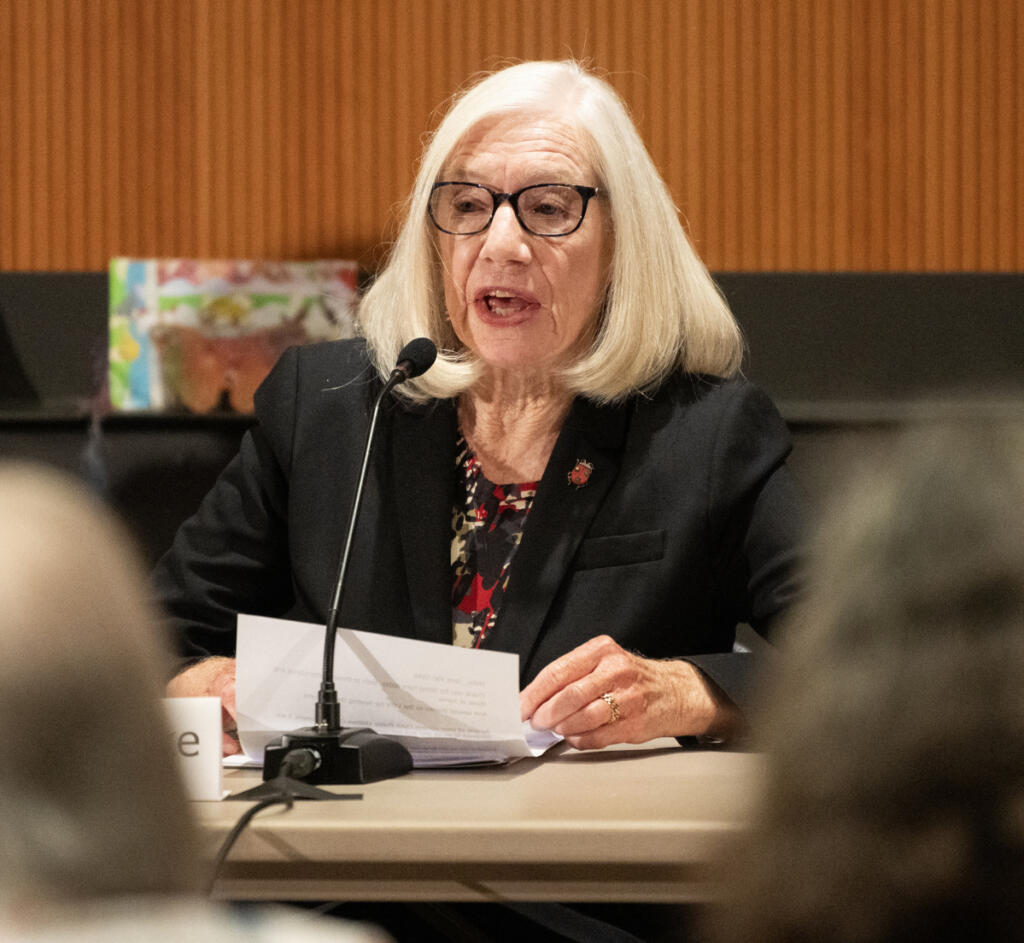
Van Dyke, a public utility commissioner for roughly 30 years, is a lawyer with experience leading several local nonprofits. She was most recently elected in 2014 but served an 18-year stint on the commission from 1984 to 2002.

Clark Public Utilities’ three-person board of commissioners serves staggered six-year terms. Commissioners don’t run the day-to-day operation of the utility, but set policies, approve investments, adopt budgets and vote on rate changes.

During a League of Women Voters forum last week at Vancouver Community Library, Van Dyke said she has promoted customer service in her time on the commission, as well as energy and water conservation, effective management and community and environmental programs.

Roegner, a Vancouver native, worked for Clark Public Utilities for three decades. He served as a lineman, and also held roles in customer service, finance and as a protection and control system technician working on things like grid safety and cybersecurity.

Roegner said his knowledge of the utility’s inner workings would inform him as a commissioner.

“Having worked in the field for 30 plus years as a journeyman lineman, I weathered many of the storms,” he said.

Matthews spent 44 years in the electrical utility industry, including three decades with Bonneville Power Administration where he worked in various roles, including technology, corporate strategy, business practices and rate design.

“I’m known as a very sharp analyst,” Matthews said at the forum, pointing to experience managing $100 million programs. But Matthews fears BPA’s new contract with Clark Public Utilities will expose customers to the volatility of the power market.

“We’re facing a very challenging decade,” Matthews said.

Clark Public Utilities is under pressure as the county’s energy demand is expected to surpass the resources it currently has available given the state’s strict environmental regulations. The state is requiring Clark Public Utilities to wind down its River Road natural gas facility by 2045 and drastically limit its output even sooner. Utility leaders, however, said they expect to add more resources in the years ahead and rely on BPA for additional power.

Matthews said the utility needs to be partnering “much more aggressively” with Eastern Washington utilities where solar is more abundant.

“We can also completely reinvent the way that we do community solar, not once every eight years,” he said. (Clark Public Utilities most recently built a community solar array at the Port of Camas-Washougal in 2023.)

Roegner agreed.

“We need to do more to increase the capacity that we can get from the eastern part of Washington and other parts of the region to address that,” he said.

Van Dyke acknowledged challenges in the industry but said Clark Public Utilities is ahead of the curve.

Get the latest headlines in your email every week!

This field is for validation purposes and should be left unchanged.

“We are willing and able to meet these challenges,” she said.

Clark Public Utilities has long planned for growth in its water system that serves thousands of customers in north Clark County. The board of commissioners recently, however, passed a rate increase to pay for upgrades to its water system’s infrastructure.

The three candidates discussed the county’s growing water needs at the forum.

Roegner said the utility has built up a large well field in north Clark County.

“We just have to build the infrastructure to get the water from the well fields to the customers, which could be quite expensive and timely,” he said.

Van Dyke said the board of commissioners recently approved a 10-year water plan to maintain its distribution system, deliver new supply and improve the rate of the system’s water supply.

“We are on our way to tying our system together with better piping, better materials, and we should be able to have the supply that’s needed,” she said.

Matthews said the utility is operating within its means and developing its water system.

“It, as with the electric side, is well staffed and well planned,” he said.

All of the candidates also spoke during the forum about intending to keep the utility’s rates as low as possible and maximizing transparency.

The election is set for Aug. 4. Ballots will be mailed by July 17.