Camas-Washougal logo tag

Rep. Marie Gluesenkamp Perez challenged from left, right, center in 3rd Congressional race

John Braun, Brent Hennrich among those taking on Dem as she seeks third term

By
timestamp icon
category icon Clark County, Government, News

U.S. Rep. Marie Gluesenkamp Perez, the Skamania County Democrat who edged out a six-term Republican incumbent during the 2022 primary election, is seeking her third term in Congress.

First, though, she will need to fend off competition from all sides in the Aug. 4 primary.

Unlike the 2024 primary, when two Republicans and one independent challenged Perez, she now faces rivals from the right, left and center. A recent poll has her tied with John Braun, a Republican state senator from Centralia endorsed by President Donald Trump. But she’s also up against two other Republicans, three Democrats, one independent and one member of the centrist Cascade Party of Washington.

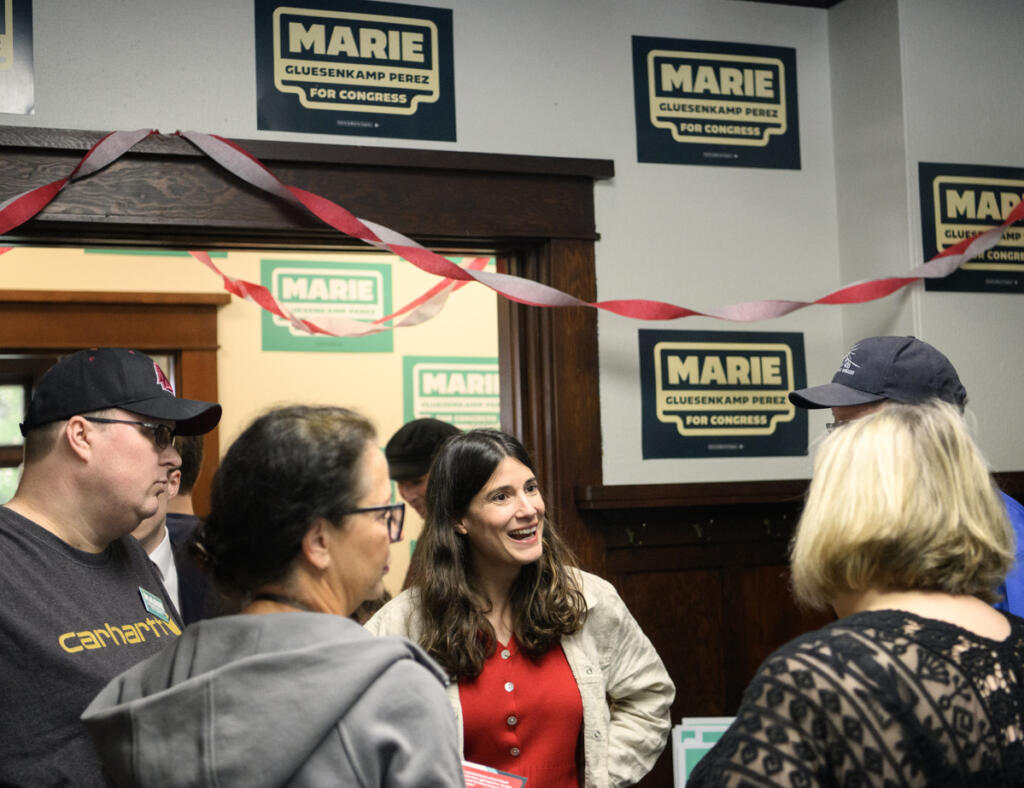
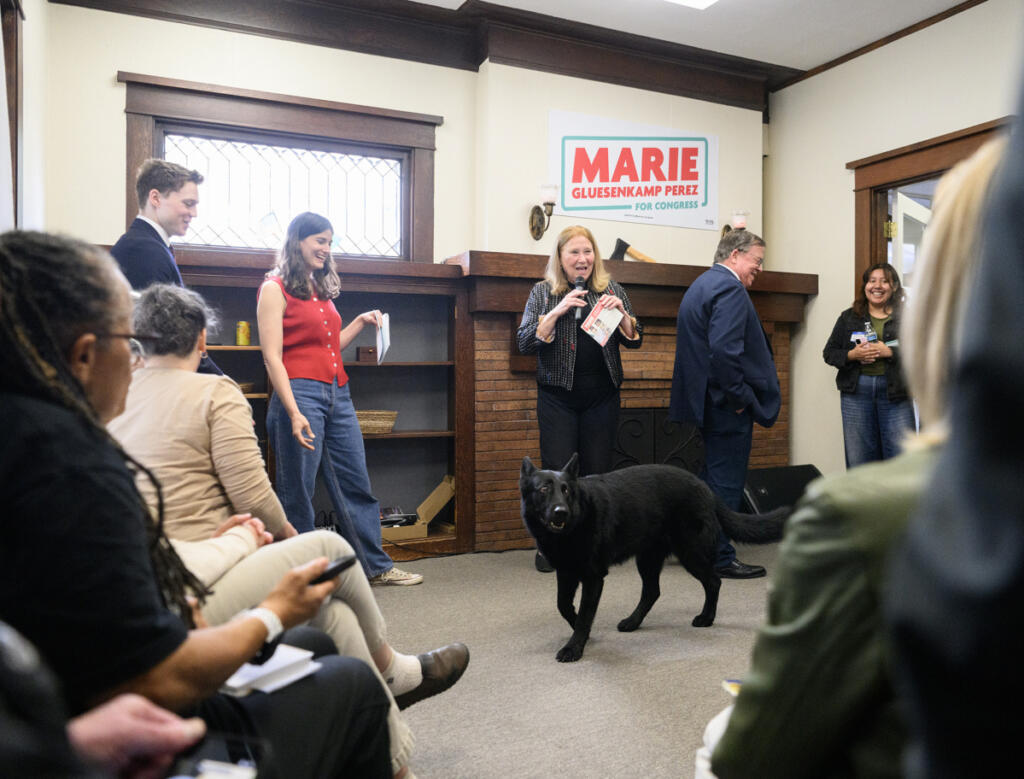
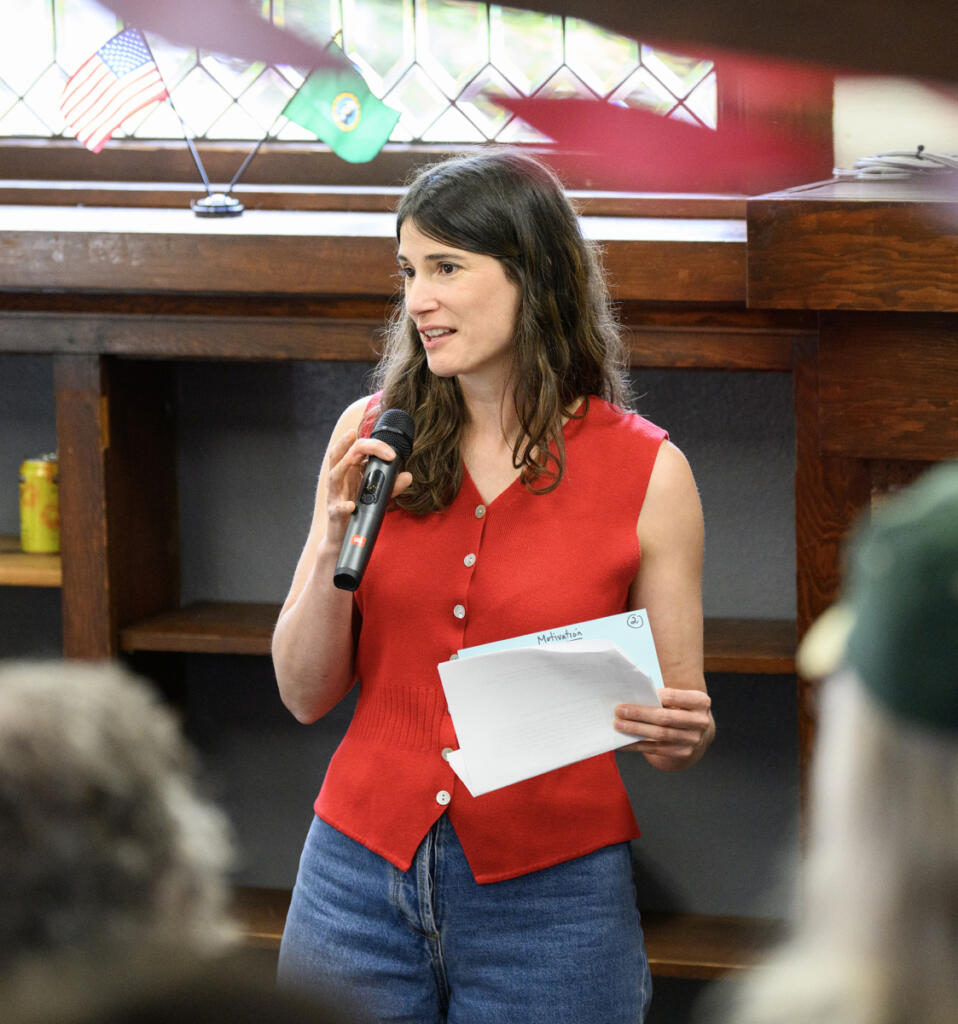
During an election kickoff event May 17 in Vancouver, Perez sounded confident in her ability to win a third term and keep the 3rd District — one of the few truly competitive congressional districts in the country — in the hands of the Democrats.

“I know where I come from and who sent me here. It was not the big players in this country. It was not big money. It was not generational wealth. It was not an Ivy League. It was us, in Southwest Washington,” said Perez, 38.

Perez, the daughter of an evangelical pastor and the mother of a preschool-age son, lives in rural Skamania County with her son and husband, Dean, the owner of a Portland auto repair shop. She said she “votes like an independent and works like a dog.”

She told voters in 2024 that she attends Bible study groups in Washington, D.C., “to stay rooted and find common ground with Republicans.” She’s a member of the centrist Blue Dog Coalition caucus, and, in 2025, was the second most likely member of Congress to vote against her own party.

Although she has criticized many of the Trump administration’s actions and voted against the president’s landmark “Big, Beautiful Bill,” Perez is not afraid to support Trump-backed legislation if she believes it will help the 3rd District.

National media and Perez herself often characterize the district as rural. And while it’s true that the 7,309-square-mile district has a significant chunk of rural land, the majority of 3rd District residents live in urban areas. Of the roughly 802,000 people in the district — which encompasses Clark, Cowlitz, Lewis, Pacific, Skamania and Wahkiakum counties, as well as a small part of Thurston County — close to half live in greater Vancouver.

Historically, it has been Clark County and its urban areas that helped carry Perez to victory. In 2022 and 2024, about 70 percent of her votes came from Clark County. And while Perez has scored some major federal wins for Clark County and the Vancouver area, including her work that helped secure $2 billion in federal funds for the Interstate Bridge Replacement Program, she often focuses her attention on less populated regions of the district.

At a July 10 candidate forum in Stevenson, she listed among her successes backing the transfer of the Wind River Administrative Site to Skamania County to help the rural county generate more tax revenues; urging Congress to extend the Secure Rural Schools timber-revenue program to help vulnerable Skamania County schools; and introducing her Protecting Columbia River Salmon Act, which would allow the killing of sea lions that prey on salmon in the Columbia River.

Over the past three months, Perez has toured a sawmill in Pacific County to talk about her Jobs in the Woods Act that would help young people enter forestry careers; spoken at a ribbon-cutting for a Lewis County grain terminal; and joined a roundtable at the Cowlitz Family Health Center in Cowlitz County to discuss rural healthcare challenges and rising costs.

In Vancouver, she’s more likely to encounter backlash for voting with Republicans and not doing enough to counter what many 3rd District voters see as the Trump administration’s slide into authoritarianism.

Voters who no longer support Perez say they are especially upset with her votes in favor of the original SAVE Act and for funding the Department of Homeland Security in the wake of violent and deadly immigration raids. During a May campaign kickoff event for Democratic candidate Brent Hennrich, one of Perez’s more progressive challengers, several voters who had supported Perez in the past said they felt betrayed by her votes in favor of Trump-backed legislation.

Perez told The Columbian she’s heard the criticism and hopes voters understand the complexity of some of these more contentious votes.

“I understand how angry people are, and this is such a profoundly polarizing time,” she said. “Out of 435 seats in Congress, there are only 15 seats that are an actual toss-up, and I was elected to represent the entire district and navigate a very divided Congress.”

With the controversial Department of Homeland Security funding bill, for example, Perez said she knew the Trump administration had already set up long-term funding for Immigration and Customs Enforcement officers, so ICE would be funded no matter what, but she wanted to keep funding stable for other parts of the department, including the U.S. Coast Guard, and she backed constraints on immigration enforcement officers included in the funding proposal.

“In that DHS package, they negotiated for body cameras and an end to enforcement at sensitive locations like churches, schools and courtrooms and an end to administrative warrants,” Perez said. “And that really didn’t get enough attention.”

While some former supporters may have left Perez’s camp in search of more progressive candidates, two of Clark County’s most prominent public officials, Vancouver Mayor Anne McEnerny-Ogle and Camas Mayor Steve Hogan, have thrown their weight behind Perez.

Trump’s pick

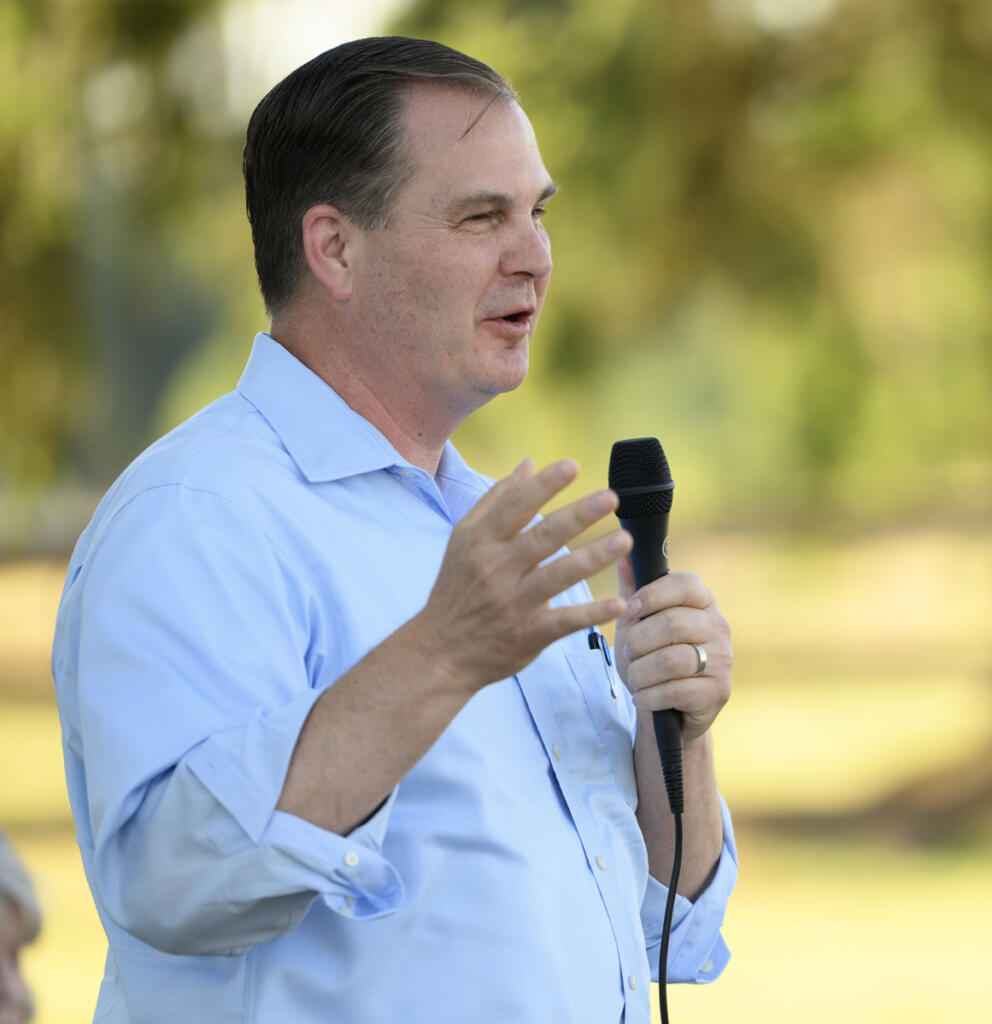
The biggest threat to Perez’s reelection comes from Braun, 59. He received an endorsement from Trump and $5.7 million in reserved campaign funding from the Congressional Leadership Fund, a super PAC that helps elect Republicans to the House.

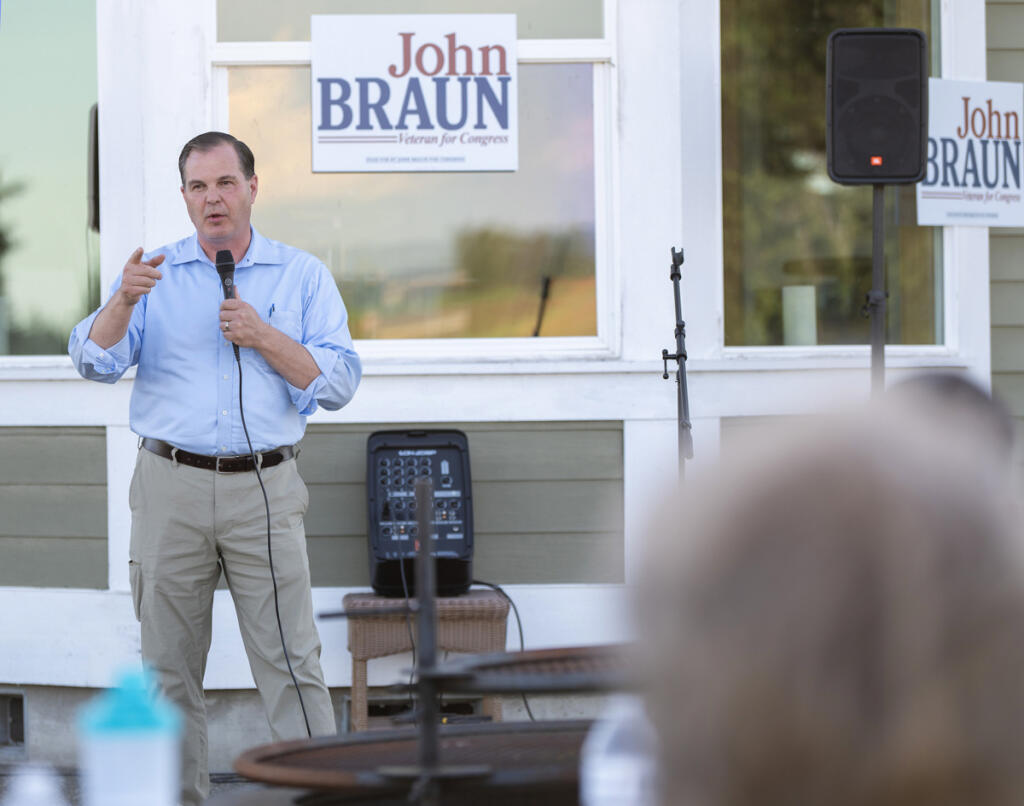
“That’s a big deal,” Braun said during a June campaign event in Toledo. “The reason I say that is because they haven’t spent a dollar in Southwest Washington since 2018.”

Braun, a retired U.S. Navy submarine captain, is president of Braun Northwest, a Chehalis emergency vehicle manufacturer with about 350 employees. He has served as a state senator for Washington’s 20th Legislative District since 2013 and has been the state Senate minority leader since 2020.

Braun and his wife of 37 years, Marlo, have raised four children: three are in the military and one is a traveling nurse.

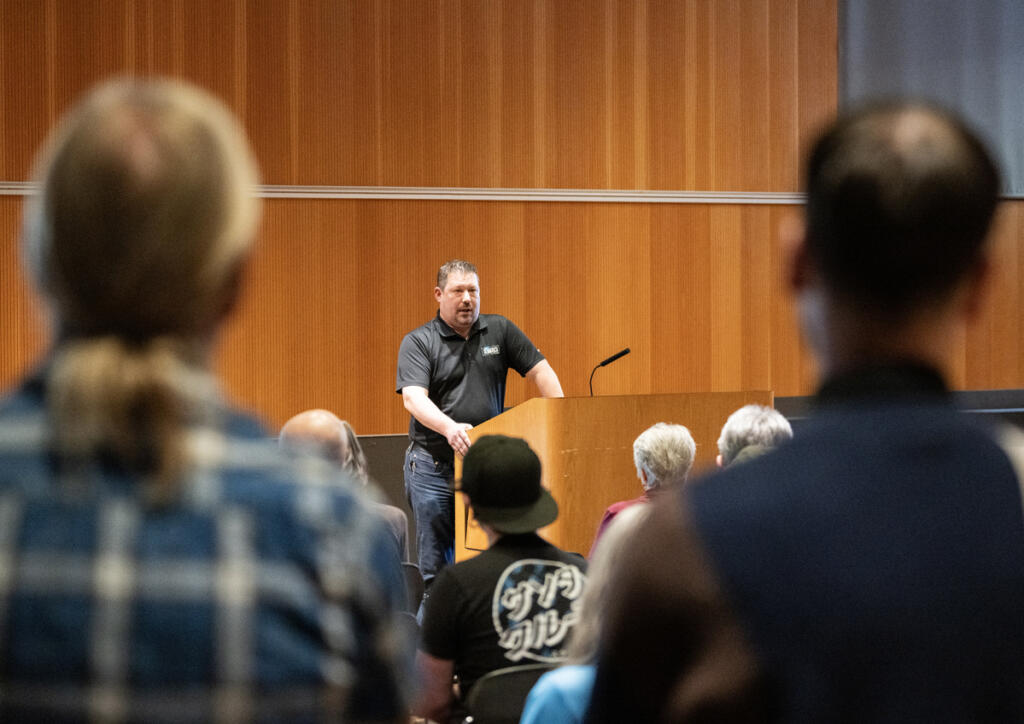
“We badly want them to come back to the state of Washington, but to do that, we’ve got to create a Washington they can afford to come back to,” Braun said during the July 10 forum in Stevenson. “That means we have to focus on spending. We’ve got to focus on keeping taxes lower. We’ve got to focus on the cost of living.”

Braun said he believes a Democratic majority in Washington’s Legislature has damaged the state’s economy.

“In 2018, when (Republicans) lost the majority, we were the top-rated economy in the country,” Braun said. “Since then, we’ve now fallen to where we’re in the bottom half and getting worse. People are leaving at an alarming rate, and that’s not good for anybody, regardless of your politics.”

Economic reports and U.S. Census data paint a different picture of the state.

Although Washington ranks fifth highest for cost of living in the country, WalletHub reported in June that the state has the second-best economy in the nation. The state’s Office of Financial Management reported June 30 that Washington is among the fastest growing states.

Braun has been an outspoken critic of the so-called “millionaires tax” passed this year by the state Legislature that will impose a 9.9 percent tax on individual or household income over $1 million. The Institute on Taxation and Economic Policy, a nonprofit organization that analyzes federal and state tax policies, has said the tax will raise more than $3 billion annually for public education, childcare and an expansion of the Working Families Tax Credit, and will “make important strides in improving the equity of Washington’s state and local tax system.”

But Republican state leaders, including Braun, have bashed the legislation as an underhanded way to implement an unpopular income tax on Washingtonians.

“It’s not a millionaires tax. It’s an income tax,” Braun said. “It does put money toward the Working Family Tax Credit, but I will also point out that that’s a program Democrats put in place 15 years ago and never funded until three years ago, when Republicans pushed for that.”

Braun said Washington residents have consistently rejected income taxes.

“It’s something that’s been culturally opposed in our state for almost 100 years,” he said. “It’s been in front of the voters 10 times — 11 if you count the advisory vote — and every time it has failed resolutely.”

He also fears it will hurt many Washington business owners.

“We are going to put them at a significant disadvantage,” Braun said. “They have to compete, so they’ll have no choice but to go out of business or relocate or reorganize so they don’t have to pay the tax. Not because they don’t want to support the public good, but because they have to compete in the marketplace.”

Braun and other Republicans say wealth taxes will cause high-income earners to flee the state in search of locations that will let them hold on to more of their money, but a Stanford University study found income taxes have little to no impact on where millionaires choose to live and that “millionaire business owners are even less likely than other millionaires to move in response to interstate differences in income taxes.”

Though many have characterized Braun as a centrist Republican leader, as a congressional candidate he has aligned himself with the party’s Make America Great Again branch. In April, Braun said it was “a great honor” to be endorsed by Trump, a highly partisan president who has called Democrats “godless communists,” “radical left lunatics” and “the enemy from within.”

Despite his alignment with Trump, other Republican officials who know Braun said he often works with Democratic representatives to pass state legislation.

Republican state Rep. Peter Abbarno has worked with Braun in the state’s 20th Legislative District for more than half a decade.

“I’m amazed at how much John gets done in this one-party system. He works across the aisle,” Abbarno said at Braun’s June campaign kickoff.

Lewis County Commissioner Scott Brummer also spoke in support of Braun’s work in the state Senate.

“He’s a champion for Lewis County and all of Southwest Washington,” Brummer said. “We value our rural areas and our small businesses and our farming. I think it’s important to have representation from someone who understands that and lives it.”

Other candidates

Aside from Braun, Perez faces seven other primary challengers: Antony Barran, with the centrist Cascade Party; Democratic candidates Austin Braswell, Brent Hennrich and Troy Rasband; independent candidate John Saulie-Rohman; and Republicans Lawrence “Larry” Kellogg and John P. Roco.

Among these, Hennrich leads in fundraising and endorsements. The 47-year-old Vancouver resident and married father of four works as a site supervisor in the movie theater industry.

This is not Hennrich’s first bid for Congress. He supported Democratic candidate Carolyn Long in the 2020 race for the 3rd District, but after Long lost to Jaime Herrera Beutler, the Republican incumbent, Hennrich decided to give it a go himself.

“I just knew we had to get Jaime out,” he said during a May 2 event at the Vancouver Community Library. “So I decided to run for this seat in 2022.”

Hennrich spent more than a year preparing his first congressional campaign. But when Perez, then a political newcomer, threw her hat in the race, he bowed out to avoid splitting Democratic votes.

Hennrich said he later became disillusioned by Perez’s stance on critical issues.

“I saw her record of enabling Trump and enabling (Republican House Speaker) Mike Johnson and siding with Republicans,” Hennrich said. “And I got more than 100 calls and messages from constituents in the 3rd District asking me to get back in the race. … So I decided it was time to step up and do this again.”

Hennrich’s 2026 platform includes advocating for universal healthcare, standing up to the Trump administration, improving access and affordability to education, and making the wealthiest individuals and corporations pay their fair share in taxes.

Hennrich told The Columbian that affordability is his No. 1 issue.

“It’s healthcare costs. It’s housing costs. It’s energy costs and grocery prices going up,” he said.

Although he supports universal healthcare, Hennrich said he knows cutting through a complicated healthcare system that relies on private insurance providers is no easy task.

“We need to increase the income threshold for Medicaid, and we need to reduce the age for Medicare,” Hennrich said. “We need to remove some of the additional, out-of-pocket expenses on the Medicare side. Those are costs that people should not have as a hindrance to getting care. We can expand the income threshold on Medicaid to $1 million a year, but we don’t have enough providers who will take it, because we need to fix the backside, the payout table, on Medicaid. It’s old, antiquated and not sufficient.”

Some voters have asked Hennrich if he feels he could beat the Republican candidate in a general race, and his answer is a resounding “yes.”

“Because our core issues in this campaign are healthcare access that’s equitable for everyone, education and making sure we’re investing in infrastructure, which is going to create good-paying jobs — these are kitchen table issues for everyone,” he said. “We’re not aiming at Democrats or Republicans. We’re just aiming at voters and saying these things matter to everyone.”

Hennrich also said he has seen signs that Perez’s support is dwindling and that she may be more vulnerable this election season to Democratic challengers.

“People are just walking away,” he said. “I don’t think a single person who voted for Marie thought she would vote to disenfranchise 80 million women from the ballot. … The list of votes that goes against what was implied is long. And we know that, if we get out there and talk to people, that we can re-secure those votes.”

Perez’s other challengers have tried to separate themselves from the frontrunners in the field by focusing on other issues important to 3rd District voters.

Rasband, a 27-year-old Vancouver resident who earned his associate’s degree from Clark College and said he has been working blue-collar jobs since he was 16, describes himself as a democratic socialist focused on making life more affordable for the working class and stimulating the economy through Green New Deal jobs that also protect the planet from the devastating impacts of climate change. He also supports making wealthy individuals and corporations pay their fair share in taxes, finding a legislative fix for the Citizens United Supreme Court decision that allowed the creation of super PACs, helping ensure children and families don’t go hungry in the U.S., and implementing a more affordable and equitable universal healthcare system.

Get the latest headlines in your email every week!

This field is for validation purposes and should be left unchanged.

“I believe there is a better way forward. One grounded in compassionate, practical policies, rather than the fear-based politics that have shaped our culture for too long,” Rasband said in his candidate statement.

Independent candidate John Saulie-Rohman, 45, is a father of four who lives near the Camas-Washougal border. This is his second congressional run. In 2024, Saulie-Rohman ran against Perez and Republicans Joe Kent and Leslie Lewallen during the primary election and earned 2.5 percent of the vote.

He said Israel’s military actions in Gaza prompted him to run for Congress.

“The Gaza genocide made me feel so powerless,” he said in a recent phone interview. “Back in 2024, I was a one-man show and didn’t raise that much. I had some business cards and yard signs, but that still translated into more than 5,200 votes so I do think people are willing to look at the message and prioritize their principles and morals over political partisanship.”

At the July 10 candidate forum in Stevenson, Saulie-Rohman spoke out against the National Defense Authorization Act up for a vote in Congress this month, and cautioned that the legislation would fold Israel’s military into our own nation’s military system.

“If you want to support this country, then research your candidate. Find out where they stand on this,” Saulie-Rohman said. “If they’re willing to accept that lobbyist money, then they are not standing for you. They’re not prioritizing you. They’re not prioritizing this country.”

On the other end of the political spectrum is Lawrence “Larry” Kellogg, a retired air cargo pilot from rural Washougal. He said he’s running as a center-right Republican who wants to get “real” Republicans elected to office, create a business-friendly environment in the 3rd District and “reset our democracy back to normalcy.”

“We want businesses to come and put down roots here,” Kellogg said. “I see the flight of companies going to Arizona, Texas, Florida … we have to be able to compete with these states and get good businesses to come here.”

The Columbian was unable to contact Roco. Barran and Braswell did not respond to requests for more information.

The top two vote-getters in the primary will move on to the Nov. 3 general election. Ballots must be postmarked by Aug. 4 or dropped in a secure ballot drop site by 8 p.m. that day.