Nitrogen makes plants grow. It’s a fundamental building block for all living things, essential for the creation of proteins, amino acids and chlorophyll.
Commercial farmers typically must rely on synthetic nitrogen fertilizers to add nitrogen back into the soil. Despite making up 78 percent of our planet’s atmosphere, plants cannot directly absorb nitrogen from the air.
But what if they could? Associate professor Stephanie Porter from Washington State University Vancouver is working to make that possible.
“We like to look at wild plants and look at the adaptations that have evolved there over a long time periods and see how we might apply some of these useful adaptations to help crops grow better,” Porter said.
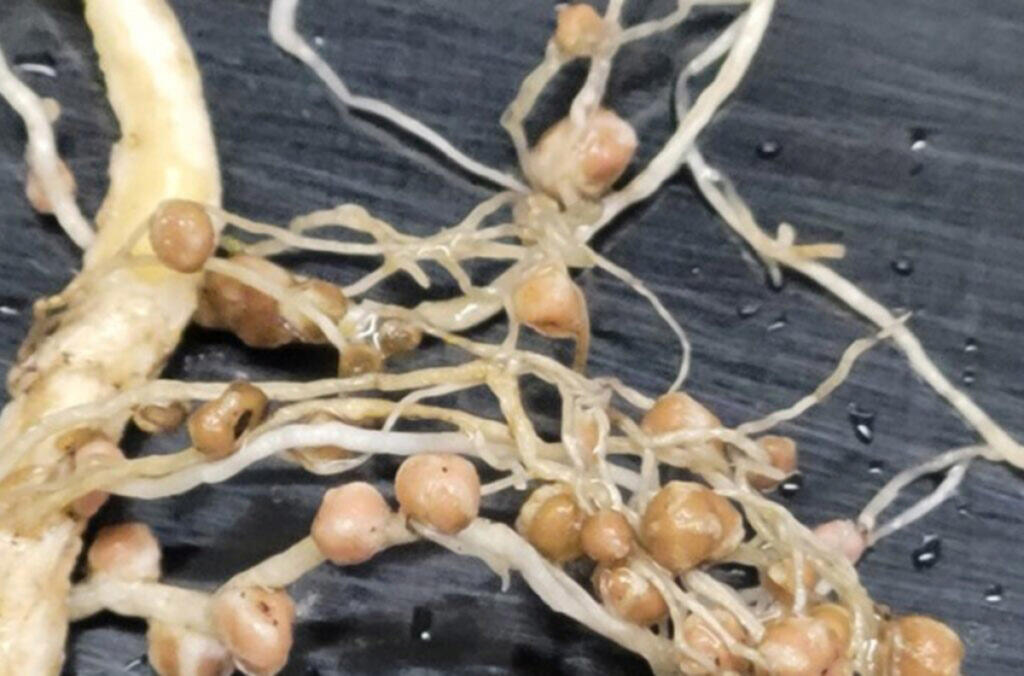
Last month, Porter published her research on transferring genes from rhizobia bacteria found in legumes, particularly peas and beans, that absorb nitrogen from the air into bacteria that do not. She and her team worked with commercial farmers on a proof-of-concept solution they hope will transfer to other crops.