Camas-Washougal logo tag

C-Tran board to comply with Washington’s edict

Members OK ‘4-3-2’ plan after finding compromise

By
timestamp icon
category icon Clark County, Government, News
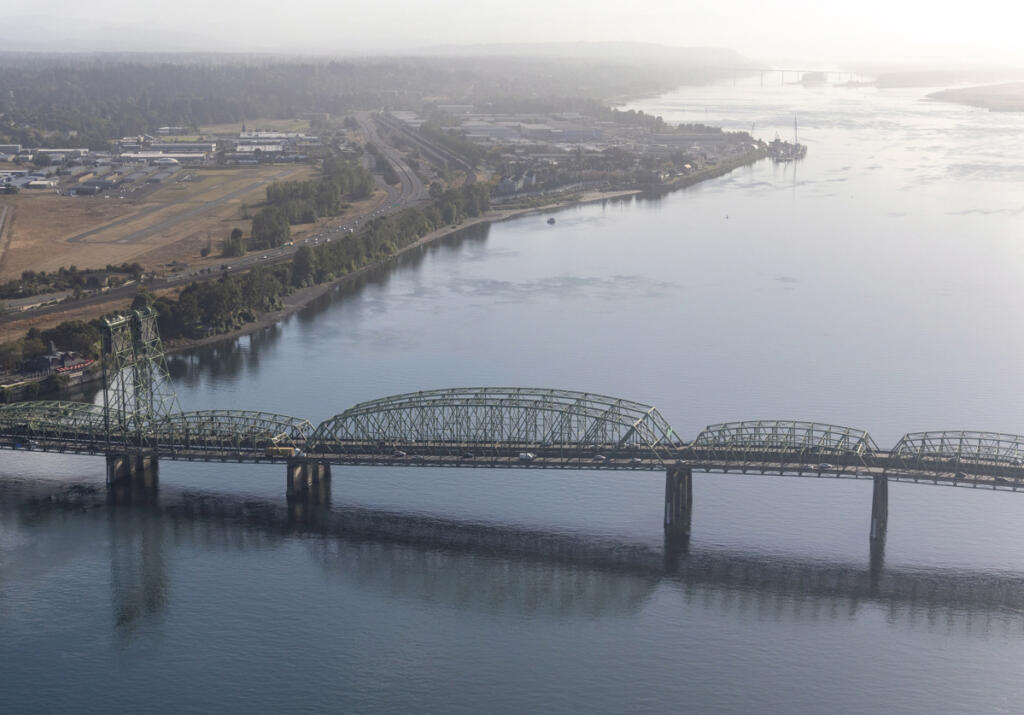
The Interstate 5 Bridge crosses the Columbia River on Oct. 11, 2022. (Taylor Balkom/The Columbian files)

C-Tran’s board on Tuesday agreed to alter its structure after resisting an edict from the Washington State Department of Transportation for nine months.

The board will switch to the state’s preferred “4-3-2” composition with four directors representing the city of Vancouver, three representing unincorporated Clark County and two representing the county’s small cities of Battle Ground, Camas, La Center, Ridgefield and Washougal, as well as the town of Yacolt in northeastern Clark County.


The current C-Tran board consists of four small city representatives, three from the Vancouver City Council and two from the Clark County Council, as well as a nonvoting labor representative.

A June 30 letter from the state told C-Tran its board gives too much representation to the small cities, which represent about 18 percent of the transit agency’s service district population, and too little representation to the city of Vancouver and the county.

The state warned if C-Tran did not come into compliance, it would jeopardize millions of dollars in state transportation grants.

Several small city representatives opposed to paying for light rail trains set to run between downtown Vancouver and North Portland on the future Interstate 5 Bridge replacement had fought the 4-3-2 composition. They argued instead for a 3-3-3 configuration that would give an equal number of seats to Vancouver, the county and the small cities.

An agreement made during the C-Tran board’s regular meeting on Tuesday evening helped change their minds.

Instead of leaving open an option for C-Tran to use sales tax revenues to help pay for light rail-related costs, the board agreed Tuesday that C-Tran may participate in funding the operations and maintenance of the bistate transit, including any new Park & Rides that may be constructed, but funding for these costs may not come from sales tax revenues previously approved by voters that are collected outside Vancouver or its urban growth boundary.

The agreement to move to the state’s preferred 4-3-2 configuration also came with the caveat that a lawsuit between the state transportation department and C-Tran in Thurston County Superior Court be dismissed with prejudice.

“Battle Ground is in support of this,” Battle Ground Mayor Eric Overholser told the C-Tran board Tuesday. “We don’t want to be a hindrance or get in the way of a bridge replacement. And if light rail needs to be funded by C-Tran, I agree that it should be new money, not the existing funding we know C-Tran needs to … operate at their current operations level.”

Camas City Councilor Tim Hein said his city also agrees with the compromise.

He said Camas officials, who have opposed light rail on the future I-5 Bridge, did not want to get in the way of the bridge replacement project.

“We support it,” Hein said. “And we want to stay as positive members (of C-Tran). The services are valued and increasing in value, but the city of Camas does not want to help fund additional services for light rail or have its citizens pay for light rail.”