Camas-Washougal logo tag

Officials urge residents to watch out for yellow-legged hornets

Invasive insect was found on grain ship April 30 at Port of Vancouver

By
timestamp icon
category icon Clark County, Environment, News, Outdoors
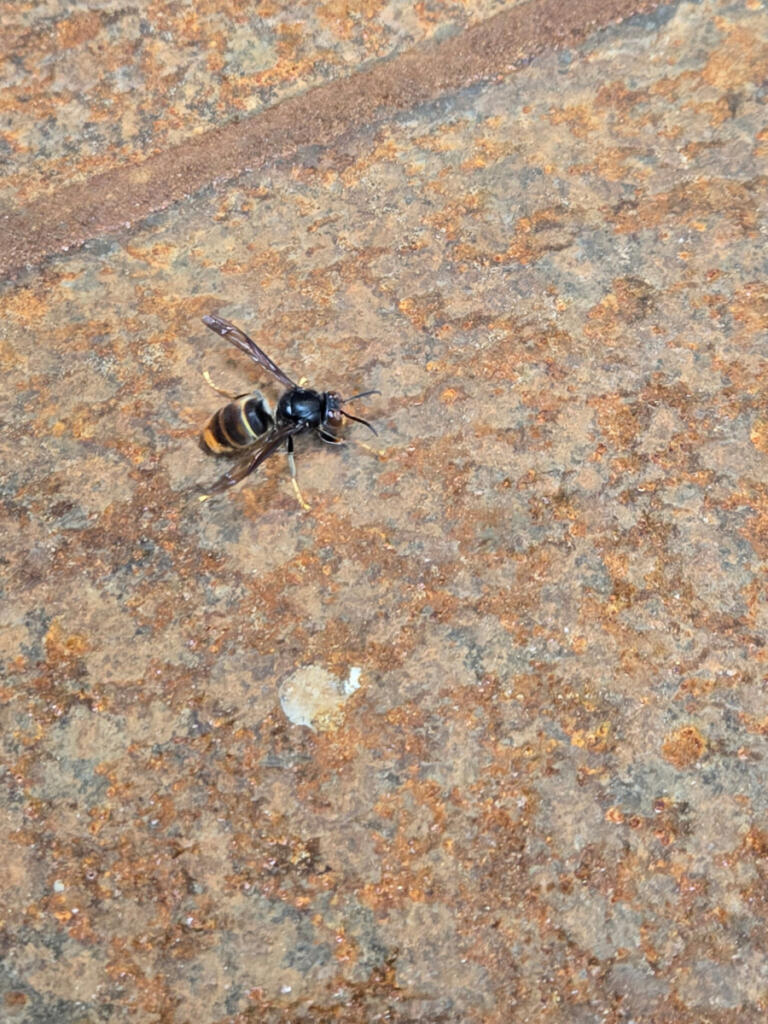
A yellow-legged hornet, considered highly invasive, was found at the Port of Vancouver during a grain inspection April 30. (Contributed by Washington State Department of Agriculture)

Washington officials are asking Clark County residents to keep an eye out for yellow-legged hornets after one was intercepted on a vessel at the Port of Vancouver.

The highly invasive insect was discovered on a grain ship April 30 by a U.S. Department of Agriculture inspector, according to a Friday news release from the Washington State Department of Agriculture Pest Program. The inspector photographed the hornet, and then destroyed and discarded it.


No other yellow-legged hornets have been found in the area so far.

“We are hopeful that this was a one-off interception, which occasionally happens at our ports,” Sven Spichiger, WSDA Pest Program manager, said in Friday’s press release. “But given the serious nature of this hornet and its potential impact to honey bees, we are asking for extra vigilance from people in the Vancouver area.”

The insect has spread rapidly through Europe, causing a 30 percent reduction in honey bee hives and honey production, according to the press release.

Spotted in Ga. in 2023

The hornet, with the scientific name Vespa veluntina, was brought to Georgia in 2023 and since spread to South Carolina, the press release said.

The agriculture department said the yellow-legged hornet is roughly 0.75 to 1 inch long, with queens being slightly larger. It’s named for its legs, which are yellow near the bottoms. Part of its abdomen is yellow and orange.

The bug builds paper-like nests, with up to 6,000 hornets, in tree branches and outdoor areas, according to the press release.

The agriculture department asks those in Vancouver and the surrounding areas to report any suspected yellow-legged hornet sightings with a photo to agr.wa.gov/hornets or by email at [email protected].

The department also asks residents to catch the suspected insect if it’s safe to do so and put it in a freezer.

Spichiger said the public was critical to former eradication efforts of other insects.

“And they will be just as important in responding to this introduction if there are more hornets in the area,” Spichiger said.