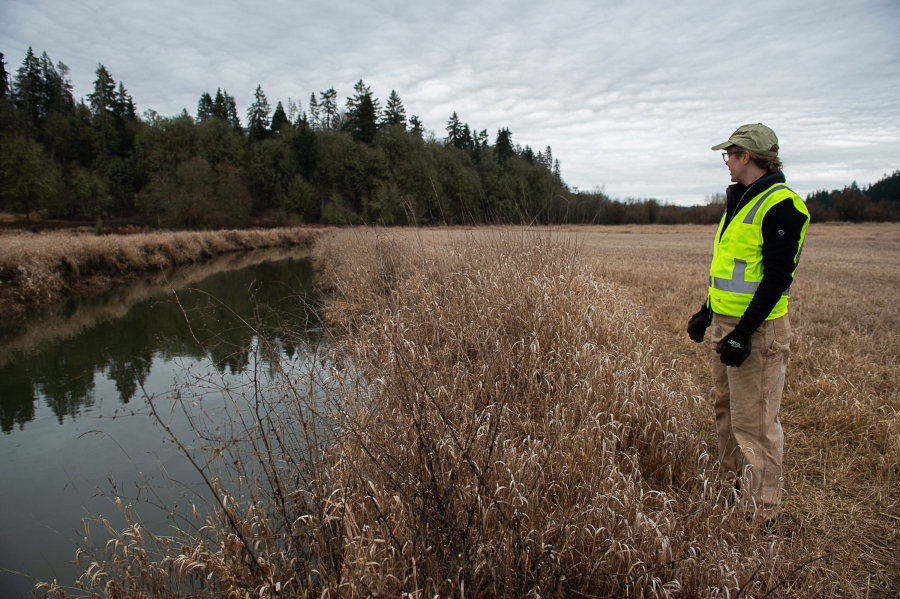
Water temperatures in many of Clark County’s rivers and streams, especially in urban areas, continue to rise, according to the county’s most recent stream health report. That was the message Marlena Milosevich Butler of the county’s public works department shared at a water pollution symposium Tuesday.
“There are many different ways we … can combat rising temperatures,” she said.
When it comes to keeping stream temperatures cooler, the main factors are shade and stream flow, Milosevich Butler said. While development in urban areas is a major contributor to lower stream flows and the lack of shady riparian areas, rural areas aren’t immune to these problems.
Milosevich Butler said the county began collecting data in 2002 with the most recent report for the 2024 water year, which runs from Oct. 1 through Sept. 30. To monitor stream health, the county measures oxygen levels, turbidity, metals, nutrients and bacteria. Staff also collect select aquatic macroinvertebrates.
Online maps show changes
The new online maps show numerous changes in stream health since 2010. For example, water quality in Mill Creek and Woodin Creek has gone from fair to poor since the 2010 report. Additionally, water quality in Mason Creek east of La Center went from good to fair, while nearby Dean Creek went from good to poor.
Milosevich Butler said agricultural operations in rural areas can impact water quality. Farmers may remove trees to increase the amount of farmable land, and runoff carries pesticides and other chemicals.