Camas-Washougal logo tag

Tree loss accelerates amid hotter summers

Two recent studies link tree deaths to the region’s warmer climate

By
timestamp icon
category icon Clark County, Environment,

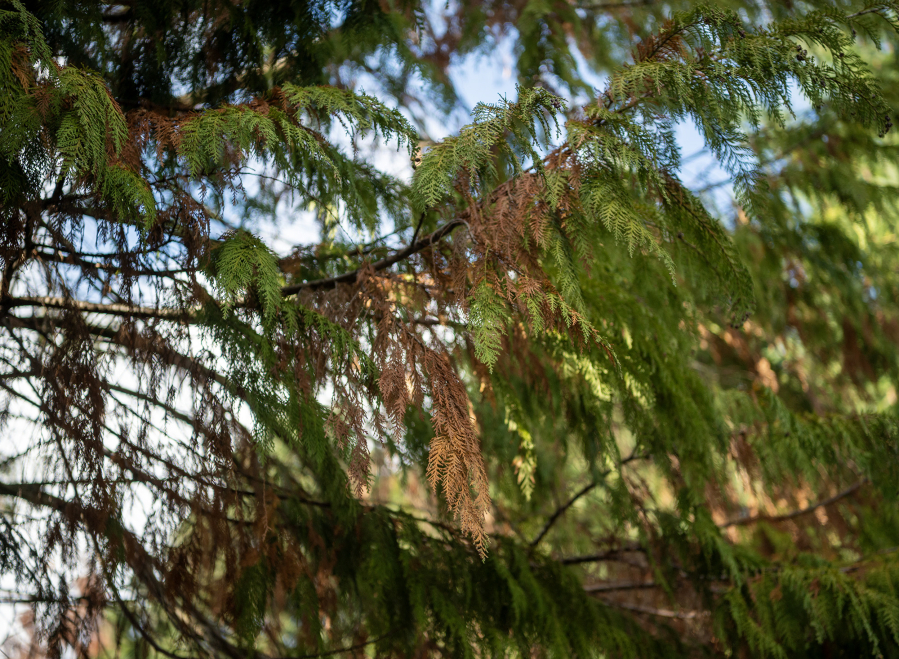
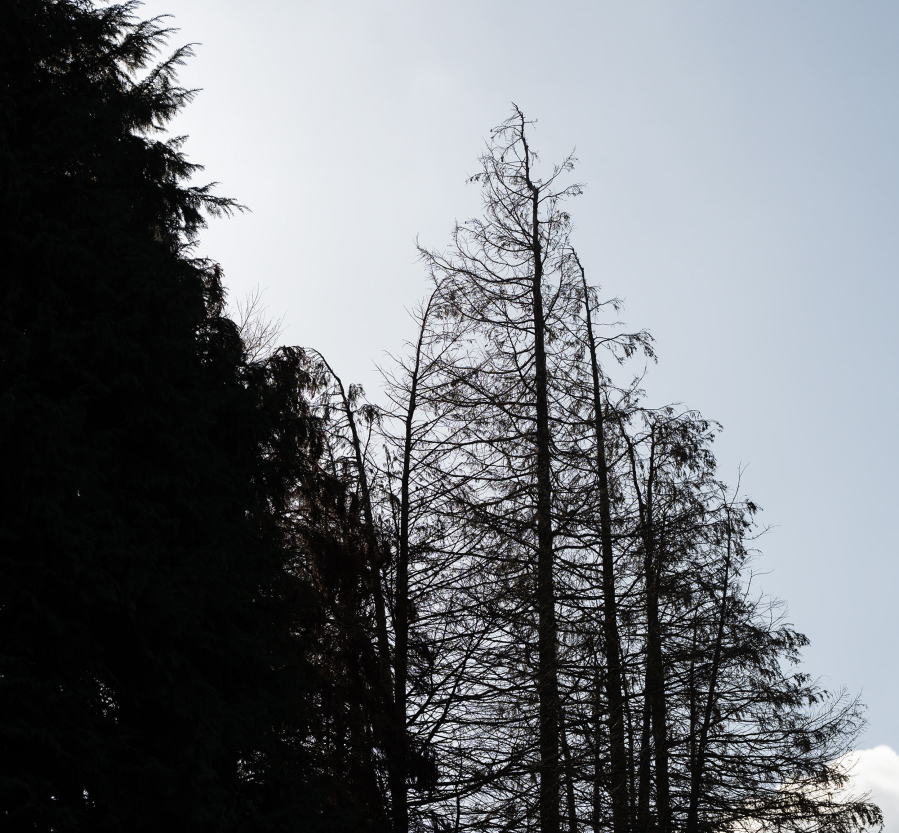
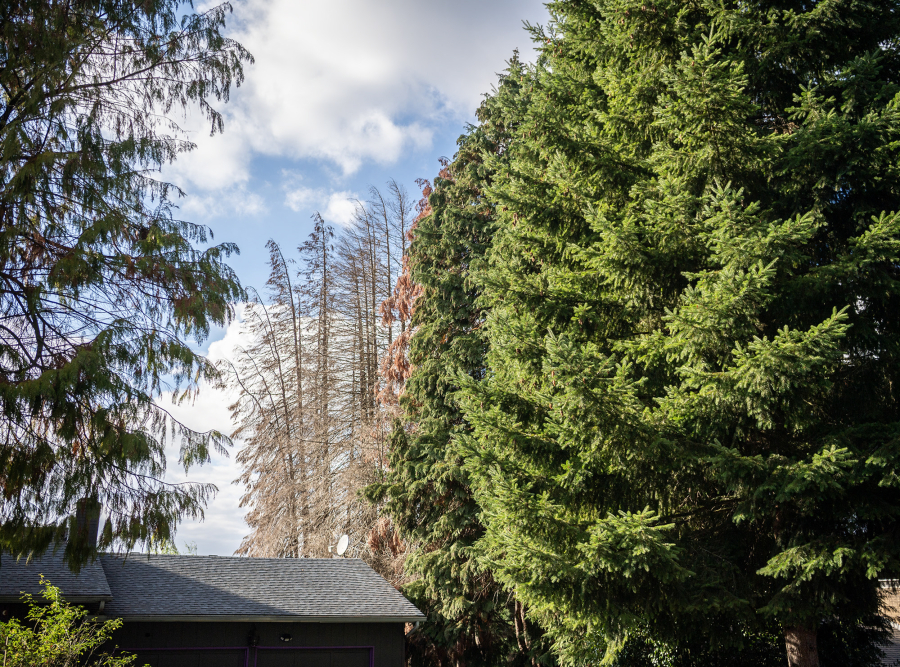
The hot, dry summers Clark County and much of the Pacific Northwest have experienced in recent years are harming some native tree species. Forestry experts and environmental groups say western hemlock, western red cedar and bigleaf maple are dying off due to the changing climate.

Tree loss became especially noticeable after the 2021 heat dome that pushed temperatures to a record-setting 115 degrees in Vancouver.

“Western red cedars are struggling. The signs that they’re struggling are typically top-down deaths from either the heat dome, which burned out a lot of them, or just general warmer, drier climate,” said Ryan Savaikie, lead forester for Clark Conservation District.

Adela Miller, neighborhood tree specialist for Friends of Trees, said the nonprofit has also seen the impact to trees in urban areas, especially bigleaf maples, which are native and serve an important role in the ecosystem.

“We planted them pretty widely in the urban environment, and they’re just not doing well either,” she said.

In addition to trees that have already died, many others are showing signs of drought or heat stress. Younger trees with shallower or less well-established root structures are especially at risk, Savaikie said.

“Planting has been pretty difficult. We’ve had landowners lose 50, 60 percent of a planting just from big burnouts during summer,” he said.

Recent studies by both the University of Washington and University of Oregon linked tree deaths to the area’s warmer, drier climate. In 2022, Oregon researchers documented 1 million acres of fir trees with signs of mortality. That study found that warmer, drier conditions can weaken and kill trees even when followed by wet years.

Additionally, trees already stressed from heat or drought can be more susceptible to fungus and pests such as beetles, worms and caterpillars that can also kill trees.

In response to what’s happening with these tree species, forestry officials and environmental groups are changing which trees they choose to plant, where they get saplings and which trees they recommend to property owners.

Vancouver’s urban forestry program is removing western hemlock, western cedar and bigleaf maple from its list of approved trees.

“We are recognizing that although natives are extremely important for pollinators and for a variety of reasons in the area — especially in the built environment where there’s asphalt and concrete, thermal masses that hold heat and raise the temperatures 5-10 degrees more than surrounding forests — there are a variety of reasons why nonnative trees might even be more appropriate,” said Andrew Land, urban forestry specialist for the city of Vancouver.

After recommending native tree species for years and finally getting homeowners excited about the idea, Miller said it’s hard to tell them now that the trees they’ve picked may not survive long. Friends of Trees has started looking south toward Southern Oregon and Northern California, where summers are already hotter and drier, to find suitable replacements.

“There’s just a general trend towards wanting to source trees that are native to Northern California, just in anticipation of what our weather systems will look like in the next 40 years. For hemlocks and red cedars and those kind of tall evergreen, giant species, I’ll substitute incense cedars, which do well and are at the very northern tip of their range. … And then the ponderosa pines do well with extended periods of drought,” Miller said.

Miller said options to replace bigleaf maples can include Oregon white oak (the only oak species native to Washington) or some of the California oak species such as coast live oak or blue oak.

Land said Vancouver planted a few California oak species as a trial and will also try canyon oak and live oak.

“What the arborist community is being told is, with climate change in mind, the next generation of trees that we should be planting are those that are thriving 500 miles south, so we’re talking roughly Ashland to Sacramento,” Land said.

Homeowners with existing trees already on their property should watch for signs of stress. Watch for dead branches, leaves or needles — especially at the tree crown — as well as peeling or flaking bark or fungal growth. Savaikie said homeowners can take steps to minimize loss.

“We do tell people if they have these trees and want to keep them, especially if they’re close to the house or something, irrigating them can be helpful. Getting deep soaks during very hot weather events can be pretty helpful over summer,” Savaikie said.

And for property owners wanting to plant new cedar or hemlock trees, Savaikie suggested planting near streams or seasonally wet areas to increase their odds of survival.


This story was made possible by Community Funded Journalism, a project from The Columbian and the Local Media Foundation. Top donors include the Ed and Dollie Lynch Fund, Patricia, David and Jacob Nierenberg, Connie and Lee Kearney, Steve and Jan Oliva, The Cowlitz Tribal Foundation and the Mason E. Nolan Charitable Fund. The Columbian controls all content. For more information, visit columbian.com/cfj.