Camas-Washougal logo tag

Camas student’s project aims to tackle algae bloom in Fallen Leaf Lake

4-by-7-foot ‘floating island’ planted with native wetland species to absorb excess nutrients

By
timestamp icon
category icon Camas, Environment, News, Outdoors
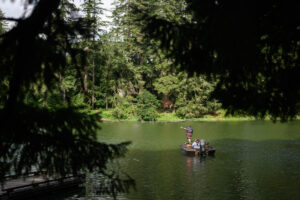
CAMAS — Many people view algae blooms as a problem too big for any one person to solve. Emily Jiang saw an opportunity to prove that one person still could make a difference.

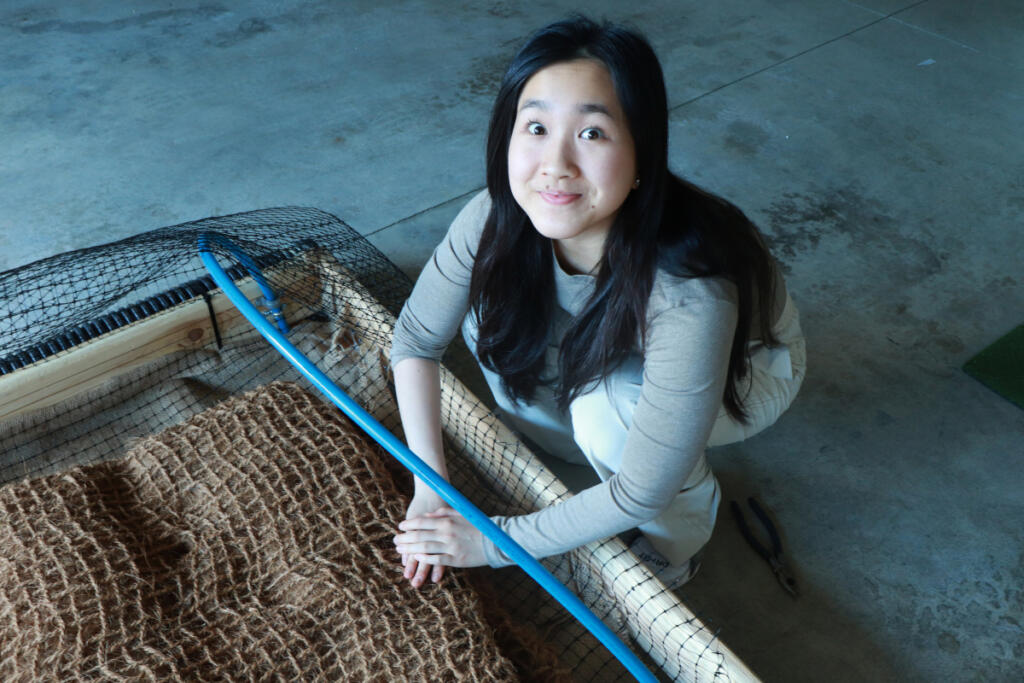
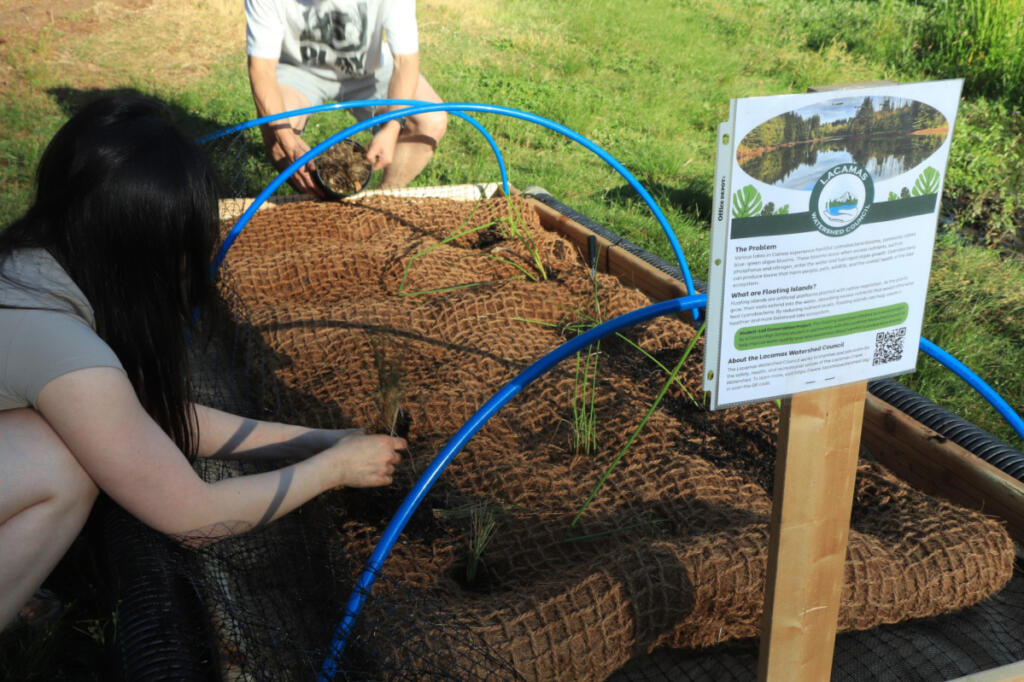
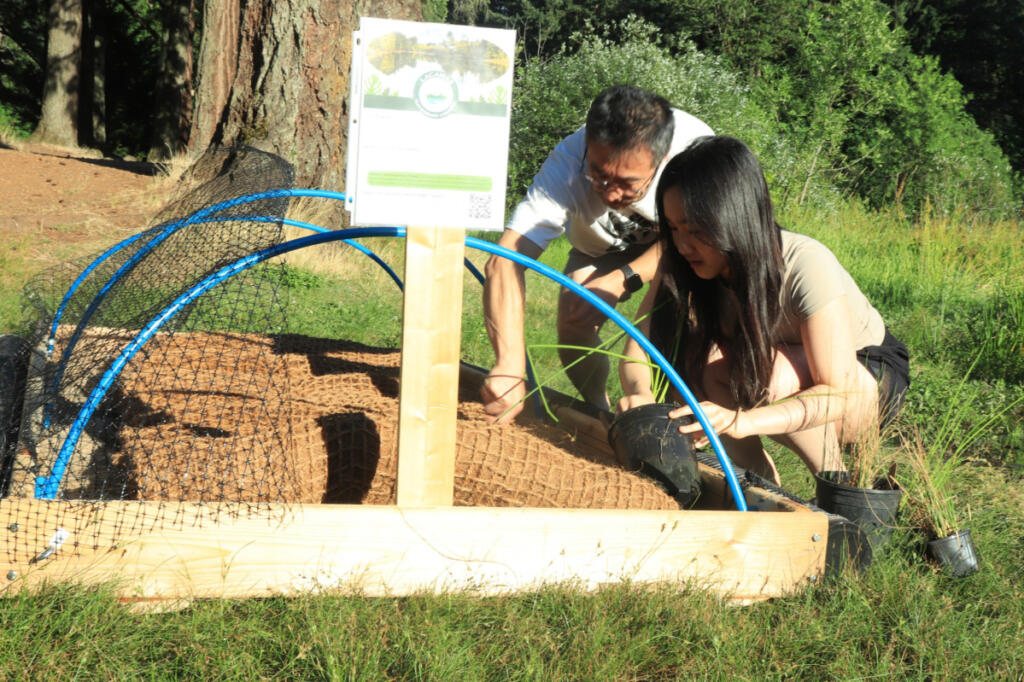
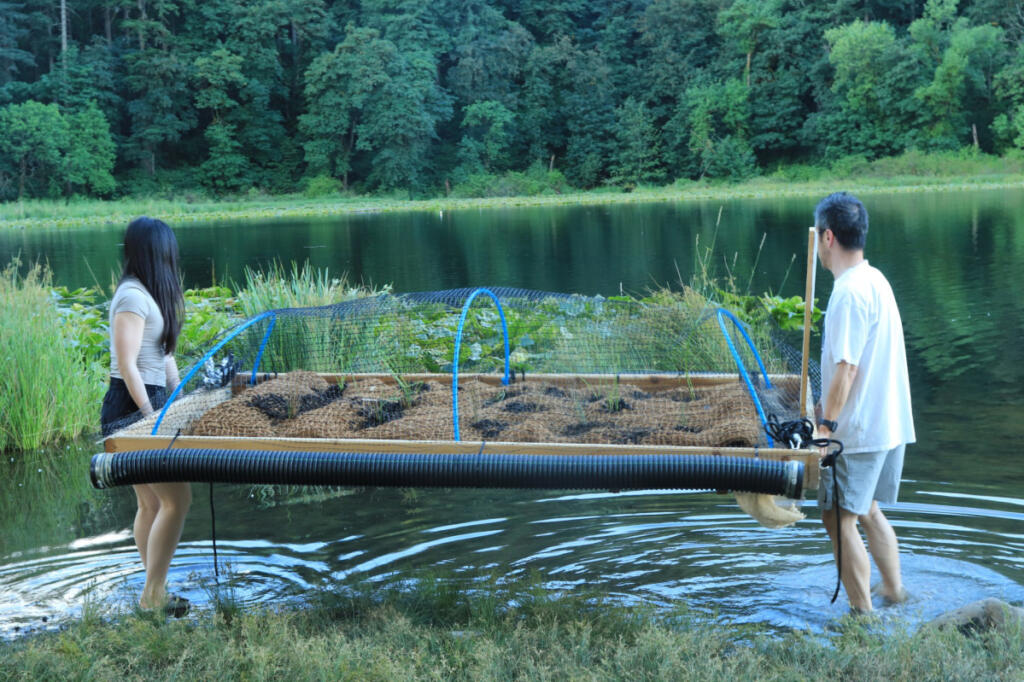
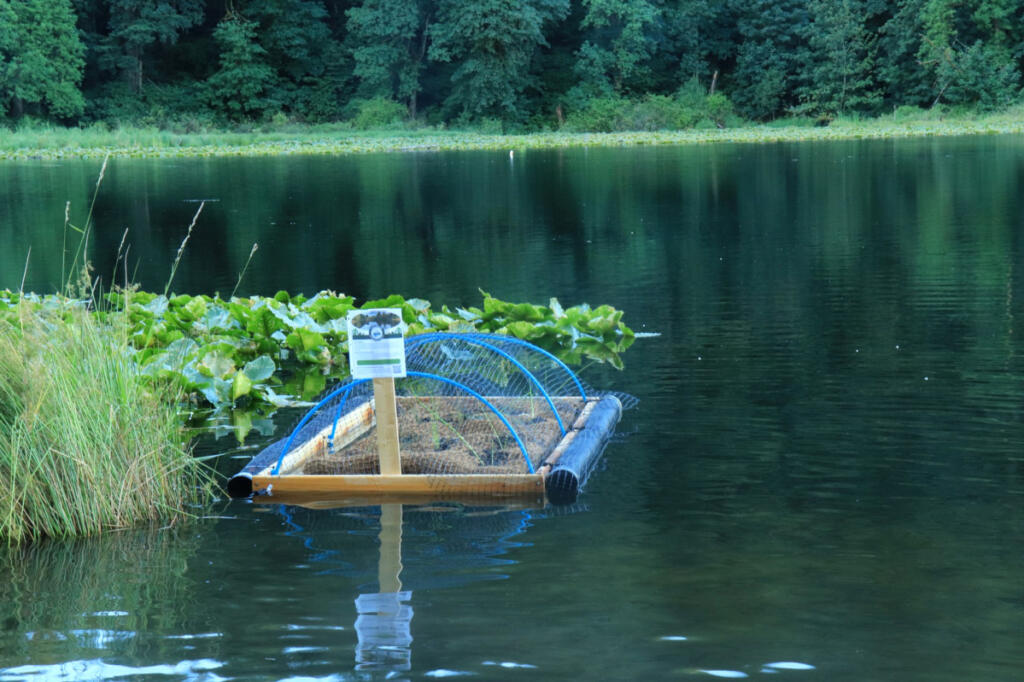
Jiang, a rising Camas High School senior, designed and built a “floating island” — a 4-by-7-foot raft planted with native wetland species — to help combat toxic blue-green algae blooms in Fallen Leaf Lake. With assistance from her father, Lipin Wang, she placed the island into the lake on July 3.

“I’ve always really enjoyed going to the lake, and during COVID it was my main way to get outside,” she said. “It’s a place so many people use and enjoy, but I kept hearing stories about people getting sick and dogs dying from the cyanobacteria toxins. I realized this is a real issue in our community and thought, ‘If I can help, why not try to do something so people can keep using and enjoying this resource?’ ”

The plants’ roots dangle into the water, absorbing excess nutrients like phosphorus that would otherwise fuel algae growth. The island, in theory, offers a natural, chemical-free way to improve water quality.

During the coming months, Jiang will compare plant growth and phosphorus levels between island plants and control plants grown at home to see whether her island could point the way to a scalable, community-driven lake-restoration strategy.

“I don’t think this single island will make a huge difference in the entire lake, because it’s only one,” she said, “but I do think it’s a pretty good step in seeing if it’s a possible solution to build them instead of purchasing them from a company. If we’re able to build them and it actually works, it would help a lot with the water quality.”

Ty Cobb — president of the Lacamas Watershed Council, a Camas-based nonprofit organization that promotes the health of Lacamas, Round and Fallen Leaf lakes — said Jiang’s findings could provide useful data for “scaling up floating wetlands in key hotspots around the lake system, giving us a cost-effective, natural tool to complement our and the city’s ongoing restoration strategy.”

“Long-term watershed recovery requires continuous momentum, which relies entirely on people who care. Seeing young stewards like Emily bring community focus to the health of our waters makes me deeply optimistic,” Cobb said. “Over the next five to 10 years — as community partners, local leaders and students collaborate on innovative solutions like floating islands — we won’t just restore water quality; we will build a sustainable network of solutions that preserves the health of the Camas lakes for generations to come.”

Project dates to 2024

Jiang’s project dates back to 2024, when she conducted research on cyanobacteria and blue-green algae for her MST (math, science, technology) magnet program.

“When I was a sophomore, I researched the blue-green algae and why it’s there and different methodologies of how to get rid of it or prevent it from blooming,” she said. “That kind of led me to the floating island idea. I came across the floating islands that you buy, but sadly they can’t be used in the lake due to cost restrictions.”

Jiang approached the Lacamas Watershed Council earlier this year with her proposal to create a low-cost, DIY alternative to pricey commercial floating islands. Council members responded to her idea with “a lot of smiling and happy faces,” Cobb said.

“The Lacamas Watershed Council had also had ideas about a floating island, but they said they were waiting for someone to go in and do it,” Jiang said. “That’s kind of where I came in and said, ‘Hey, I’m really interested in doing this. Would there be support for me?’ They were like, ‘Yeah, for sure, we would love to support you,’ and that’s how I took action.”

Jiang’s project illustrates the role that community members — and especially young people — can play in solving environmental challenges, Cobb said.

“Restoration doesn’t just happen at the government or policy level. It happens when individuals apply creative problem-solving in their own backyards,” he said. “When young leaders provide the community with experimental and tangible solutions, they inspire their community to take action, too.”