Camas-Washougal logo tag

Clark County weighs changes to regional waste system, possible purchases of two Vancouver transfer stations

County council approves contract with HDR Engineering for consulting, facilitation

By
timestamp icon
category icon Clark County, Government, News
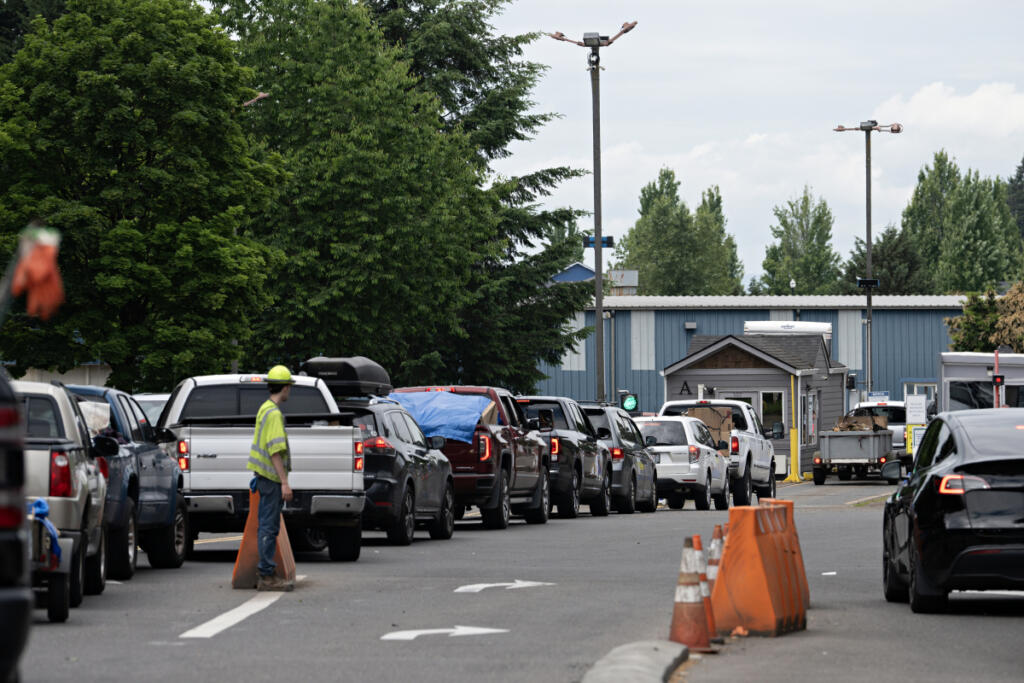
Drivers wait in line at the Central Transfer and Recycling Center in northeast Vancouver. The county council on Tuesday hired consultants to look at creating a regional solid waste utility, which could include purchasing Waste Connections Central and West Vancouver transfer stations. (Amanda Cowan/The Columbian files)

The Clark County Council last week unanimously approved a $649,115 contract with Vancouver-based HDR Engineering to evaluate options for a revamped regional solid waste system. Funding will come from the county’s regional solid waste system fund.

Joelle Loescher, division manager for Clark County Public Works, said HDR will provide consulting, facilitation and technical support to the regional solid waste steering committee in evaluating regional governance, public ownership options and operational changes to the system.

As part of the regional system, the county council is also looking at purchasing the West Vancouver and Central transfer stations, and any future stations, owned by Columbia Resource Company, a division of Waste Connections of Washington. The county has the option to purchase the facilities for $1 each. The county could also purchase the Washougal station if the city of Washougal opts out.

While it may seem like the county has plenty of time to act — its contract with Columbia Resource Co. doesn’t expire until 2032 — an agreement between the county and the city of Vancouver requires a regional solid waste authority to be created by 2029.

“Right now, we really have to discuss with the cities what availability they have. We’ve discussed maybe a compressed timeline where we just meet more frequently and get something, a (memorandum of understanding) and an interlocal agreement started right away, or we might have to extend it out a year. It just depends on what everyone’s 2027 looks like,” Loescher said.

A 2019 review of the existing regional solid waste system identified necessary infrastructure improvements as well as investments needed to provide the capacity to manage waste over the next 20 years. It also included an evaluation of alternatives for fast-growing areas of the county, a feasibility analysis for a fourth transfer station and a financial analysis of the current cost of services.

The study found that current rates at the transfer stations generate revenue in excess of the operating costs, depending on what the county deems as an acceptable margin. These “excess funds” could help pay for future capital improvements, according to the study.

During a June council work session, Loescher said a new financial analysis of potential ownership options found relatively small differences between public and private ownership. However, purchasing the facilities would give the county greater control over rates and how the solid waste system operates, she said.

Loescher said staff have already begun reaching out to the cities to discuss how a regional system would function as well as to gauge interest.

“I think there’s a varying level of interest. I think everyone’s excited about evaluating the options,” she said during the meeting. “I would say there’s a spectrum of interest in terms of just wanting to make sure that the rates are going to remain stable. I think the most exciting thing is there’s the opportunity to competitively bid for pricing.”