Camas-Washougal logo tag

Cost to replace I-5 Bridge now estimated at $13.5B to $15.2B

Interstate Bridge Replacement Program was estimated to cost $5B to $7.5B

By
timestamp icon
category icon Clark County, Government, News

Newly released estimates show the cost of replacing the 109-year-old Interstate 5 Bridge and improving the adjacent 5 miles of freeway will likely be more than double the $5 billion to $7.5 billion estimate quoted by the Interstate Bridge Replacement Program for the past three years.

The program released a new estimate Tuesday showing that the entire project will cost between $13.5 billion and $15.2 billion.

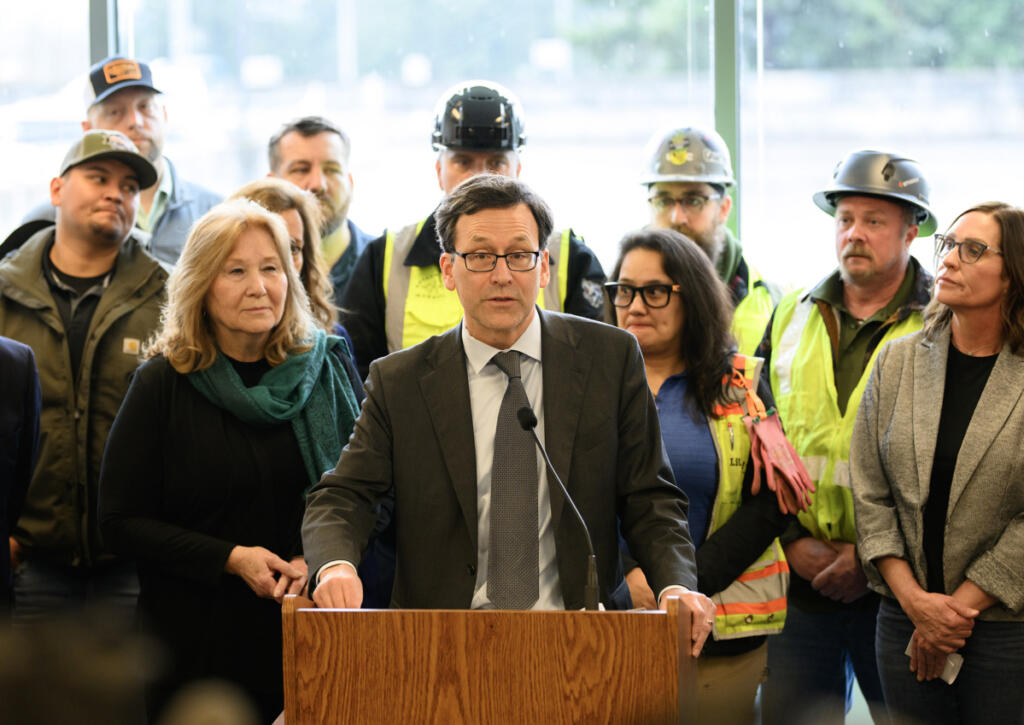
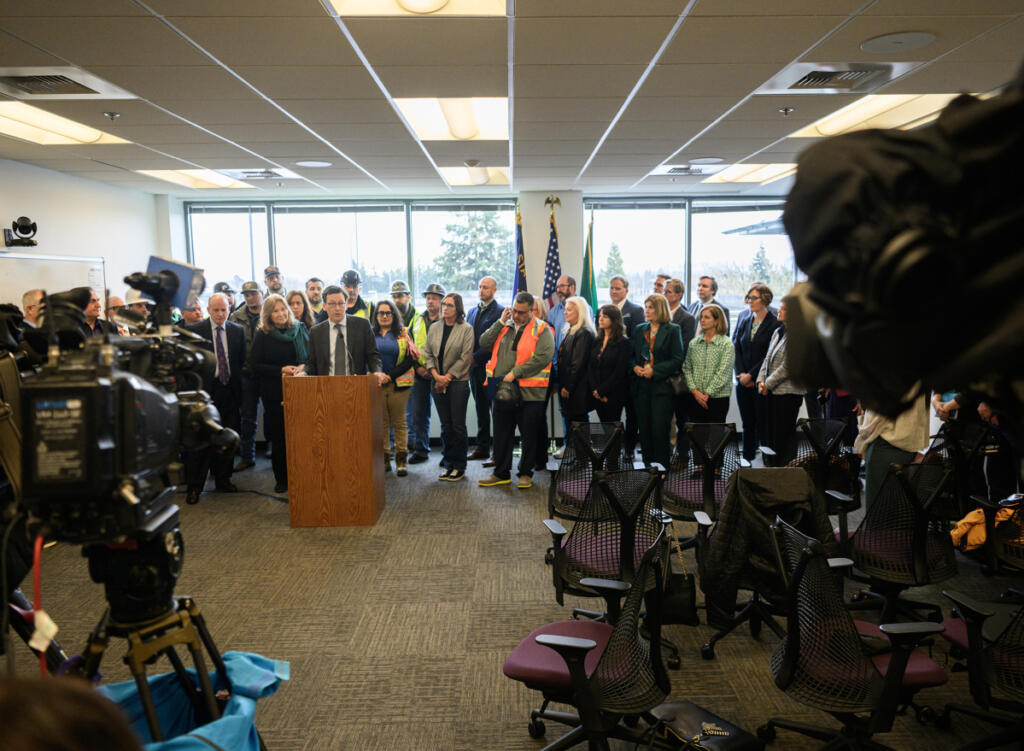
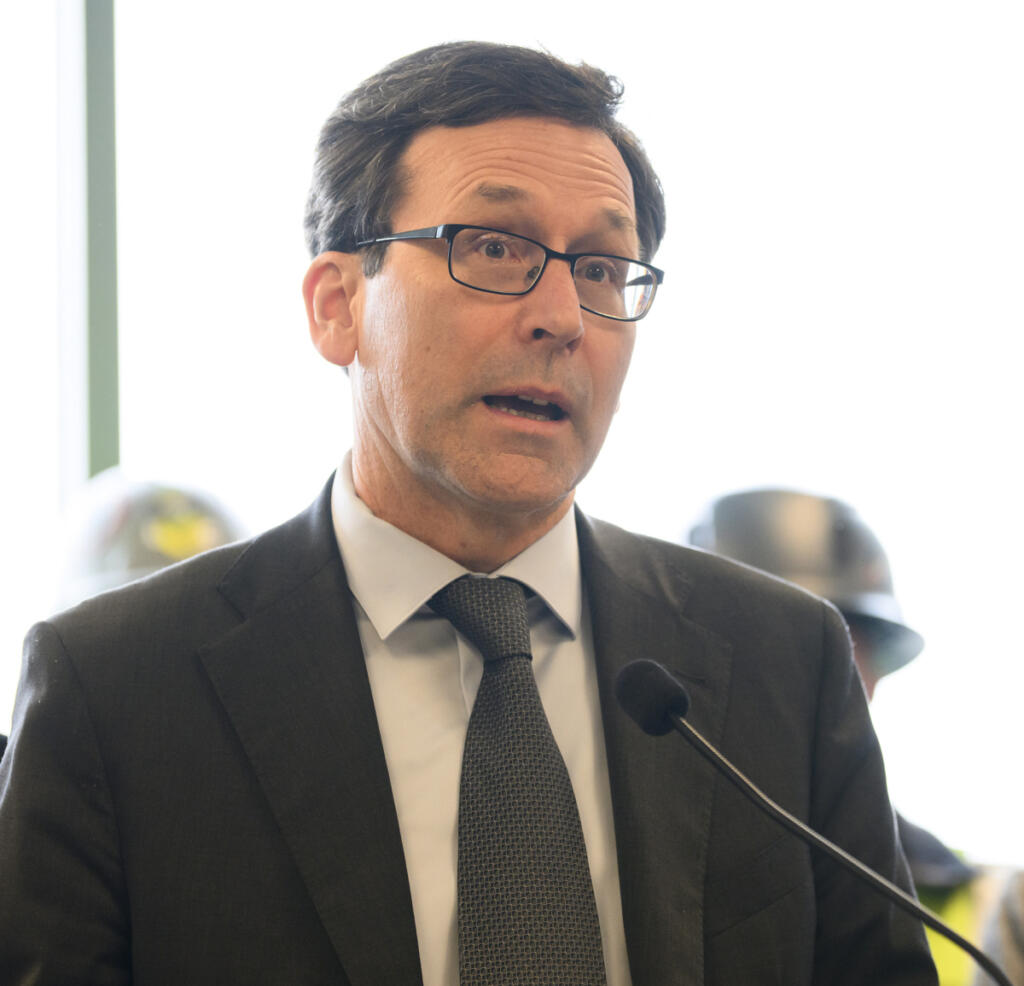
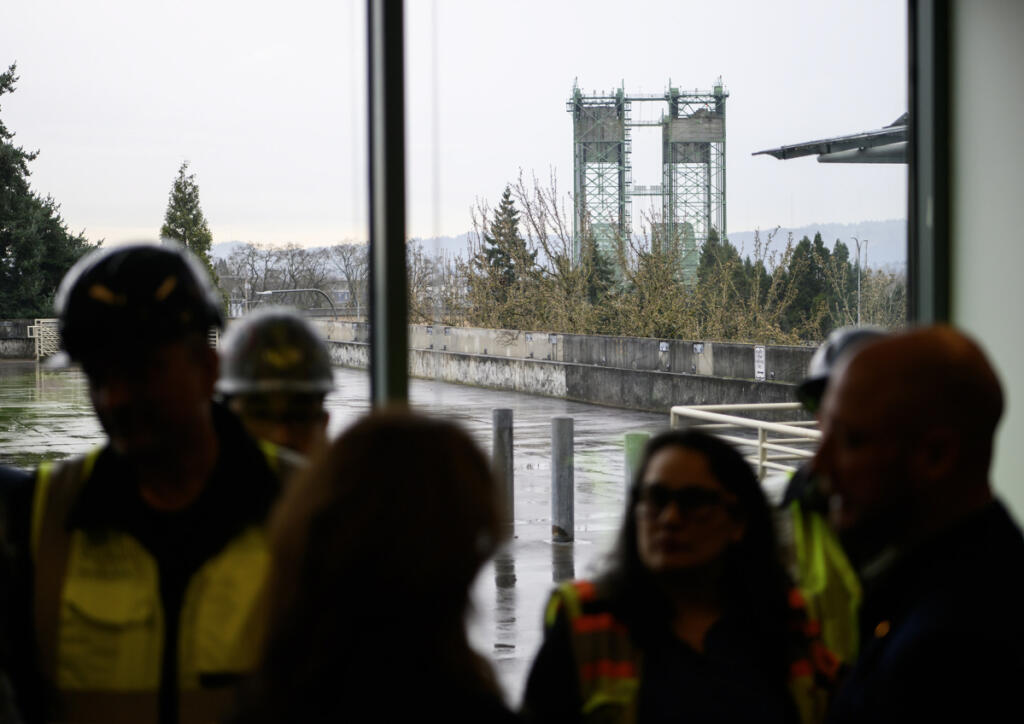
Washington Gov. Bob Ferguson spoke about the new cost estimate Tuesday morning during a press conference at the program’s Vancouver office.

“We’re going to build this bridge. That’s going to happen,” Ferguson said.

The program has $5.5 billion in funding so far, including $2 billion from the states of Oregon and Washington and more than $2 billion in federal grants. Officials and program leaders have said tolling across the bridge will be another revenue source but have not yet provided updated figures.

Ferguson said Tuesday that it will cost $7.65 billion to replace the two moveable I-5 Bridge spans with one fixed, 116-foot-high bridge equipped with light rail and extend TriMet’s MAX from Portland to downtown Vancouver.

The governor said the project also plans to improve a 5-mile corridor along I-5 that includes seven interchanges and eventually extend light rail to Evergreen Boulevard in Vancouver, but his initial focus is on replacing the bridge and building the initial light rail infrastructure.

“The focus right now is on getting this bridge built,” Ferguson said.

The bridge replacement officials earlier said construction could begin this year but now say it will start in 2028. The program plans to select a contractor and work on designs in 2027, said Ferguson and Carley Francis, the bridge replacement program’s interim program administrator.

“We’re committed to making that happen,” Ferguson said. “We’re moving forward. We have the resources. We have the team in place and the commitment to do it.”

Legislators in Washington and Oregon pushed Interstate Bridge Replacement Program leaders in December to release the program’s new cost estimates as quickly as possible and said they had hoped to have the new numbers in time for the 2026 legislative sessions.

Washington’s 60-day legislative session ended March 12. Oregon’s 35-day session adjourned March 6.

Francis, who stepped into the interim leadership role after the program Administrator Greg Johnson resigned at the end of 2025, told legislators in December that the price of steel and concrete has increased sharply in recent years and pointed to a Federal Highway Administration report showing that construction costs nationwide had increased 70 percent between 2020 and 2024.

Program leaders said the new estimate represents a 45 percent to 85 percent probability that costs will fall within the $13.5 billion to $15.2 billion range and a 70 percent chance costs will be under $14.4 billion.

“The updated cost estimate reflects national trends of significant cost increases driven by inflation and market conditions leading to higher construction bids,” according to the program’s website.

The cost estimate includes a $7.8 billion base cost plus $4.2 billion in risks and $2.4 billion to account for inflation.

The entire bridge replacement project includes plans to replace the moveable, seismically unstable spans with a fixed-span bridge; extend light rail into Vancouver; rebuild interchanges at Marine Drive and Hayden Island in Oregon and at state Highway 14, Mill Plain Boulevard, Fourth Plain Boulevard and state Highway 500 in Washington; build a bridge to connect Hayden Island and Marine Drive; and improve the corridor for all, including transit riders, bicyclists and pedestrians.

Program leaders have said the project will be done in phases but did not provide a timeline for those phases during the governor’s press conference.

The current bridge replacement program based its 2022 cost estimate of $5 billion to $7.5 billion using data from the previous Columbia River Crossing Program. On Tuesday, program leaders said schedule delays combined with market conditions — including a 58 percent cost escalation for materials and labor — pushed up the projected costs.

“What’s happening now with the cost of this project is not unusual,” Ferguson said Tuesday. “Costs go up. Inflation goes up. All of those things have an impact. My job as governor is to make sure we focus on what we can do right now. What’s most important right now is taking the funding that we have — which is considerable — and building on that considerable momentum.”

Ferguson said the U.S. Coast Guard’s recent approval of the program’s preferred 116-foot-high, fixed-span bridge marked a significant milestone in the effort to replace the I-5 Bridge. He said building another moveable bridge would have tacked at least $1.7 billion on to the new cost estimate and meant more traffic jams on I-5 during bridge lifts.

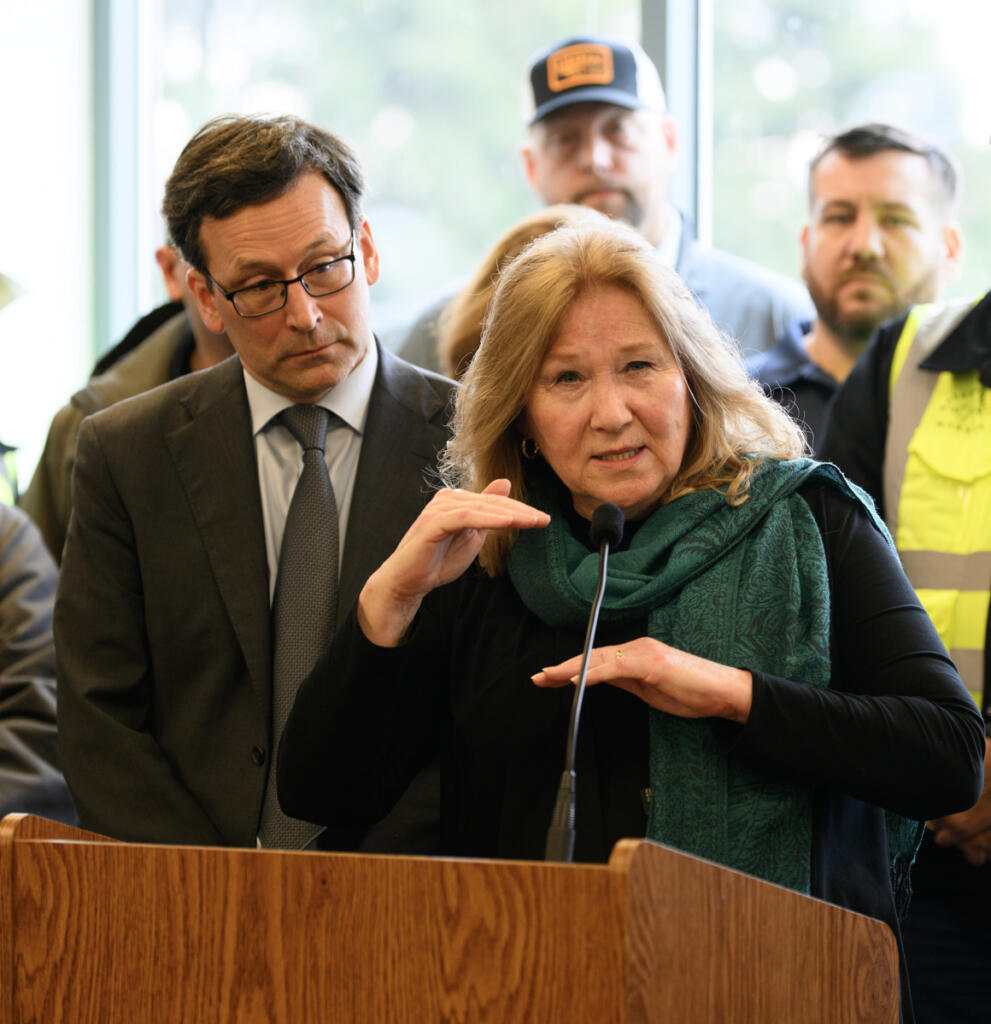
Vancouver Mayor Anne McEnerny-Ogle also spoke Tuesday about the importance of moving forward with the bridge replacement.

“The Interstate Bridge is more than just a piece of infrastructure,” she said. “It is the doorstep into Vancouver.”

McEnerny-Ogle pointed to the need for a new bridge and compared the current structure’s support system, built on timber pilings sunk into the Columbia River’s sandy bottom, as “pretzels in chocolate pudding.”

“It’s outdated and vulnerable to earthquakes,” the mayor said, adding the replacement span will “be seismically resilient and allow the economy throughout our entire region to continue to move $30 million a day across that bridge.”

Labor representatives from Oregon and Washington also spoke Tuesday about the economic boost the project will provide to construction workers in both states.

“The tens of thousands of skilled trade union workers we represent collectively between Washington and Oregon building trades are eager to get started working on this once-in-a-generation project as soon as possible,” said Robert Camarillo, executive secretary of Oregon Building Trades.

TriMet General Manager Sam Desue also spoke about the program’s investment in light rail across the replacement bridge.

Get the latest headlines in your email every week!

This field is for validation purposes and should be left unchanged.

“This program is more than about replacing an aging bridge,” Desue said. “Transit is an essential part of the solution. When we invest in transit, we are investing in the economic vitality and livability of the entire region.”

Desue said studies have shown that for every $1 invested in public transit, $5 is returned to the community.

“The communities of Portland and Vancouver share a long history of connection through commerce, culture and common values,” Desue said. “Extending light rail across the Columbia River will create a faster and more reliable connection between the two cities.”

Later, a reporter asked Ferguson if he had any qualms about the light rail piece of the project knowing that many Clark County residents have historically opposed bringing TriMet’s MAX trains into Vancouver.

“That literal and figurative train has left the station,” Ferguson said. “We’re going forward. We’re going forward with light rail.”

The governor said he is not interested in rehashing past battles over light rail.

“We’re moving forward. We’re building this damn bridge. That’s happening,” Ferguson said. “And my focus is: What dollars do we have? What agreements are in place? And how do we move it forward?”