Camas-Washougal logo tag

PNW strives to move away from fossil fuels, but goal proves complicated

By
timestamp icon
category icon Clark County,

Just as Washington ordered utilities to start cutting fossil fuel use, demand for energy in the Pacific Northwest began skyrocketing.

In 2019, Washington lawmakers approved the Clean Energy Transformation Act, which requires utilities to eliminate greenhouse gas emissions by 2045.


Meanwhile, the grid has begun to strain under the pressures of population growth, escalating electrification of autos and home heating, and an insatiable need for power by energy-hungry data centers and artificial intelligence.

That leaves green energy projects to fill the gap. But these projects face countless roadblocks, so much so that not a single one is underway in Clark County.

“We had a general inquiry about code requirements for large-scale battery storage a few months back,” said Brent Davis of Clark County’s development department. “That is all that I am aware of.”

A recent report from Washington nonprofit Clean & Prosperous found some 250 green energy projects in the state “ready to advance if development pathways become more efficient and predictable.”

These projects, however, face five key hurdles long before they can ever start powering people’s homes here.

No. 1: Energy market

The first is the structure of the Pacific Northwest’s green energy market, which isn’t as appealing to investors as markets elsewhere in the nation.

Renewable energy companies in other states sell power to customers of different sizes and types, said Spencer Gray, executive director for the Northwest & Intermountain Power Producers Coalition, which represents renewable energy developers throughout the region.

“In the Northwest, we have very few,” he said.

There are only six investor-owned utilities in the Northwest, including Idaho and Montana. And while they’re usually located in bigger urban and suburban areas with growing demand, they also often have their own power plants.

Northwestern states, with few exceptions, also don’t allow big industrial businesses with large loads to buy power directly from the regional power market. They usually get power from their local utility.

And smaller, more rural utilities most often get their power directly from the Bonneville Power Administration and don’t need to buy more power from the market.

Other states, like California, have dozens or even hundreds of buyers for new renewable power.

“That’s pretty fundamental, actually, for the confidence of investors in renewable energy companies and the companies themselves,” Gray said.

No. 2: Transmission

Connecting to the power grid is another challenge.

BPA has seen a big push for increased capacity since about 2017, driven by cryptocurrency, requests for renewables to connect to the grid and now energy to power data centers and artificial intelligence.

All these projects need to connect to the grid, either to draw power or add more of it. They require not only connections but upgrades to the grid itself before it can handle the big boost in energy.

The magnitude of requested capacity overwhelmed BPA, which now has hundreds of projects wanting to connect to the grid.

The long wait times are proving to be a hang-up for renewable energy companies wanting to bring their clean energy projects online.

Previous requests to connect to BPA’s grid ranged from 4 to 5 gigawatts. Now requests are closer to 20 GW, “driven in large part by data centers and such,” said Jeff Cook, vice president for planning and asset management on BPA’s transmission services team. (A single gigawatt can power about 830,000 homes in the Pacific Northwest, according to estimates from Portland General Electric.)

The entire generation for the Pacific Northwest at its peak is 32 GW. Developers have asked to connect 61 GW of new generation to BPA’s grid.

BPA started studying the projects in groups, to not only identify how new developments could connect to the grid but the costs it would take to upgrade the system’s overall capacity. Part of the first study was completed in late January.

It’s not unusual for some projects to back out of their plans after seeing the costs of upgrading BPA’s system. Then the group, minus whatever projects dropped out, has to be studied all over again, Cook said. That also contributed to the backlog.

On top of all of this, BPA was pinched by the staffing cuts and hiring freezes that rocked the entire federal government last year.

No. 3: Permitting

“Lengthy and uncertain” permitting poses another hurdle, Gray said.

Sometimes a project requires only county-level permits, but if it requires state permits, things become more complicated. Gray said members of his organization have seen their renewable energy applications caught in disputes between agencies.

“That is a huge headache for developers,” Gray said. “The delays and the second-guessing and the unpredictability of that are really significant.”

Clark County would serve as the lead permitting agency for most projects here. But, so far, there aren’t any.

Davis, the county land use review manager, said utilities and utility substation facilities are allowed in all unincorporated zoning districts with an approved site plan review. Some power generation projects, however, may not meet the county’s definition of utilities or substation facilities, he said.

Davis cautioned that many projects will also have to follow the State Environmental Policy Act, or SEPA, which requires wider public notice and coordination with state agencies and stakeholders. According to the Department of Ecology, about 2 percent to 3 percent of projects require additional state-level environmental analysis.

“It can add permit conditions or require mitigation for environmental impacts not covered by county code, such as noise and air quality,” he said.

State agencies like the Department of Commerce and Department of Ecology are working now to ensure permitting processes at the state and local level run as quickly and smoothly as possible.

Get the latest headlines in your email every week!

This field is for validation purposes and should be left unchanged.

“Our role is really looking at the big picture for clean energy and working with our programs and other agencies at the federal, state, local level, working with tribes, industry,” said Diane Butorac, clean energy coordination manager for Ecology.

No. 4: Public opposition

Large energy projects can also draw public outcry, even when they’re just passing through the area.

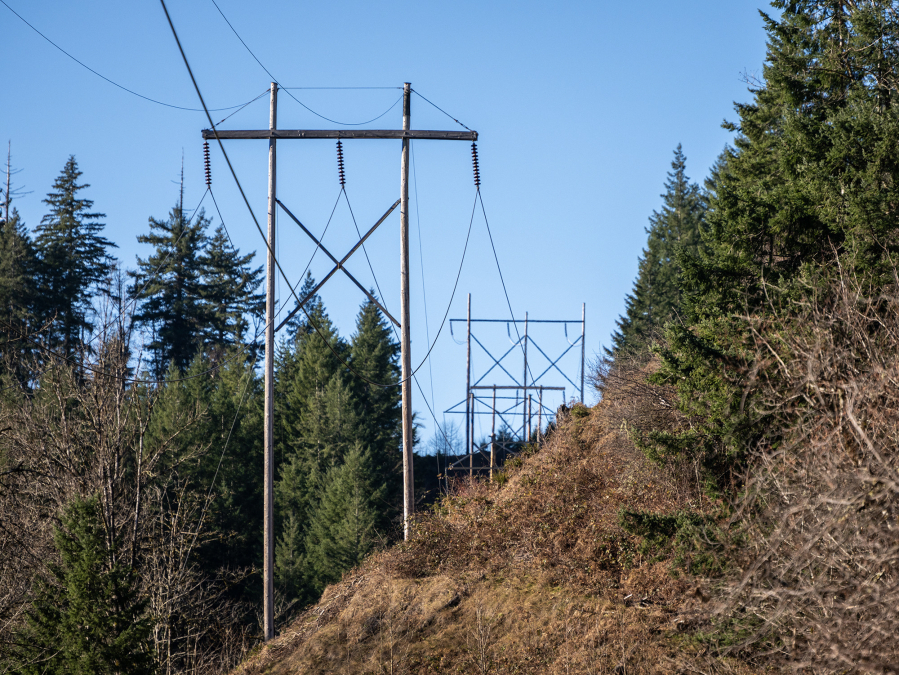
PacifiCorp, for instance, is working on building a transmission line across east Clark County, where it holds a 70-plus-year-old easement.

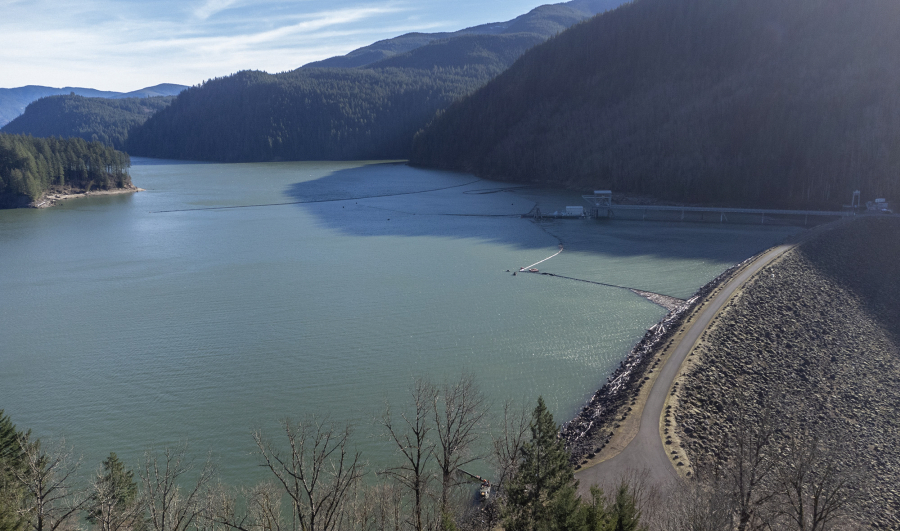
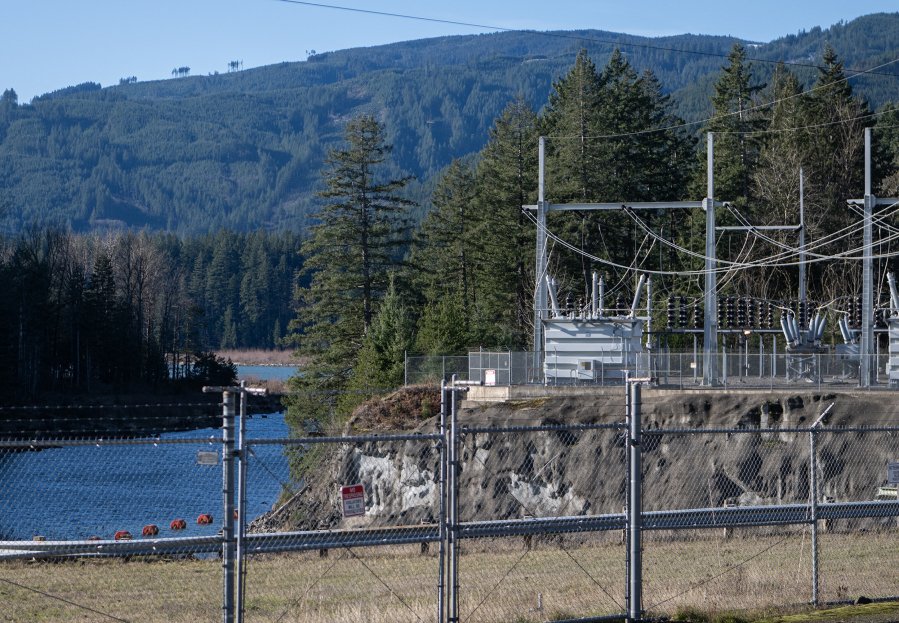
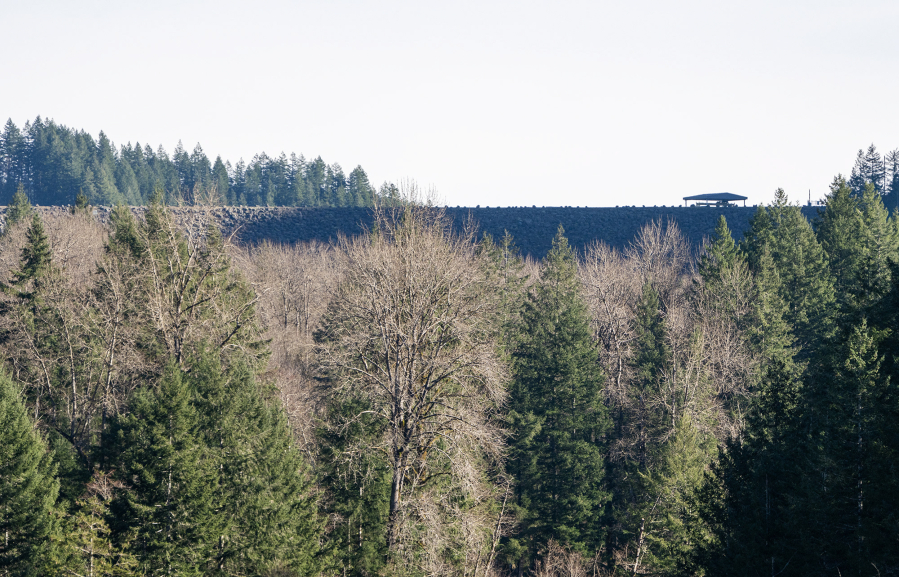
The company aims to divert its energy production at Swift Dam directly to a substation in Troutdale, Ore., to get away from relying on BPA transmission lines to get power to its customers in the Portland area.

Previous attempts to use the easement failed after residents in east Clark County fought against it. They argued it endangered the residential development that has cropped up in the years since the easement was created. The city of Camas mandated that any transmission lines built within city limits must be buried.

PacifiCorp’s recent effort to advance the project garnered social media outrage, email campaigns to public officials and packed public meetings.

“When the right of way was granted, all of east county was essentially farmland and forestland, and that is simply no longer true,” Patrick Borunda, who lives in Yacolt, told The Columbian in July. The easement runs partially through his property.

The transmission line is an example of the kinds of anger that can accompany new energy projects around the region.

Wind farm developers in the Columbia River Gorge faced similar anger decades ago.

No. 5: Federal policy

Green energy development received a boost from the Biden administration and the billions of dollars in private-sector investment that followed. Since then, federal policy has shifted.

The Trump administration signed an executive order in July eliminating subsidies for what his office called “unreliable ‘green’ energy sources,” including solar and wind. The action followed cuts to renewable energy and new restrictions on energy tax credits implemented when Congress passed the “One Big Beautiful Bill” last summer.

The pullback of federal funding left hundreds of projects around the country up in the air. Plus, tariffs bumped up the price for some renewable energy materials.

All this could affect Clark Public Utilities’ plans to buy power from two solar projects currently under development in Eastern Oregon.

Steve Andersen, director of energy resources at Clark Public Utilities, told the utility’s board in December that solar power has become more expensive since his team began looking for new sources 2½ years ago.

Solutions

In a December executive order, Gov. Bob Ferguson directed state agencies to identify and address any existing barriers to planned projects’ ability to tap into the federal tax incentives phasing out this year.

Butorac said Ecology is working with project developers to provide information that helps them move forward while also protecting people and the environment.

In June, Ecology completed three statewide studies for utility-scale solar energy, onshore wind energy and green hydrogen energy. From those studies, Ecology created road maps for those kinds of projects.

“We have a document that says, if you’re building this type of facility, here are the potential impacts that may happen … here’s what you need to do to mitigate that,” Butorac said.

Ecology now is working on a study of alternative jet fuels, also known as sustainable heat engine fuels, which would be a better fit for Clark County than wind or solar projects, according to an earlier analysis by Ecology of each region’s potential.

The analysis found Clark County would also be well suited for green hydrogen (created by splitting water molecules rather than by fossil fuels) and geothermal energy, as well as energy transmission projects like PacifiCorp’s proposed high-voltage line or the Cascade Renewable Transmission project.

Geothermal might be the most interesting green energy opportunity in Southwest Washington “given all the hot source rock in the Cascades,” Gray said.

Butorac said Ecology is working to identify green energy possibilities for the future not yet tied to a specific project or utility, including geothermal energy production from Mount St. Helens.

“This isn’t project specific. This is planning that’s looking at a really early phase to hopefully identify potential impacts to tribes and communities while looking at what developers should consider for siting,” she said.

Working in collaboration with the Department of Natural Resources and Washington Geological Survey, Ecology will eventually create road maps similar to the ones already available for wind, solar and green hydrogen projects.

The governor’s executive order also calls on state agencies to involve tribes in green energy projects.

Cowlitz Indian Tribe Chair Bill Iyall said new infrastructure must go somewhere, but avoiding harm requires early tribal consultation, careful listening and siting decisions that protect sensitive areas while meeting regional needs.

“Growth across Southwest Washington means demand for power will continue to rise, and planning for that reality is essential. The tribe is actively assessing its long-term energy needs and investing in on-site renewable generation where possible to reduce strain on the grid and improve reliability,” he said.

Like Iyall, Gray said his organization appreciated the governor’s executive order.

“There’s a political will that will need to be sustained at the decision-maker level,” he said. “And they seem committed to doing that.”

But the recent significant applications submitted to the state experienced serious delays and unpredictability, Gray added.

“So I don’t feel like we’re in a new, predictable, expedited paradigm,” he said. “Maybe we’ll get there.”

Sarah Wolf: 360-735-4513; [email protected]

Shari Phiel: [email protected]; 360-562-6317; @Shari_Phiel

About the project: Community Funded Journalism is a project from The Columbian and the Local Media Foundation that is funded by community member donations including The Cowlitz Tribal Foundation. The Columbian maintains editorial control over all content. For more information, visit columbian.com/cfj.