Camas-Washougal logo tag

Experts: Starter homes are obsolete as owners stay put amid high costs

The death of starter homes has been a hot topic. More young buyers are moving into forever homes instead. Also age of first time homebuyers has increased. What do local realtors see.

By
timestamp icon
category icon Clark County, News
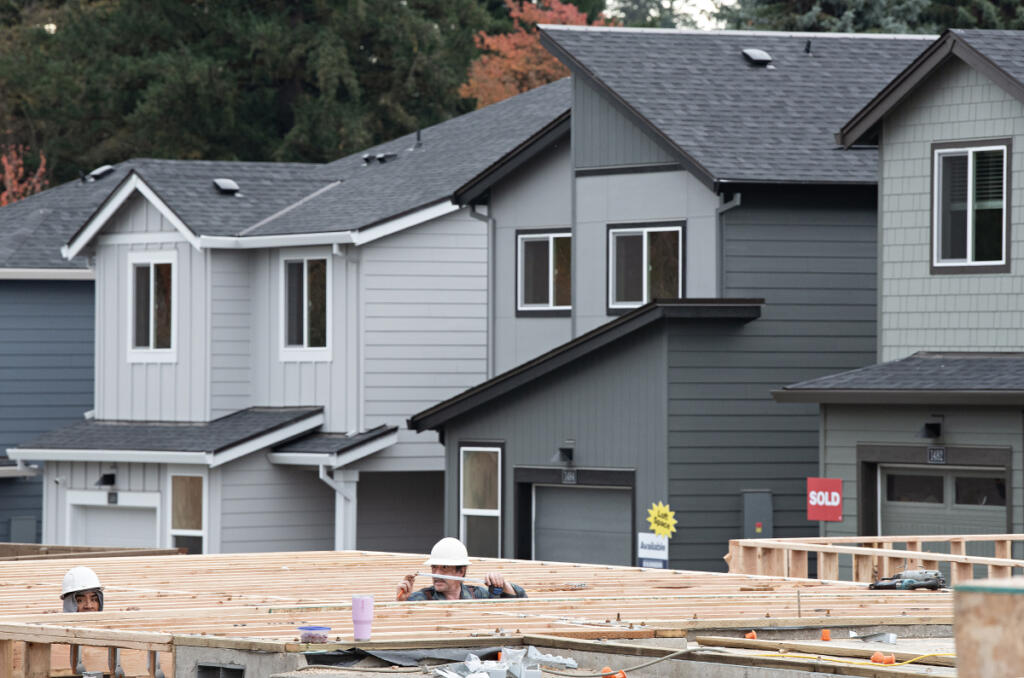
Workers construct Fircrest Meadows in November in Vancouver. For generations, a starter home was the first rung on the homeownership ladder. But now, many buyers face the challenge that the next step is too far away to grasp. (The Columbian files)

For generations, a starter home was the first rung on the homeownership ladder. That ladder has collapsed, according to Bank of Montreal.

Sixty-five percent of American home shoppers expect their first house to be their last, according to a recent report. Americans surveyed said the days of buying a starter home and later transitioning into a larger home “makes no sense these days.”


Clark County real estate agents say the trend is driven by high costs, rising interest rates and changing priorities.

“It’s golden handcuffs,” said Tracie DeMars of RE/MAX Equity Group in Vancouver. “Will this house be their forever home? No — because the market’s always shifting. Now, will it be their longer-than-they-expected home? Yes.”

Locked in

The term “starter home” was coined in the United States following World War II. The homes were no-frills and affordable for returning veterans. The idea was that buyers would stay in the starter home for a few years, then move into a larger, more expensive home once they got their feet under them.

In 2006, the average tenure for a household in a home was six years. Now, it’s 12 years, according to a Redfin analysis.

“I think there’s a whole lot of factors that are playing into this,” said Mike Lamb, a real estate broker at Windermere Northwest Living. “But there’s a definite trend.”

That’s because houses are expensive and choices are limited, he said.

Real estate agents said homeowners who purchased their homes at interest rates of 2 percent or 4 percent a few years ago are now hesitant to sell and take out mortgages at today’s rates of around 7 percent.

This is what real estate agents call the “lock-in effect.” According to the U.S. Federal Reserve, this can reduce housing inventory and fuel higher costs across the market.

“Now they need a bigger home. … But even with their equity … the mortgage payments seem to be too much,” DeMars said.

Get the latest headlines in your email every week!

This field is for validation purposes and should be left unchanged.

Lamb said starter homes today often are much nicer than those of past generations, which results in less urgency to “move up.” Instead, homeowners often stay put and invest in renovations.

As people stay in their homes for longer, it reduces the number of houses overall hitting the market, DeMars said.

A report from the Home Buying Institute shows that in the 1980s in the United States, starter homes made up 40 percent of new construction — nearly 420,000 homes. Now, it’s 7 percent, or 65,000 homes. The average age of first-time homebuyers has risen to 40, according to the National Association of Realtors.

“With fewer entry-level options, many potential buyers are now renting well into their 30s and 40s. That’s a big shift from the 1980s and ’90s, when the typical first-time buyer was in their late 20s,” the Home Buying Institute report said.

Local agents are seeing the average age of first-time homebuyers trend upward. DeMars said she recently sold a 70-year-old woman her first home.

“It’s a totally different world,” DeMars said.

Different costs

In 1986, a typical Vancouver-area three-bedroom ranch home cost about $46,500, but mortgage rates were around 11 percent, Lamb said. In 2006, he said, the median sale price was about $258,000. Interest rates were around 6 percent then, according to Bankrate.

Today, the median home sale price in Clark County is $545,000, and interest rates are nearly 7 percent, according to May’s Regional Multiple Listing Service report.

A MoneyLion report broke down costs from 1986 to 2026. The report shows that Americans take home more income today than in 1986. Yet, today’s shoppers are burdened by additional, more costly expenses that exhaust their larger incomes.

“The numbers are bigger, but the incomes are higher,” Lamb said.

According to MoneyLion, the costs for daily goods and services — including childcare, health insurance premiums and student loan debt — have increased much faster than normal inflation.

In 1986, high mortgage interest rates were the biggest hurdle for potential homebuyers. Now, home shoppers are dealing with financing on top of limited inventory.

DeMars said that now, when she’s selling homes, she makes sure people are realistic and can see themselves living in the home for years to come.

“You need to look at this home and think, ‘Can I live here for five to seven years comfortably?’ ” DeMars said. “Buying a home is exciting and scary. People get caught up in the excitement without looking at the future possibilities.”